

Air Handling Unit Maker Guide to Selecting Reliable HVAC Equipment
2026-10-15
Selecting a reliable air handling unit maker shouldn’t feel like a gamble. Yet too many engineers and facility managers learn the hard way that specs on paper don’t always match reality. In this guide, shairko shares practical criteria to separate dependable AHU manufacturers from the rest—before you sign the purchase order.
Match the Unit to Real Operating Conditions, Not Just Nameplate Ratings
Nameplate ratings tell a tidy story, but the real world rarely follows the script. A unit stamped for 10 tons of cooling might groan under a 35-degree rooftop heat load, or short-cycle when paired with an oversized air handler. Field conditions—long piping runs, altitude, humidity swings, and actual airflow—shift performance far from the lab test points. Matching the unit to what it will actually face means measuring static pressure, checking line lengths, and looking at the building’s true thermal profile instead of trusting the label alone.
The temptation is to swap like-for-like or size by square footage alone, but that ignores how the system breathes. Two identical nameplate units can behave differently if one sits in a dusty alcove with restricted condenser air and the other on a clean open pad. Real operating conditions include how the ductwork leaks, how the occupants actually use the space, and whether the voltage sags at the end of the line. A unit chosen only by its rating may run fine in the brochure and struggle in the install bay.
The fix is to treat the nameplate as a starting point, not a verdict. Measure the live conditions: return air temperature, external static pressure, compressor amp draw under load, and the actual refrigerant line set length. Then ask whether the unit’s capacity at those conditions—not at standard rating conditions—matches the load. Often the right choice is a different unit size, a different airflow setting, or a minor modification like adding a crankcase heater or a low-ambient kit. The goal is a system that fits the real job, not the imaginary one on the spec sheet.
Look Beyond the Spec Sheet: Seals, Panel Strength, and Thermal Bridges
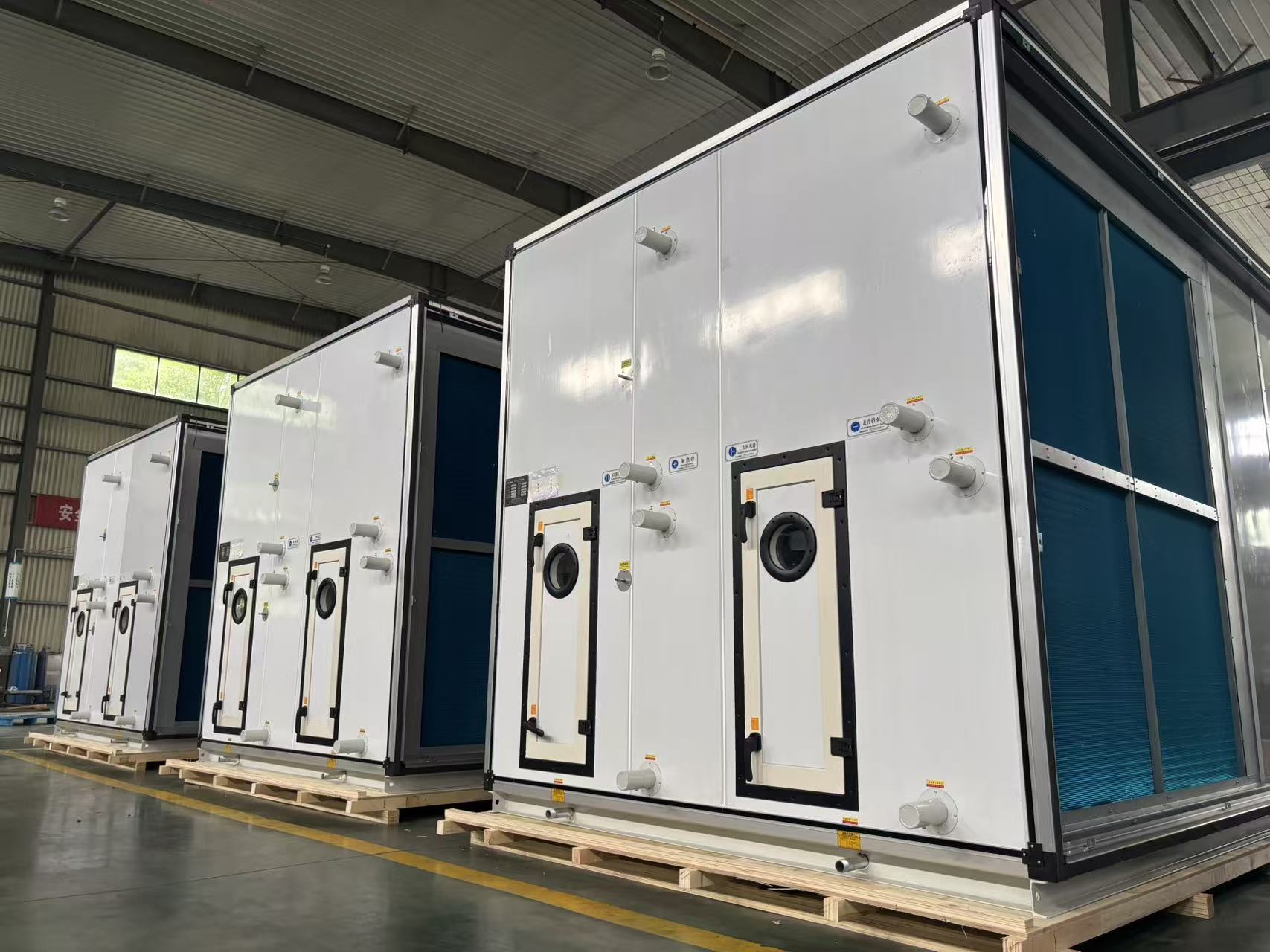
Manufacturers love to highlight R-values and U-factors, but real-world performance often hinges on details that never make the brochure. Take seals, for instance. A poorly fitted gasket around a door or window can leak more air than the entire wall assembly, quietly undoing all that insulation you paid for. Even high-quality seals degrade over time—UV exposure, temperature swings, and simple mechanical wear turn them brittle and ineffective. If you're not checking the actual compression set and weather resistance of the seal material, you're trusting a spec sheet number that may mean nothing in a cold January wind.
Panel strength is another silent variable. Panels that meet minimum deflection standards on paper might still flex noticeably under wind load, causing fastener stress and micro-cracks in exterior finishes. Over years, that flex translates into loose joints, moisture intrusion, and hidden rot. The difference between a panel that barely passes code and one that stays rigid in a storm isn't always reflected in published data. It's worth asking for full-scale test results or even visiting an installed project to see how the panels behave when the wind really blows.
Then there are thermal bridges—the unglamorous weak points where structural elements pierce the insulation layer. Steel studs, balcony connections, window frames, and even fasteners can conduct heat straight through the envelope, drastically lowering the effective R-value. A wall might be advertised as R-30, but with typical thermal bridging, the actual performance could drop by 30% or more. Smart designers specify thermal breaks, insulated headers, and continuous exterior insulation, but you won't see that nuance on most product data sheets. Spec sheets give you a starting point; actual durability and energy performance come from checking the details that live in the shadows.
Why Stable Airflow and Room Pressure Control Separate Reliable Units from the Rest
Most cleanroom and isolation suite designs look identical on paper, but the gap between spec sheets and actual performance widens the moment airflow begins to drift. A unit that holds pressure during commissioning may fall out of compliance by Tuesday afternoon if its airflow response lags even half a second behind a door opening. Reliable units are not built around static setpoints; they are tuned to anticipate disturbances—exhaust fan speed changes, filter loading, even a person walking past a supply diffuser—and correct for them before the room notices.
Pressure cascades fail quietly. A differential of 0.02 inches of water column can vanish without a single alarm if the control loop samples too slowly or averages readings into meaninglessness. The better systems treat pressure not as a single number but as a direction and a gradient, constantly cross-checking door switches, damper positions, and fan curves. When that logic is missing, the room becomes a passive box that only looks controlled because nobody is measuring what matters.
Operators often discover the difference during annual recertification, when a slightly dirty prefilter or a worn belt reveals how little margin the original airflow design actually had. Reliable units hold their envelope under those conditions because they were designed for degraded modes, not just ideal ones. The rest simply hold a setpoint on a good day and hope nobody opens the wrong door at the wrong time.
Maintenance Windows and Component Swaps: What Actually Keeps a Unit Running for Decades
Most people assume a machine that survives thirty or forty years in the field does so because it was built like a tank from day one. The reality is far less romantic. Longevity comes from a disciplined rhythm of scheduled downtime, where worn parts are pulled before they fail, and from the unglamorous practice of swapping in rebuilt components rather than waiting for a total breakdown. Operators who treat maintenance windows as non-negotiable events, not inconveniences, are the ones who get decades of reliable service. They know that a bearing replaced at 80% of its predicted life costs a fraction of the collateral damage caused by a seized shaft at 3 a.m.
The component swap itself is where experience really shows. A skilled technician doesn't just replace a failed part; they look at the wear pattern on the old one and adjust the replacement interval, the lubrication spec, or the alignment procedure. This feedback loop turns every maintenance window into a small engineering review. Over time, the unit evolves away from its original design weaknesses. The gearbox that once needed a rebuild every five years might go eight after a different bearing preload is specified. That kind of incremental refinement is invisible to outsiders, but it's the real engine behind multi-decade operation.
There is also a quiet art to knowing when to stop swapping parts and start replacing an entire subassembly. Some components, like control boards or hydraulic manifolds, become difficult to source or rebuild reliably after a certain point. Smart operators stockpile critical spares while they are still available, or they arrange with machine shops to reverse-engineer parts before the supply chain dries up. None of this is complicated in theory, but it demands consistency and a long-term view. The units that rack up forty years of runtime are not lucky; they are curated, piece by piece, through every planned maintenance window on the calendar.
Fan Noise and Vibration Dampening: The Hidden Markers of Build Quality
Open up most laptops and you'll spot the usual spec sheet heroes: processor, RAM, storage. But flip one over after a long rendering session and place your palm near the hinge—what you feel and hear tells you more about build quality than any benchmark. Fan noise isn't just a decibel number; it's the difference between a thin whine that slices through your focus and a low, steady whoosh that fades into the background. The best chassis designs route airflow away from high-pressure zones and use asymmetrical fan blades to break up tonal peaks, so the cooling system never sounds like a dental drill.
Vibration dampening is even more telling, because it's invisible until you care about it. Cheap mounts let a spinning fan transfer micro-oscillations into the keyboard deck, turning every keystroke into a faint buzz. Quality builds use rubberized standoffs, tuned mass dampers, or even dual-layer foam gaskets around the fan module. The result is a machine that feels solid under load—no rattling trackpad, no buzzing palm rest, just a subtle warmth and a whisper of air movement. That tactile quiet is the hidden signature of engineers who sweated the details no review chart captures.
Next time you're comparing two laptops in a store, ignore the spec placard. Run a stress test or just play a 4K video for five minutes, then rest your ear near the exhaust and your fingers on the deck. The machine with the boring, unremarkable cooling noise is usually the one built to outlast the flashy spec sheet.
Warranty Fine Print and Manufacturer Support: Uncovering the Real Service Commitment
Most product warranties read more like a legal shield than a promise. The fine print is where manufacturers quietly carve out exceptions for the very failures you're most likely to experience—water damage, impact damage, or any repair not performed by an authorized service center. Even 'lifetime' warranties often define lifetime as the expected product cycle, not your lifetime. If you dig into the actual terms, you'll find that coverage can shrink based on where you bought the item, whether you registered it within a narrow window, or if you kept the original receipt in a specific format.
Manufacturer support tells a similar story. What starts as a friendly help line often becomes a maze of scripted questions, escalating ticket numbers, and polite refusals. The real service commitment is usually limited by internal policy budgets rather than goodwill. In many cases, a replacement part costs less to ship than the labor to diagnose it, so support agents are trained to steer you toward buying a new unit. That gap between the warranty's bold print and the actual repair experience is where customer frustration quietly builds.
If you want to know how a company truly stands behind its product, ignore the marketing and test the warranty before you buy. Ask for the full terms in writing, check what happens after the first year, and look up how long replacement parts remain available. A warranty is only as good as the manufacturer's willingness to honor it without friction.
FAQ
Ask for a complete bill of materials, not just a brochure. The frame gauge, insulation type, and door hardware tell you more about real-world durability than a polished spec sheet. If a maker hesitates to disclose those details, treat that as a warning sign.
A lot more than people assume. Double-wall construction with thermal breaks prevents condensation inside the panels, which is where corrosion and mold quietly start. Look for low-deflection casings rated for the highest static pressure the fan could ever see, not just the design point.
Not necessarily, but they require more engineering discipline. The risk isn't customization itself, it's poor documentation. A reliable custom unit comes with detailed submittals, clear service clearances, and factory testing that simulates the actual operating envelope instead of a generic test cycle.
Pay attention to where the fan operates on its curve. A fan sized too close to the surge line will hunt and vibrate, which wears out bearings and belts quickly. Reliable makers leave enough margin so the fan remains stable during dirty filter conditions and unexpected duct static changes.
Request certified test reports from an independent lab, not just software predictions. Also ask for coil face velocity and water pressure drop data at your specific conditions. Real-world performance drops fast if the coil is selected with optimistic fouling factors or unrealistic entering air temperatures.
Filters protect the coil, and a poorly matched filter bank lets dirt bypass or load unevenly. That raises coil airside pressure drop, reduces heat transfer, and forces the fan to work harder. A good maker designs the filter rack with proper sealing and enough depth for a MERV 13 upgrade without starving the fan.
Look for hinged access doors with sweep gaskets that don't require tools, drain pans that fully slope to a visible outlet, and fan bearings that can be regreased without removing the drive assembly. If you have to fight the unit to change a filter or inspect a coil, it will get neglected over time.
Lowest first cost almost always backfires in HVAC. A cheap unit will use thinner metal, smaller coils, and less efficient fans, so you pay for it every month in energy and repairs. Compare lifecycle costs including filter replacements, fan energy, and expected coil cleaning intervals, and the reliable option usually wins within a few years.
Conclusion
A reliable air handler rarely earns that title from a catalog page. You have to start by mapping the unit against the building's actual load profile, ambient swings, and part-load behavior—not just the nominal cooling or heating figures printed on the nameplate. In many cases, a unit that looks efficient at full load can struggle with humidity control or short cycling when demand drops. Beyond the performance tables, the build details tell you more. Cabinet seals, panel stiffness, and the way thermal breaks are placed around the frame determine whether condensation, air leakage, or wasted energy will eat into long-term performance. If those basics are flimsy, no amount of coil surface or fan efficiency will fix the drift in room pressure. Units worth specifying hold supply and exhaust airflow steady under varying filter loading, damper shifts, and occupancy changes. That stability is what keeps isolation rooms, labs, and clean spaces safe—and it separates genuine engineering from box assembly.
Longevity comes down to what happens after startup. Look for designs where filters, belts, bearings, and even the entire fan section can be reached without dismantling ductwork or squeezing past sharp edges. Quick component swaps during a two-hour maintenance window matter more than a glossy parts list. The same goes for fan noise and vibration. A builder that balances impellers, isolates the motor base, and uses properly sized flex connections is signaling attention to things you can't see after the ceiling goes in. Finally, read the warranty not for the number of years but for what it excludes, who responds, and whether replacement parts arrive from a local depot or an overseas queue. A manufacturer that documents coil replacement procedures, keeps control firmware updates free, and answers technical calls with engineers rather than scripts is the one that will still be around when the unit needs real service.
Contact Us
Contact Person: Crystal
Email: [email protected]
Tel/WhatsApp: 8613524235353
Website: https://www.airkohvac.com