

All-in-One Air Compressor: How to Choose the Right One for Your Needs
2026-10-24
Most all-in-one air compressors look impressive on paper—that's exactly the problem. Spec sheets shout about tank size, CFM, and horsepower, but none of that matters if the machine doesn't fit your actual needs. At Seize Air, we've watched too many people overspend on power they'll never use or settle for a compressor that stalls mid-job. This guide cuts through the marketing noise and breaks down what really makes the right compressor for your work, so you can buy once and get back to the job.
Tank Size That Keeps Up With Your Pause-and-Go
Most small tanks empty right when you’re mid-task—two nails in and the motor kicks on before you can make the third. This tank is sized to match how you actually work: a solid burst of air, a natural pause while you reposition or swap pieces, then another full-strength cycle without waiting on a refill.
The trick isn’t raw gallons; it’s recovery timing. You get enough stored air to finish a full pattern or bring a tire from flat to road pressure in one pass. By the time you’re back in place, the tank is already topped off and ready for the next go. No constant cycling, no lag between steps.
CFM and PSI Numbers That Won't Let You Down Mid-Job
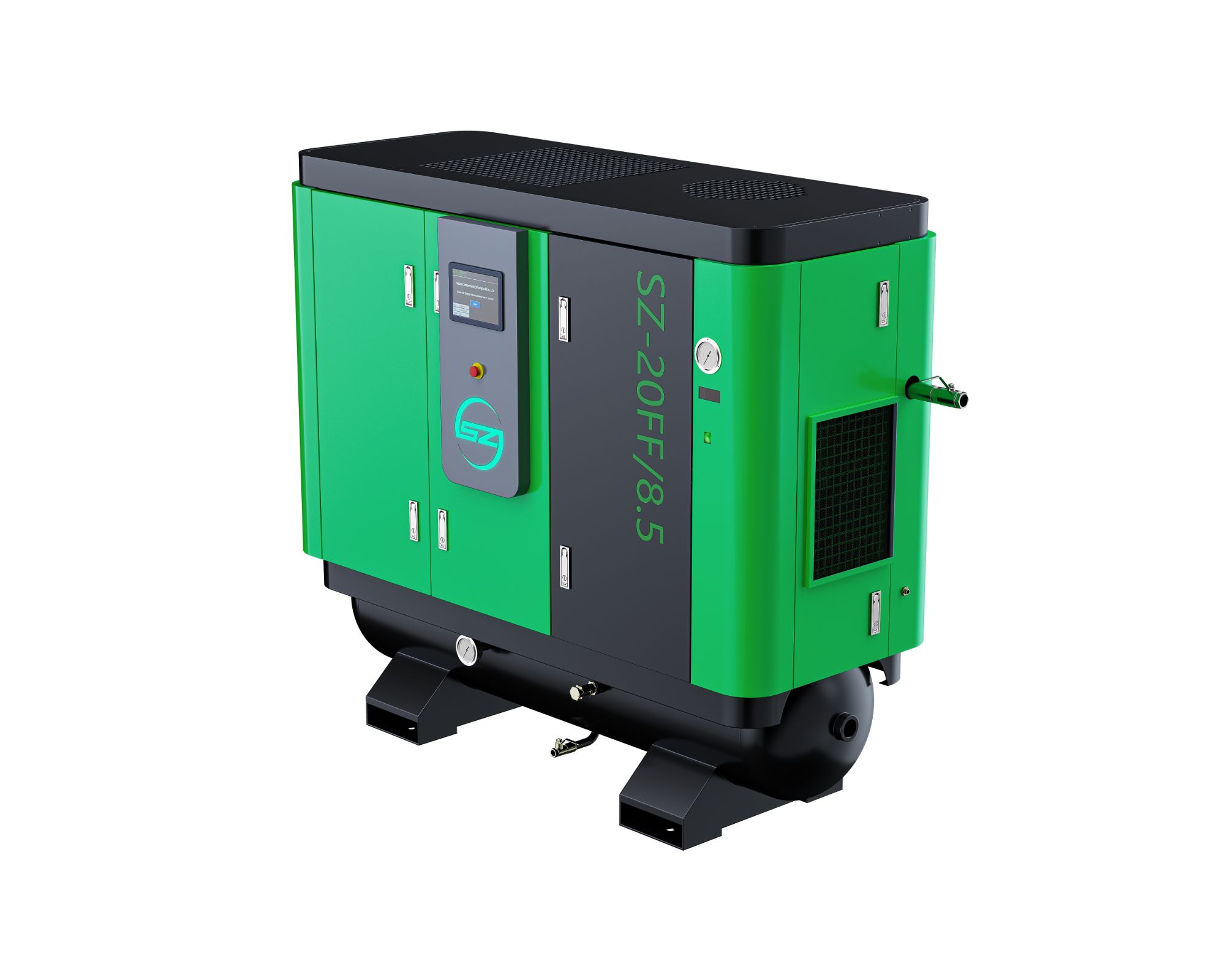
Most job-site disappointments trace back to one thing: underestimating how much air your tools actually consume. A rating that looks fine on a spec sheet can turn a framing nailer into a paperweight after the third consecutive nail. The number that matters here is CFM at 90 PSI, not the inflated peak value printed on the box. If a compressor can't hold 90 PSI while delivering 4–5 CFM, it won't keep up with a finish nailer, let alone a small impact wrench.
PSI without enough CFM is just pressure waiting to collapse. Run a die grinder on a 6-gallon pancake compressor rated at 150 PSI and you'll watch the gauge dip, the motor run constantly, and the tool stumble long before the weld is clean. A safer bet is to add 20–30% to the tool's stated CFM requirement, then choose a compressor whose output at 90 PSI stays above that buffer. That margin is what keeps the tank refilling faster than you can drain it, so the work pace never outruns the air supply.
Light Enough to Carry, Stable Enough to Trust
The frame weighs less than a full water bottle, yet it doesn’t wobble on uneven ground or flex under load. That balance comes from a tapered tube design and a low-slung center of gravity, not from adding bulk. You notice it most on long carries: the pack stays quiet, the legs plant without hesitation, and your hands stay free for the trail.
Stability here isn’t just about a wide footprint. The locking joints use a cam mechanism that bites harder as pressure increases, so the legs don’t creep or slip when you shift your weight. Set it on slick rock, loose gravel, or a wooden deck, and it holds without needing constant adjustment. When you do move it, the fold is quick enough to do one-handed.
The real test is forgetting it’s there until you need it. It rides easily against a pack strap, sets up in seconds, and then disappears under your gear. No rattling, no slow sag, no second-guessing whether it will still be standing when you reach for it.
A Sound Level You Can Share a Garage With
Most people picture a garage as a place for noisy machinery, but it doesn't have to be that way. A sound level you can share a garage with stays around the volume of a relaxed conversation or the hum of a refrigerator. That means you can tune a bike, sort through boxes, or work on a small project while someone else reads or takes a call just a few feet away, without either of you reaching for ear protection.
What makes this work is keeping the running noise under the threshold where it becomes a constant irritation. Instead of a sharp, piercing whine, you get a low, steady background presence that fades from attention after a few minutes. It's the difference between hearing something and being forced to listen to it. For shared spaces, that distinction matters more than raw decibel numbers.
In practice, this level also means you won't startle the dog or send the neighbors a reason to complain. The sound stays inside your own walls and doesn't turn every garage session into a noise event. When the machine or tool runs this quietly, using the garage feels less like an industrial task and more like an ordinary part of the day.
Maintenance Touchpoints You Won't Need a Manual to Find
Some maintenance points hide behind plastic covers or get buried deep in the engine bay, but a handful sit right out in the open where you can spot them in seconds. The oil dipstick, for example, usually has a bright loop handle that practically begs for a tug. Washer fluid and coolant reservoirs are often translucent with clear level markings, so a quick glance tells you if they need topping off before a longer drive.
You also don't need to dig through a glovebox manual to check tire pressure. The valve stems on each wheel are exactly where they've always been, and a decent gauge costs less than a coffee. Battery terminals are equally straightforward to locate once the hood is up. If you see a crusty white or blue buildup around the posts, that's a sign to clean the connection before it becomes a no-start issue.
The trick isn't finding these touchpoints, it's making a habit of actually looking at them. A quick walk-around and a peek under the hood every couple of weeks can catch low fluids, uneven tire wear, or loose battery clamps long before they turn into roadside surprises. No special tools, no manual, just a few minutes with your eyes and hands.
Power Cords and Plugs That Survive Real Job Sites
You can spot the difference the moment you pick up a cord built for actual job sites. The jacket feels thicker, less willing to kink, and you notice the plug ends aren't some flimsy molded plastic that cracks after one accidental drop from a scaffold. Real work cords use heavy-duty rubber or hybrid compounds that resist oil, moisture, and the constant abrasion of being dragged across concrete and rebar. The blades on the plugs are often solid brass, not cheap stamped metal, and many feature reinforced strain reliefs where the cord meets the plug—because that's exactly where most failures happen when someone yanks a saw out from under a pile of lumber.
On a busy site, cords get run over by scissor lifts, pinched in doorways, and left out in the rain overnight. A cord that survives this kind of abuse usually carries a rating like SJEOOW or SOOW, which means the outer jacket and inner insulation are all oil-resistant and water-resistant. Some even have a special cold-weather rating so the jacket won't stiffen up like a garden hose in freezing temperatures. You'll also see plugs with locking features or extra-large grips that let you pull them apart with gloves on—details that seem small until you've spent ten minutes fighting a regular plug while your hands are numb.
Durability isn't just about surviving impacts; it's about staying connected under load. Quality job-site cords use nickel-coated or directly welded connections between the wire and plug blades, reducing hot spots that cause melted ends on cheaper cords. Some higher-end models include built-in LED indicators that show power is flowing, so you don't waste time troubleshooting a dead battery when the real issue is a tripped GFCI upstream. And while no cord lasts forever, the best ones are built to be repaired: replaceable plug ends and field-serviceable connectors mean you can cut away a damaged section and re-terminate rather than tossing the whole thing in the scrap bin after one bad run-in with a circular saw.
FAQ
It's a unit that combines the pump, motor, tank, regulator, and often hose storage or an accessory kit into one ready-to-run package. You don't need to buy a separate filter, regulator, or fittings just to get started.
Match the tank to your longest continuous task. A small 1-2 gallon tank is fine for nail guns and tire inflation, but if you run a die grinder or spray paint, you'll want 20 gallons or more to avoid waiting for pressure to build.
CFM matters more for sustained tools. Look at the tool's required CFM at 90 PSI and pick a compressor that exceeds it by about 20-30%. PSI just needs to meet the tool's maximum, not double it.
They're lower maintenance and lighter, which helps if you move it around or work indoors. Oil-lubricated models run quieter and last longer under heavy use, but need oil changes. Choose based on how often you'll use it.
Anything under 70 decibels is comfortable enough to stand next to without ear protection. Many compact all-in-one units run between 60-70 dB, similar to a normal conversation. If you're in a garage with neighbors close by, look for a quiet series.
Not necessarily. Pancake or twin-stack designs can still deliver 2-4 CFM, enough for trim work and inflation. But if you need continuous high flow, a wheeled vertical tank is a better compromise than a truly portable unit.
For oil-free: drain the tank after each use, clean the intake filter monthly. For oiled models: check oil level before each use, change it every 200-300 hours, and inspect belts if applicable. Never store with pressure in the tank.
Conclusion
When you're in the middle of a project, the last thing you want is an air compressor that makes you wait. Tank size matters more than most people think, but not in the way spec sheets suggest. A small tank cycles constantly, which wears out the motor and interrupts your flow every time you pause to reposition a nail gun or switch from inflating to blowing off sawdust. Look for a tank that balances recovery time with portability—you don't need a 30-gallon beast for trim work, but a pancake that can't finish a single framing run without gasping for air will cost you more time than it saves. Match the CFM and PSI to the hardest tool you actually use, not the one you might buy someday. That means checking the tool's requirements at the pressure you'll run, not just the maximum rating stamped on the box. And while you're at it, pay attention to weight distribution and noise. A compressor that tips over when you pull the hose is a hazard, and one that screams at 90 decibels will make you unpopular in a shared garage or basement workshop. The best all-in-one units feel stable on uneven ground, have a handle that doesn't pinch your fingers, and keep the racket down to a level where you can still hear a conversation or a podcast.
Beyond the headline numbers, the daily irritations are what separate a keeper from a return. Maintenance touchpoints should be obvious, not buried behind plastic panels that require a screwdriver and a prayer. The drain valve needs to be reachable without tilting the whole unit, and the oil fill—if it's not oil-free—shouldn't demand a funnel with a flexible neck. Air filters you can pop off with one hand save you from skipping a cleaning that'll eventually choke the pump. Then there's the power side. Cords that kink, plugs that loosen after a month, and strain reliefs that crack in cold weather are dealbreakers on real job sites. A good all-in-one compressor has a cord long enough to reach the outlet without an extension, or at least a plug that grips firmly and doesn't arc when you unplug it. Finally, don't chase the highest specs if they mean sacrificing the small ergonomic details. The right compressor is the one you don't think about while it's running—it just keeps up, stays put, and doesn't fight you when it's time to pack up.
Contact Us
Contact Person: Mia
Email: [email protected]
Tel/WhatsApp: +86 19821985894
Website: https://www.seize-air.com