

Bath Bench Manufacturer Guide to Quality Shower Seating for Seniors
2026-08-14
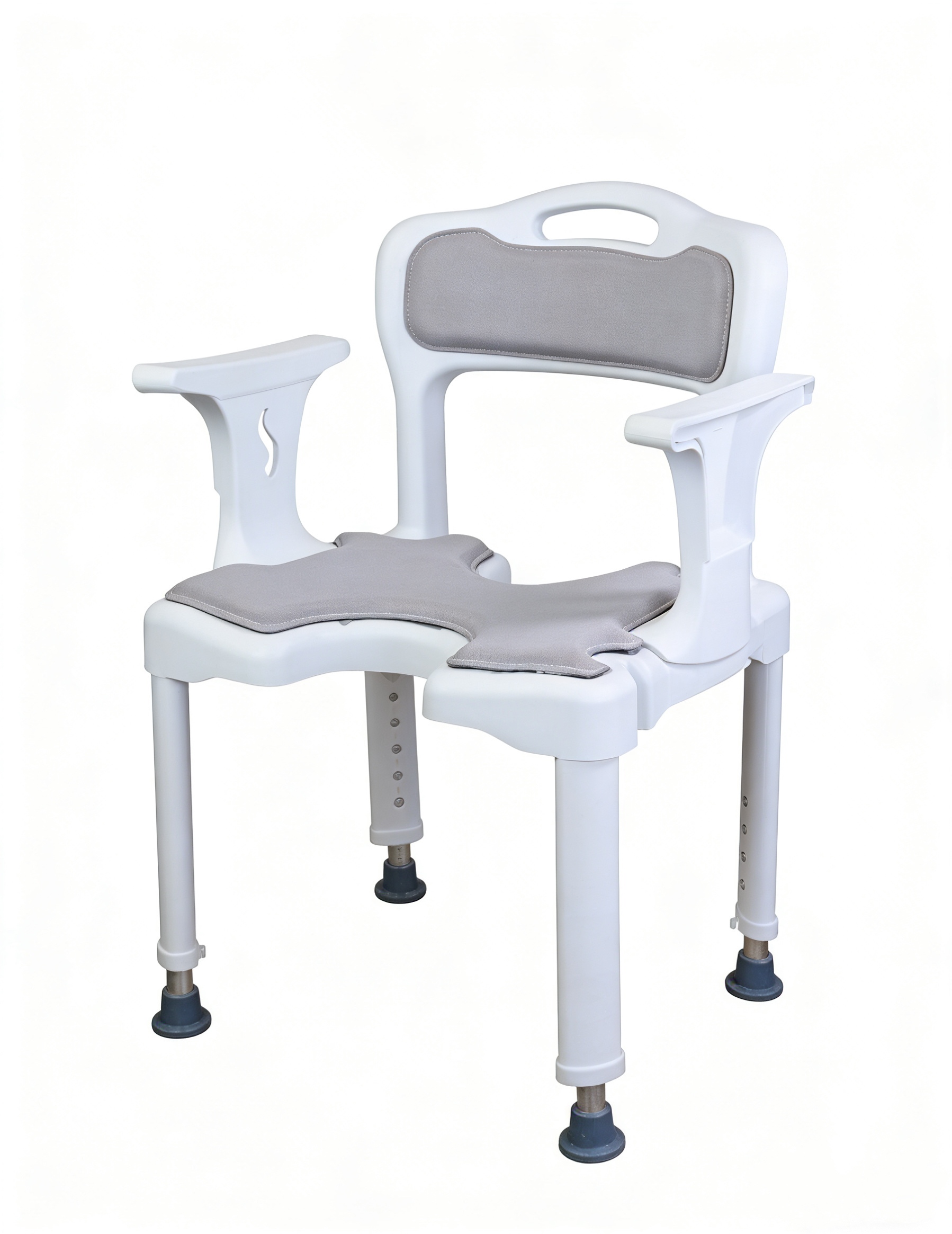
Finding a truly reliable bath bench isn't just about picking something off a shelf—it's about trusting a manufacturer who understands the daily realities of senior shower safety. At Suncare, we've spent years refining what makes quality shower seating: stable legs, slip-resistant grips, and materials that won't crack under humidity. This guide cuts through marketing noise to show you exactly what to look for, so you can choose a bench that feels less like a product and more like a promise.
Designing Around Real Mobility Limits, Not Demographic Assumptions
Aging is often treated as a proxy for frailty, but that shortcut misses the point. A seventy-year-old who cycles daily may navigate stairs more easily than a forty-year-old recovering from surgery. Designing for “the elderly” as a uniform group leads to spaces that either over-accommodate or ignore real needs. Instead, mobility limits should be observed directly: can a person stand from a low chair, carry groceries while opening a door, or walk across an uneven courtyard without hesitation?
Shifting from demographic labels to functional capacity changes the design brief. Rather than adding grab bars in every bathroom because “old people live here,” a designer might test how residents actually move through their homes and where support is genuinely lacking. This approach uncovers unexpected patterns—like a young parent struggling with a stroller on a steep ramp or an office worker with a temporary knee injury avoiding a particular corridor. The environment should respond to those concrete frictions, not to an assumed age profile.
The payoff is both practical and respectful. When barriers are removed based on observed difficulty, the result is a space that works for a wider range of bodies without singling anyone out. A step-free entrance, a lever handle, or a well-placed bench helps the person with a cane, the delivery driver with a heavy cart, and the child with short legs alike. Real limits are messy and individual—designing for them demands attention, not assumptions.
Material Choices That Hold Up to Constant Moisture and Cleaning Agents
Stainless steel often gets the nod for wet, heavily sanitized environments, but not all grades perform equally. Type 316 contains molybdenum, which resists pitting from chlorides found in many commercial cleaners, whereas 304 may show rust spots after repeated exposure. Look for a satin or brushed finish—it hides water spots better than mirror polish and can be refinished without special tools.
Solid surface acrylics and quartz composite slabs tolerate constant dampness without swelling or delaminating, unlike laminates with particleboard cores. Their non-porous nature means bleach solutions and quaternary disinfectants don't soak in and break down internal bonds. The trade-off is thermal shock: quartz can crack if a hot pan meets a cold, wet counter, so specify a thickness above 2 cm for better resilience.
For joints and seams, skip traditional silicone that peels within months under daily disinfecting. Use a polyurethane or MS polymer sealant rated for continuous submersion—they stay flexible and adhere even when surfaces are cleaned with alcohol-based wipes multiple times a shift. Epoxy grout in floor tile installations also outperforms cement-based grout, which erodes into a chalky paste under aggressive floor scrubbers.
The Difference Between Static and Dynamic Load Testing for Shower Seats
Most people assume a shower seat just needs to hold a certain weight, but the way that weight is applied changes everything. Static load testing pushes a fixed force straight down on the seat and holds it there, often for several minutes, to see if the structure bends, cracks, or pulls away from the wall. It is a slow, steady squeeze rather than a sudden jolt, which makes it useful for checking basic load capacity and installation strength.
By contrast, dynamic load testing throws in movement, repetition, and sometimes a sudden drop of mass to mimic how people actually shift around on a seat. This could be dozens or even thousands of cycles of force being applied and released, or a weighted bag dropped from a set height. That repeated stress exposes weaknesses that a single static test misses, such as hinge wear, loosening fasteners, or hidden fatigue in plastic and metal parts.
In practice, a seat might sail through a static test at one and a half times its rated load yet fail a dynamic test at a much lower force because the energy of motion finds the weak link. Good manufacturers run both, not just for certification but to catch real-world failures like a grab bar pulling out after a year of small, wiggling movements. So the key difference is not just 'how much' but 'how the load behaves'—steady and stationary versus moving, repeated, and sudden.
Surface Drainage and Texture Details That Prevent Slipping and Skin Tears
The top layer uses a network of shallow, angled channels that pull moisture away from contact points within seconds. This keeps the surface dry even under sustained pressure, which is exactly when skin becomes fragile and prone to tearing. The channels are not cosmetic; they follow the natural paths of fluid movement, so perspiration or accidental spills never pool beneath the user.
A fine, pebbled texture covers the load-bearing zones, creating hundreds of tiny grip points that stop the body from shifting during repositioning. Unlike smooth vinyl or plastic, this texture does not rely on stickiness or chemical coatings. Each raised node flexes independently, so the skin can move slightly without shearing against the material.
The edges of the surface have a more pronounced ridge pattern. This gives hands and elbows a stable purchase when pushing up or turning, reducing the sudden slips that often cause skin tears in delicate areas. The texture is also designed to be non-abrasive, so repeated movement does not create friction burns or redness over time.
Ergonomic Contours That Reduce Pressure on Hips, Back, and Thighs
The seat's sculpted profile follows the natural curve of the hip joint, shifting weight away from the bony prominences that typically bear the brunt of prolonged sitting. A subtle depression in the center cradles the pelvis while the raised lateral edges keep thighs from pressing into hard frame edges—each contour works together to spread pressure across a wider surface instead of concentrating it in a few painful spots.
Along the backrest, variable-density foam is thicker at the lumbar curve and tapers near the shoulder blades, allowing the spine to rest in a neutral position without forcing the lower back into an exaggerated arch. The result is less fatigue at the end of a workday and fewer pressure-related aches around the tailbone and upper hamstrings.
For the thighs, a waterfall front edge removes the sharp ridge that can cut off circulation behind the knees. The slight downward slope encourages a natural knee angle and lets active sitters shift position freely, keeping blood flowing and muscles relaxed even after hours of use.
Production Consistency Checks That Catch Wobble Before It Reaches a Home
On the assembly floor, each table base passes through a wobble-detection jig before the top is attached. The jig uses three linear sensors placed at 120-degree intervals under the resting points. If one sensor reads more than 0.2 mm of lift while the other two stay flush, the unit is pulled and the leg mount is re-machined. It takes about eight seconds per piece, but that small pause keeps a complaint from turning into a return.
Beyond the static check, a robotic arm pushes sideways on the top rail with 18 pounds of force, then releases and watches the decay in vibration. Any unit that still oscillates after 1.5 seconds gets flagged. The test operator can hear the difference too—a dull thud versus a ringing ping—and that auditory cue has become part of the line's informal quality language.
Shift supervisors pull three random units every two hours for a rough-floor simulation. Each unit is placed on a plywood board with a 4-millimeter shim under one corner, then loaded with twice the rated weight. The amount of rocking is recorded on a simple dial gauge. When the average reading drifts by 0.1 mm over three consecutive samples, the rework team checks the drilling jig and torque settings before the next batch starts.
FAQ
Focus on stability rather than looks. A wide, non-slip base with rubber or suction-style feet helps prevent sliding on wet tile. The seat surface should have drainage holes and a slight texture so water doesn't pool or make it slippery. Check that the frame is rust-resistant and that any adjustable legs lock securely into place.
Anodized aluminum frames and high-density polyethylene seats tend to last longest because they resist corrosion and mildew. Stainless steel hardware is also a good sign. Avoid untreated wood or thin molded plastic that can crack, warp, or develop hidden mold in joints.
Look for a listed capacity of at least 300 pounds, and preferably 350 to 500 pounds. Keep in mind that sitting down and shifting position creates forces greater than body weight, so a higher static rating gives an extra margin of safety.
Yes. A backrest supports the spine during longer showers, and armrests provide leverage when moving from sitting to standing. For someone with balance issues, weak knees, or limited upper-body strength, those features can significantly reduce the chance of a fall.
Freestanding benches with a wide, stable footprint don't require any drilling. There are also tub transfer benches that clamp onto the tub edge without permanent changes. Wall-mounted folding benches, however, must be anchored into studs or solid blocking behind the wall to be safe.
Once a month, check that bolts are tight, rubber feet haven't hardened or cracked, and the seat shows no sharp edges or deep scratches. Wipe the bench down with mild soap and water, avoid abrasive cleaners that can roughen the surface, and replace any worn non-slip pads promptly.
A seat height between 17 and 19 inches usually allows an older adult to sit and stand without excessive strain. Depth should be at least 16 inches so the thighs are supported, and width around 18 to 22 inches offers room to shift safely. A slight contour or raised front lip can also help prevent sliding forward.
Conclusion
A well-made shower seat for older adults starts with observing how people actually move when balance, reach, and strength are limited—not with broad assumptions about age. Handles need to support a controlled lowering and rising motion, while the seat depth and height must accommodate forward-leaning transfers from a walker or wheelchair. Instead of adding bulk, manufacturers should focus on strategic clearance for feet and a stable base that resists shifting during those small, corrective adjustments that happen on wet floors.
Beyond geometry, material selection determines whether the seat survives daily exposure to soap, hard water, and disinfectants. Sealed aluminum or marine-grade stainless frames paired with high-density polyethylene or phenolic seats resist corrosion and microcracking. Testing should distinguish between a static load—like a user sitting still—and the sudden drop of a person losing control, which demands dynamic impact verification. Surface design matters just as much: drainage slots, subtle texturing, and rounded edges move water away and reduce the risk of skin tears on fragile tissue. Contoured profiles should relieve pressure under the thighs and across the lower back rather than forcing a single posture. Finally, factory checks for wobble, uneven leg contact, and loose fasteners before boxing keep a minor manufacturing drift from becoming a safety failure in someone’s bathroom.
Contact Us
Contact Person: Frank Chan
Email: [email protected]
Tel/WhatsApp: 0086-13924529088
Website: https://www.suncare-medical.com