

Best Fire Safety Label Manufacturer Traits Experts Say You Should Never Ignore
2026-11-18
Choosing a fire safety label supplier isn’t just about compliance—it’s about trusting that a tiny piece of material will do its job when everything else is falling apart. Industry experts keep pointing to a handful of non-negotiable traits that separate reliable manufacturers from the rest, yet many buyers still overlook them until an audit or an incident forces a rethink. Among the names quietly earning repeat business for getting these details right is Xinsen, a manufacturer whose approach reflects the very qualities safety engineers say you should never ignore. Here’s what actually matters before you sign off on your next order.
The Overlooked Reason Some Labels Fail Before the Alarm Sounds
A label rarely fails because the adhesive simply gives up all at once. More often, the damage starts in the first few seconds after die-cutting, when a slightly unbalanced release liner creates micro-tears along the edge. These flaws are easy to miss under normal lighting, but once humidity, temperature swings, or surface contamination enter the picture, the small separations grow quietly. By the time the alarm condition approaches, the label has already lost enough contact area to drop away.
Another overlooked factor is the mismatch between adhesive and surface energy. A clean-looking pipe or panel may still carry a film of mold release, plasticizer, or cleaning residue that lowers the real surface energy. The initial tack can feel strong enough during installation, but the bond never fully wets the surface. Under a steady load, it lets go gradually rather than peeling in one obvious event.
Storage and handling can also plant a delayed failure. Rolls stored in a humid warehouse or exposed to repeated freeze-thaw cycles may develop adhesive bleed or liner curl. Operators rarely inspect for slightly tacky die-cut edges or faint waviness in the liner, so defective labels reach the field looking normal. Mounted on equipment, they hold just long enough to pass a quick check, then fail before the alarm ever sounds.
What Emergency Responders Notice on Labels That Survive
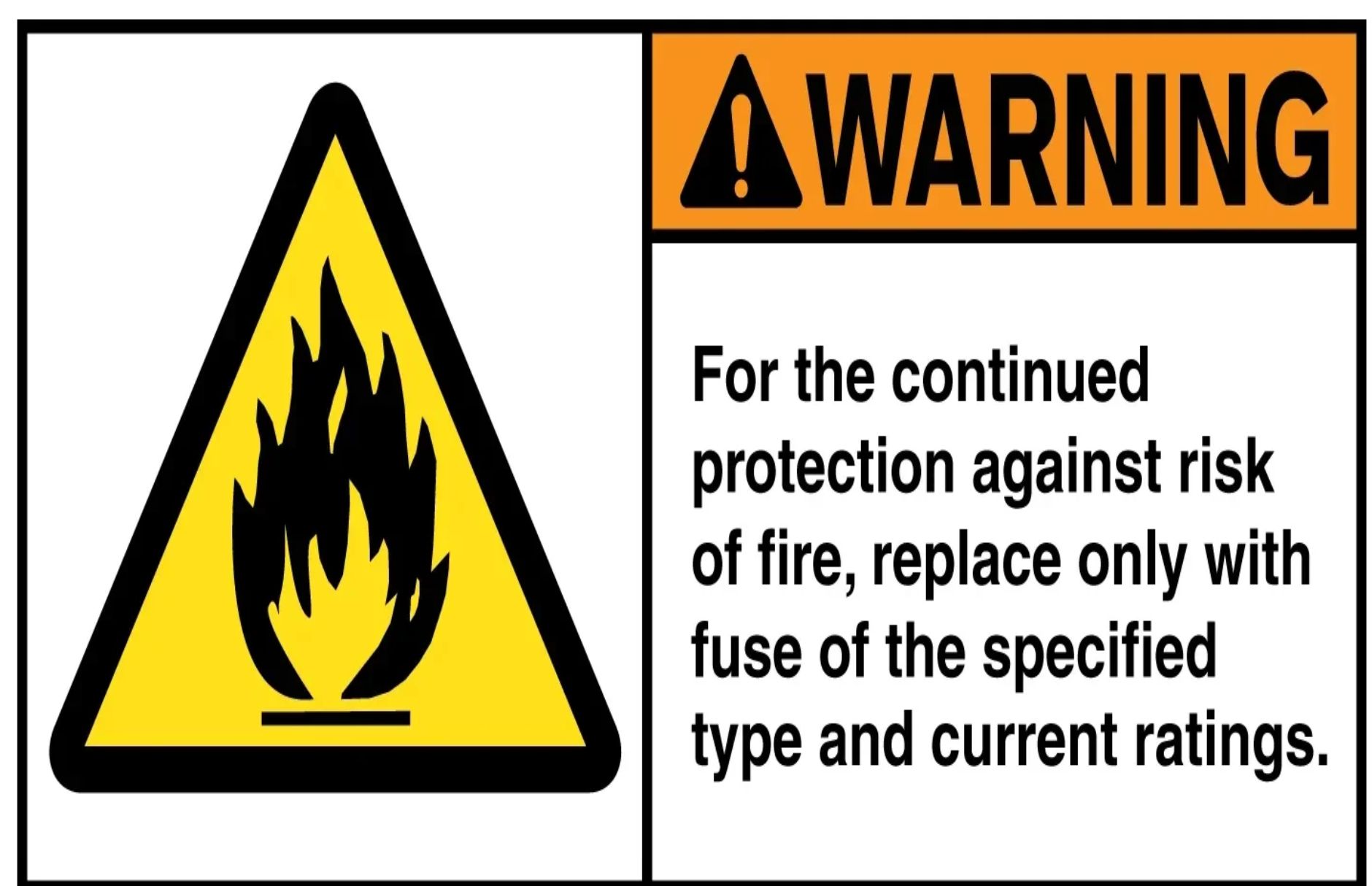
In the first thirty seconds, responders are not reading paragraphs—they are scanning for a handful of anchors: the product name or common chemical identifier, the four-digit UN number, and the hazard symbol. If those three items remain legible after heat, solvent exposure, or a torn corner, the label has done its job. A faded border matters less than a missing UN 1993 or an unreadable flammable pictogram, because that single line can change foam selection or evacuation distance.
Durability shows up in small ways they learn to recognize. Ink that has soaked into a polyester substrate tends to survive where surface printing turns into a smeared gray film. Raised thermal transfer or laser-etched text still catches a flashlight beam through smoke, while laminated labels that have kept their corners flat are easier to read than curled, peeling stock that hides part of the warning under a shadow.
Placement also gets noticed. A responder wants the health and reactivity data near the main identifier, not printed in a fine band on the opposite side of the drum. Color blocks, NFPA diamonds, and GHS pictograms draw the eye before sentences do, so labels that group these elements into one uncluttered field tend to be read first when time is short and gloves are already slick with product.
The Difference Between Certified and Actually Compliant
A certificate often captures a moment in time rather than an ongoing condition. An auditor checks documents, reviews a sample of records, and signs off, but that does not mean the same discipline shows up on a rainy Tuesday when nobody is watching. Actually compliant operations treat the standard as a working habit, not as a framed document in the lobby.
The gap becomes visible when pressure arrives. A certified company may still take shortcuts under a deadline because the paper trail is separate from daily decisions. A genuinely compliant one has controls that survive stress: people know why a step matters, managers notice drift early, and records reflect what truly happened. Certification can be purchased or gamed; compliance has to be maintained through small, unglamorous choices.
Custom Artwork Without Losing Required Safety Markings
Blending custom graphics with mandatory safety labels often comes down to placement and contrast. Rather than treating the warning panel as an afterthought, we treat it as a fixed design constraint from the first sketch. The artwork is built around the safety zone, using negative space, border weight, and color breaks so the required markings stay legible even when the surrounding visual gets busy.
Material choice also plays a bigger role than most people expect. For anything exposed to handling, sunlight, or cleaning chemicals, the ink and substrate need to hold up at the same rate as the decorative elements. If the safety copy fades faster than the artwork, the product becomes non-compliant long before it looks worn. We test print samples with the same varnish, lamination, and adhesion process used in the final run to confirm the text remains sharp and scannable.
Finally, we keep a short internal checklist tied to the relevant labeling standards for the target market. Font size, symbol format, and minimum clear space are locked in before proofs go out. That way the custom design stays intact, but the critical markings do not get shrunk, recolored, or buried under texture just to make the layout feel cleaner.
Why the Best Manufacturers Ask About Installation Surfaces First
The moment a manufacturer asks about your installation surface before discussing product specs, you know they’ve moved past generic selling. It’s not a formality—it’s a filter. Drywall, concrete, tile, wood, or uneven plaster each change how a product sits, holds, and behaves over time. A maker who ignores this early is guessing, and guessing leads to callbacks, stripped anchors, or a clean install that degrades within months.
Surface questions also expose whether the design team understands real jobsite friction. A bracket that performs beautifully on a test bench can fail on a hollow-core door if nobody asked what’s behind the paint. The best manufacturers don’t wait for the installer to volunteer this; they pull it out of you with two or three targeted questions, then adjust hardware, adhesive, or mounting plate recommendations on the spot.
This habit separates engineers who build for a controlled lab from those who build for kitchens, garages, and rental units with mystery walls. When you hear that question up front, it’s a signal the company has already imagined your screw going into something other than a perfect 2x4. That mental rehearsal is what keeps a simple install from turning into a weekend project with extra trips to the hardware store.
A Short Run Should Still Meet the Same Fire Rating
A short length of conduit, duct, or cable tray is often assumed to carry less risk because the exposed distance seems too small to matter. Fire does not work that way. A flame can move along a compact section, reach a penetration or joint, and transfer heat through the barrier before anyone has time to react. The rating cannot be relaxed just because the run is short.
When a short segment carries a lower classification, it becomes the one weak point in an otherwise rated assembly. Smoke and hot gases only need a small opening or a brief loss of integrity to pass into an adjacent area. Keeping the same fire rating on short runs removes that vulnerability and ensures the barrier performs as intended across its full length.
FAQ
They rarely start with the final label. They look at raw material handling, adhesive storage conditions, and whether the company keeps a clean chain between material batches and finished rolls. A missing log there usually means the plant cannot prove consistent heat resistance.
The face can look perfect while the adhesive softens at 80°C and lets the label slide off a fire extinguisher. A serious manufacturer asks where the equipment will be installed, then tests the full label on the actual surface, not just on a steel panel in a lab.
Ask for accelerated aging data that matches the real exposure: UV, salt fog, cleaning chemicals, and temperature swings. Also request retained sample swatches from past production runs. If those samples are organized and traceable, that is a better sign than a glossy brochure.
They should be able to trace a finished label back through printing, lamination, adhesive coating, and raw film rolls. In practice, ask for one random batch number and see how long it takes them to produce the full history. If it takes days, the system exists only on paper.
Lab conditions are clean and controlled. Real fire equipment faces vibration, grease, condensation, and occasional impact. Labels fail when the edge seal is too thin or the top coating is not chemical-resistant. That is why field trials on actual equipment matter.
Ask whether they can adjust adhesive coat weight, change liner thickness, or run a small pilot batch before mass production. A distributor hesitates or says those changes come from an overseas factory. A manufacturer can usually give a clear yes or no within a day.
Usually yes, because in-house testing shortens the feedback loop. When a batch shows weak adhesion, they can stop it before shipping. If testing is outsourced, bad rolls may already be cut and delivered before anyone notices.
Conclusion
A fire safety label lives in an unglamorous spot, but the wrong choice can fail long before anyone hears an alarm. One of the least discussed failure points is the substrate: a label that looks fine on a steel panel may peel, shrink, or turn brittle on powder-coated surfaces, textured plastic, or equipment that runs warm. Manufacturers worth keeping tend to ask about the installation surface before they quote a price, because adhesive and face stock decisions matter as much as the printed warnings. There is also a wide gap between being certified and actually compliant. A certificate can hang on a wall while a label quietly becomes unreadable under UV or cleaning chemicals. Emergency responders notice the difference quickly. They look for sharp text, intact borders, and edges that have not lifted after routine maintenance. Those details tell them a facility treats safety markings as working equipment, not decoration.
Custom artwork creates another trap. A label can look polished yet lose its legal footing if a designer fades the flame symbol, shrinks the signal word, or buries required safety markings inside a brand panel. Strong manufacturers push back on that gently and keep the mandatory elements prominent. The same standard should apply to small orders. A short run does not justify a thinner face stock, a weaker adhesive, or a lower fire rating, because the label still has the same job in the same environment. What separates the best suppliers is not just paperwork. It is the habit of checking how a material behaves under heat, cleaning agents, and repeated handling, then telling you when your preferred design will not survive. Those are the traits that keep a label readable when it matters.
Contact Us
Contact Person: Yara
Email: [email protected]
Tel/WhatsApp: +86 13505426090
Website: https://www.qdxspack.com/