

China Activated Carbon: The Ultimate Guide to Sourcing High-Quality Carbon for Water and Air Purification
2026-08-14
Not all activated carbon is created equal, and that difference matters when you're filtering water or air. China produces most of the world's supply, but sourcing genuinely high-quality carbon means cutting through a maze of inconsistent specs and vague claims. That's where Tundrr comes in—this guide gives you a clear, practical framework to evaluate and secure the right carbon for your purification needs.
Why Chinese Activated Carbon Dominates Global Water and Air Purification
The sheer scale of China's coconut shell and coal-based carbon production has created a supply chain unmatched anywhere else. Years of refining activation techniques, particularly with high-temperature rotary kilns and chemical treatments, yield pore structures that trap contaminants with surprising efficiency. This industrial maturity allows manufacturers to offer consistent quality at price points that competitors in other regions simply cannot match, making Chinese activated carbon the default choice for municipal water plants and air filtration systems worldwide.
Beyond cost advantages, the adaptability of Chinese producers stands out. They routinely customize iodine numbers, mesh sizes, and hardness levels to fit niche applications—from removing chloramines in drinking water to capturing volatile organic compounds in industrial exhaust. This willingness to engineer specific grades, combined with rapid logistics through major ports, gives buyers a level of flexibility that transforms a commodity into a tailored solution. As a result, engineers and procurement teams often bypass local alternatives, knowing they can source exactly what a project demands without long lead times.
Strict domestic environmental policies have also pushed Chinese manufacturers toward cleaner production methods, which paradoxically enhanced product purity. By investing in acid-washing lines and low-ash raw material selection, they now deliver activated carbon with fewer impurities that could leach back into treated water or air. This focus on cleaner output aligns with global regulatory trends, further cementing the country's role as the backbone of purification infrastructure on multiple continents.
Coal, Coconut Shell, or Wood? Matching Your Carbon Source to the Filter Job
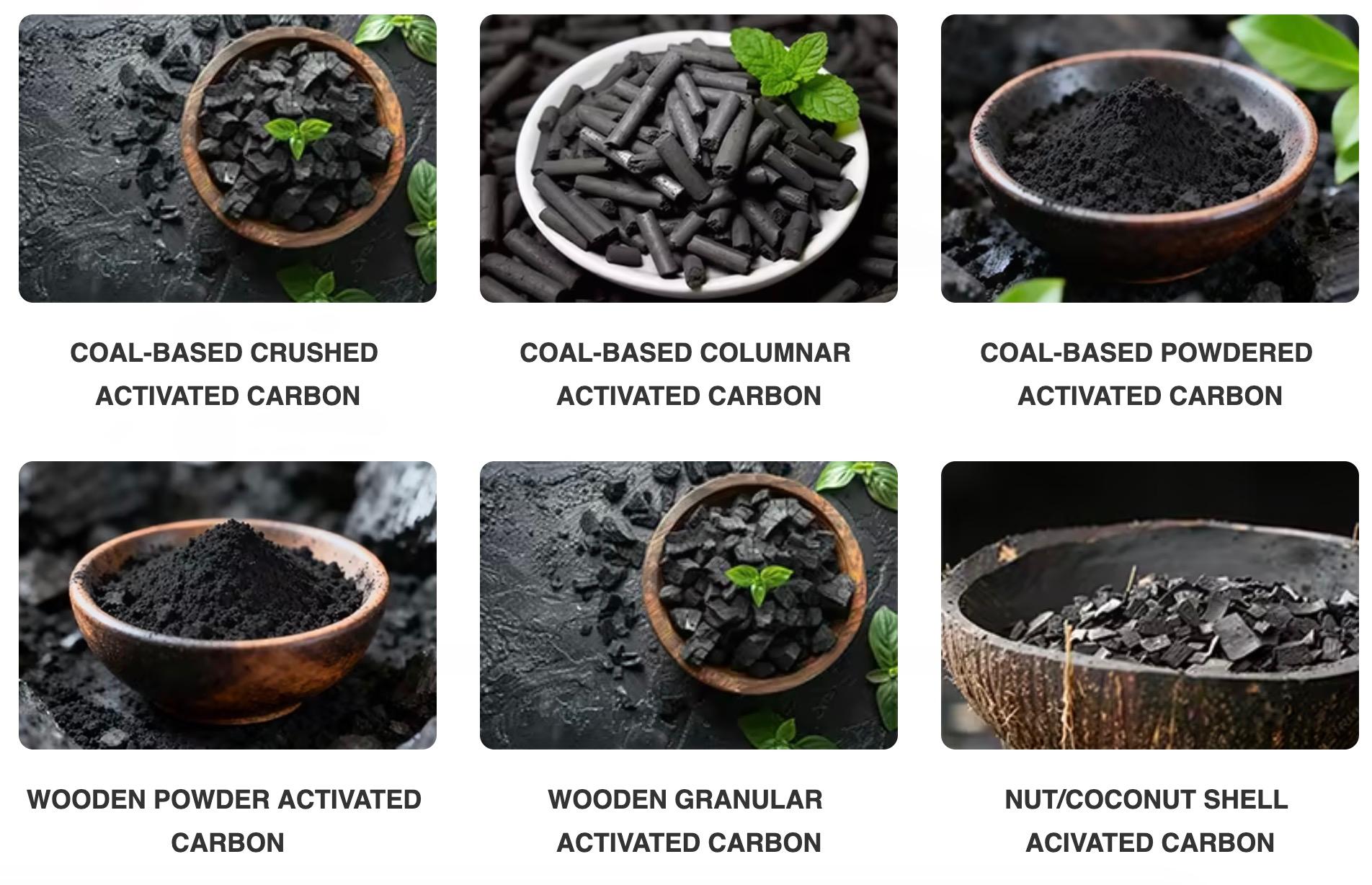
Not all activated carbon starts out the same way. The raw material behind your filter has a direct say in how it handles different contaminants. Coal-based carbon tends to offer a dense, hard structure with a broad range of pore sizes, which makes it a workhorse for municipal water treatment and heavy industrial off-gas control. Its strength and relatively low cost per pound keep it popular when you need to move a lot of air or water without replacing media constantly.
Coconut shell carbon, by contrast, comes from a renewable source and is prized for its high proportion of micropores. Those tiny pores excel at trapping smaller organic molecules—think volatile organic compounds, taste and odor compounds, and low levels of solvents. That's why you often see it in drinking water pitchers, point-of-use systems, and odor control for residential or commercial spaces. Wood-based carbon sits somewhere in between but leans toward larger mesopores and macropores, giving it an edge when decolorizing liquids or adsorbing larger molecules like humic acids or certain dyes.
Choosing the right base material means asking what exactly you're trying to remove and under what conditions. Coal handles high flow and tough mechanical stress. Coconut shell delivers precision for trace organics and clean water aesthetics. Wood provides fast kinetics for bigger molecules and color bodies. There's no universal winner—just the right match for the job in front of you.
A Practical Pre-Payment Checklist for Vetting Chinese Carbon Suppliers
Verifying a Chinese carbon supplier before sending money isn't just about ticking boxes—it's about spotting the cracks that glossy brochures and smooth sales calls tend to hide. Start with the paperwork that actually matters: a valid business license, export registration, and any industry-specific certifications like ISO 9001 or material test reports. Don't accept screenshots. Ask for scanned originals or verify the registration number directly through China's National Enterprise Credit Information Publicity System. A supplier who hesitates or gets defensive at this stage is already telling you something useful.
Next, look past the document checklist and into how the company actually operates day to day. Request a live video walkthrough of the production floor, not a pre-recorded tour. Pay attention to whether the equipment matches the claimed capacity, whether raw material storage looks organized, and whether workers are following basic safety protocols. Ask for three recent clients who have imported similar carbon products, then contact them with specific questions about shipment delays, hidden fees, and how the supplier handled a quality complaint. If the references all sound rehearsed or are conveniently unreachable, treat that as a red flag rather than a coincidence.
Finally, use a small trial order to test the supplier's real behavior under pressure. Specify exact tolerances, packaging requirements, and a firm shipping date in the proforma invoice. Then watch what happens when you request weekly progress photos or a pre-shipment inspection. A dependable supplier will send clear updates without being chased, while a risky one will suddenly go quiet or push for full payment upfront. This pre-payment phase isn't about finding a perfect vendor—it's about making sure the one you choose won't turn a good deal into an expensive lesson.
Iodine, Hardness, and Ash—Which Lab Values Actually Predict Performance
Iodine number gets the most attention because it roughly tracks the microporosity that drives adsorption of small, low-molecular-weight contaminants. A high iodine value usually means the carbon has plenty of tight pores in the 1–2 nm range, but that doesn't automatically translate into better field results. Once you move beyond solvents like iodine or small chlorinated compounds, the correlation weakens fast.
Hardness is a different animal. It says almost nothing about adsorption capacity; instead it predicts how well the carbon survives handling, backwashing, and pressure drops in a bed. Soft carbon can break down into fines that clog downstream equipment, while overly hard carbon sometimes sacrifices pore accessibility. Ash content only matters when inorganic impurities can leach into the process stream or interfere with catalytic reactions.
The lab value that actually predicts performance depends entirely on what you're trying to remove. For drinking water with low-level halocarbons, iodine number remains a useful screening tool. For decolorization, high-molecular-weight organics, or catalyst supports, pore size distribution, molasses number, and total ash become far more telling. Bench testing under real contact times and background chemistry still beats any single specification.
Negotiating with Chinese Carbon Suppliers Without Sacrificing Quality
Price pressure often leads buyers to push suppliers toward lower-grade materials or rushed production cycles. The real leverage in negotiation comes from understanding the supplier's cost drivers—raw material volatility, energy pricing, and local environmental compliance costs—rather than simply demanding a lower unit price. When you show that you recognize their operational constraints, the conversation shifts from a zero-sum haggle to a joint problem-solving session on how to maintain margins without cutting corners on carbon content, particle size distribution, or ash tolerance.
A practical approach is to lock in a transparent pricing formula tied to a publicly available index for calcined petroleum coke or needle coke, depending on your application. This removes the guesswork and prevents the supplier from padding quotes during market spikes. At the same time, insist on a documented quality agreement that specifies sampling frequency, test methods (such as ASTM or ISO standards), and the exact consequences for batches that fall outside the agreed spec. Rather than threatening to switch suppliers, propose a tiered rebate system: full payment for spec-compliant material, a small discount for minor deviations, and full replacement or credit for major non-conformities.
Finally, visit the production site or arrange a third-party audit before signing a long-term contract. Seeing the calcination furnaces, sieving lines, and quality lab with your own eyes tells you more than any certificate. A supplier that is willing to walk you through their raw material sourcing and show real-time production data is far more likely to treat quality as a non-negotiable baseline. When both sides agree that quality failures cost more than any price concession could save, the negotiation naturally moves toward a partnership that protects your process stability and their reputation.
Common Shipping and Storage Blunders That Undermine Carbon Performance
Pallet choice often flies under the radar, yet it quietly shapes the carbon footprint of every shipment. Wooden pallets, for instance, absorb moisture during long-haul transit, adding weight that forces trucks to burn more fuel. Worse, many facilities treat them as disposable, sending them to landfills after a single use instead of repairing or recycling. This waste isn't just an operational headache—it directly inflates emissions per mile, even when the product itself is lightweight.
Temperature swings during storage create another silent drain. Corrugated boxes left in uninsulated warehouses can lose structural integrity, leading to product damage and subsequent re-shipments. Each re-shipment doubles the transportation emissions for that order, erasing any gains made by choosing a more efficient carrier. Similarly, overcrowded storage areas force forklifts to take longer routes or idle while waiting for access, turning every retrieval into a slow-burning carbon leak.
There's also the habit of over-wrapping pallets with multiple layers of plastic film. While it feels like cheap insurance, the excess film rarely gets recycled and adds non-biodegradable bulk to the load. Over time, this single habit can negate the carbon savings from switching to regional suppliers. The fix isn't complicated—right-sizing packaging and auditing storage layouts—but it requires moving past the "we've always done it this way" mindset that keeps these blunders alive.
FAQ
Chinese manufacturers often use coconut shell, coal, and wood as base materials, and the sheer scale of production has pushed many factories to refine their activation processes. Coconut shell carbon from regions like Hainan or Southeast Asia processed in China tends to have high microporosity, which works well for adsorbing small molecules like chlorine and volatile organic compounds. Coal-based grades, on the other hand, offer a balanced pore structure that handles both water contaminants and heavier air pollutants.
Request a pre-shipment sample and have it tested by an independent lab. Focus on iodine number, molasses number, ash content, moisture, and hardness. Compare those results against the spec sheet the supplier provided. Also ask for a batch-specific certificate of analysis that matches the exact production run, not a generic PDF reused for every client.
For chlorine, granular activated carbon made from coconut shell or bituminous coal with an iodine number above 900 mg/g usually performs well. For VOCs, you want a carbon with a high surface area and a good mix of micropores and mesopores, so coal-based or wood-based chemically activated carbon often gives faster adsorption kinetics than coconut shell alone.
It is possible, but rarely ideal. Water treatment typically benefits from a harder carbon that resists attrition during backwashing, while air filtration often needs a lower density material with fast adsorption for gas-phase contaminants. Some impregnated carbons are formulated specifically for air streams containing hydrogen sulfide or ammonia, and they would not be the best choice for drinking water.
Ask whether the iodine number is tested according to ASTM D4607 or a local GB standard, because the values are not always directly comparable. For hardness, confirm the testing method, usually ASTM D3802 for granular carbon. Also clarify if the hardness number refers to the as-received product or after a specific washing step, since that can change the result significantly.
One frequent mistake is chasing the lowest price without checking the actual adsorption capacity per dollar. A cheaper carbon with an iodine number of 600 may require twice the volume to do the same job as a carbon rated at 1000. Another issue is ignoring packaging and moisture pickup during sea freight. Ask for vacuum-sealed or moisture-barrier bags if the carbon will sit in a humid port for weeks.
The raw material sets the baseline pore structure. Coconut shell naturally creates tight micropores, which are great for small organic molecules. Coal can be activated to develop a broader range of pore sizes, making it versatile for municipal water and industrial air. Wood-based carbon often has more mesopores and lower density, which helps with decolorization and large-molecule adsorption but may not be as durable in high-pressure water systems.
For drinking water applications, ask for NSF/ANSI 61 or an equivalent certification recognized in your target market. For food contact or pharmaceutical use, request documentation like FDA 21 CFR compliance or relevant ISO 9001 and ISO 14001 certificates. Beyond certificates, request a third-party lab report covering iodine number, ash, moisture, and particle size distribution from a reputable agency such as SGS or Bureau Veritas.
Conclusion
Chinese activated carbon earns its place in water and air treatment not by accident but through decades of refining production around abundant coal, coconut shell, and wood feedstocks. The real skill is matching the carbon source to the job: coconut shell for tight micropores and high hardness in drinking water, coal for broad-spectrum odor and chemical scrubbing in large municipal systems, wood for decolorization where larger pores help. A vetting checklist before payment separates dependable mills from marketing noise: request batch-level iodine, hardness, and ash data, confirm the carbon was not stored near volatile chemicals, and ask about post-activation washing. Iodine number tracks available surface area for small molecules, hardness predicts fines generation, and ash hints at purity—none alone tells the whole story, but together they reveal whether a supplier controls its process or merely resells.
Negotiation with Chinese suppliers should focus on consistency rather than just price. Ask for a locked specification range across three consecutive shipments, not a single lab sheet, and tie final payment to third-party testing at the port. Small concessions on packaging—such as moisture-proof woven bags with inner liners—often prevent bigger losses from humidity during ocean transit. Common blunders include leaving pallets exposed to rain at the destination warehouse, stacking carbon bags against container walls where condensation collects, and ignoring off-gassing during the first hours after opening. Proper storage in a dry, ventilated area and immediate resealing of partial bags keeps adsorption capacity intact. Ultimately, high-quality sourcing is less about finding the cheapest quote and more about matching material, verified lab values, and handling discipline to the purification task.
Contact Us
Contact Person: Ellen Zhang
Email: [email protected]
Tel/WhatsApp: +86(21) 2287 6756
Website: https://www.tundrr.com/en/