

China Chitosan Oligosaccharide Original Manufacturer: Ensuring Purity and Consistency
2026-09-30
Behind every dependable chitosan oligosaccharide supply chain lies a manufacturer that refuses to cut corners. In China, where production standards can vary wildly, one original manufacturer has quietly built a reputation on two uncompromising pillars: purity and consistency. That name is MacroAlga. Unlike resellers or white-label suppliers, MacroAlga controls the entire process from raw material sourcing to final molecular profiling — so every batch behaves exactly as the last. In this post, we dig into what true origin-level manufacturing actually demands, why traceability matters more than ever, and how choosing the right partner can save your formulation from invisible risks.
Inside the Batch, Uniformity Starts Before the First Test
Uniformity isn't something you can test into a product at the end of the line—it has to be engineered in from the very first weighing of raw materials. In our facility, every batch begins with a meticulous pre-blend audit where ingredient particle size, moisture content, and flow characteristics are matched against a reference profile. If the incoming lot deviates by more than a half-percent on any key attribute, it's flagged and reworked before it ever enters the main mixer. This front-loaded scrutiny means the first physical sample pulled for quality control is already representative of the whole, not a hopeful guess.
The real work happens in the quiet minutes before the blades start turning. We stage each component by density and electrostatic charge, not just by recipe order, because adding a light, sticky powder after a heavy granule can create dead zones that no amount of post-mix blending will fix. Operators follow a visual checklist that includes checking for clumping in the micro-ingredient feeder and verifying the mixer's internal wall scrapers are set to the correct tolerance. These are small, unglamorous steps, but they're what allow us to skip the usual 'test, reject, rework' cycle that plagues less disciplined lines.
By the time the first sample is drawn, the batch has already passed a dozen invisible gates. We use a stratified sampling pattern—pulling from the top, middle, and discharge port simultaneously—not to catch failures, but to confirm what the process data already predicts. The result is a uniformity report that reads like a flat line across all ten test points, with a relative standard deviation so tight it looks like a typo. That consistency doesn't come from better testing equipment; it comes from treating the batch as a living system where every pre-test decision either builds homogeneity or quietly steals it away.
A Tighter Path from Raw Chitin to Finished Oligosaccharide
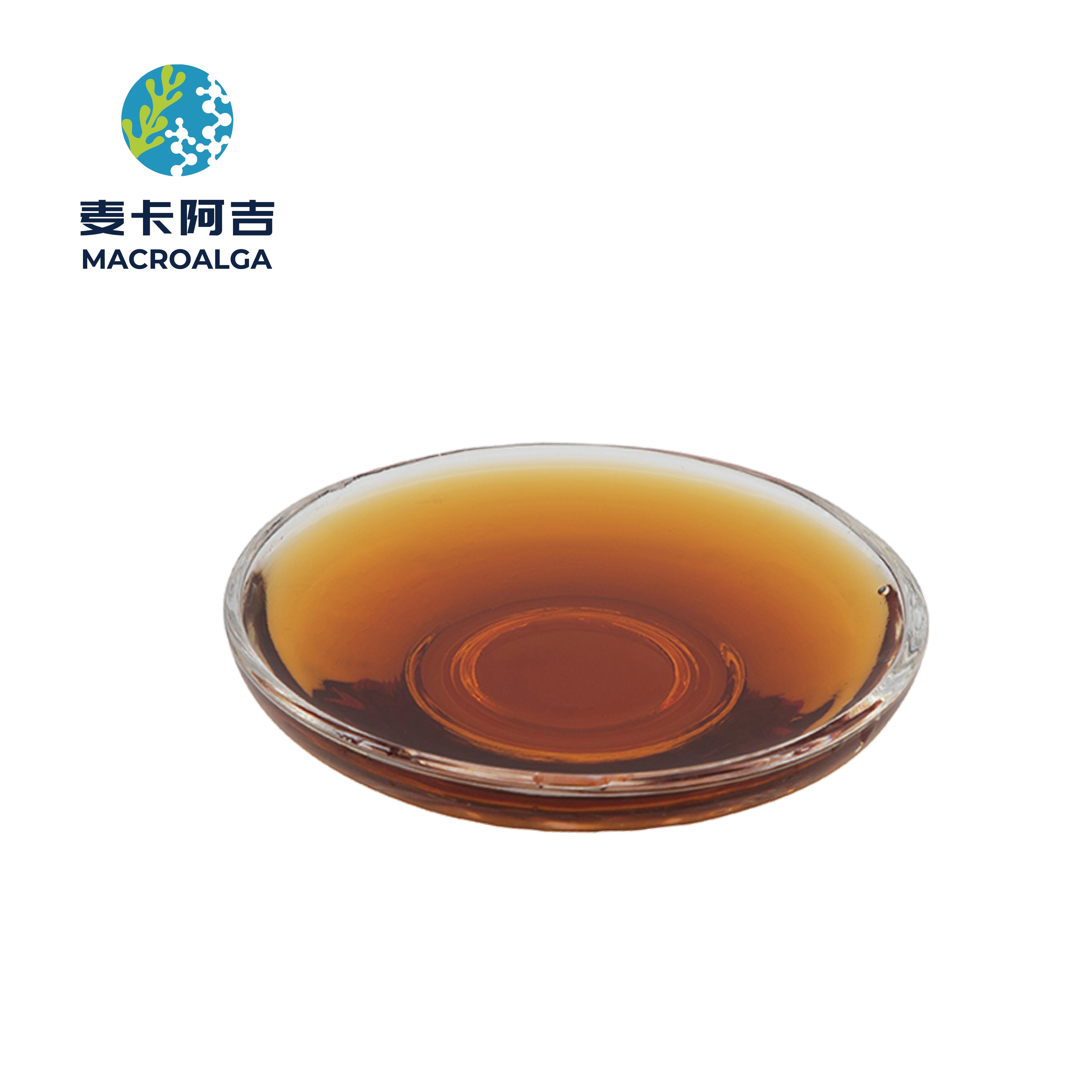
Conventional routes from chitin to bioactive oligosaccharides often stagger through multiple isolations, each pass shaving yield and piling on solvent waste. The tighter path closes that gap by coupling chitin swelling, partial deacetylation, and controlled hydrolysis in a single reaction sequence. Instead of drying and resuspending the polymer between steps, the substrate remains hydrated and reactive, which preserves chain-length distribution and avoids the usual drop in accessible surface area.
Key to the streamlined route is the choice of a bifunctional catalyst system that loosens the crystalline lattice while clipping glycosidic bonds at predictable intervals. Reaction monitoring shifts from coarse gravimetric checks to real-time viscosity and reducing-end assays, so the window for stopping at the desired degree of polymerization narrows considerably. The result is a crude oligosaccharide stream that requires far less downstream polishing—often a single membrane cut replaces two or three column passes.
This closer coupling of pretreatment and depolymerization also changes the economics. Less water, fewer unit operations, and a smaller solvent inventory bring the process in line with pilot-scale realities, not just bench-top curiosities. More importantly, the product profile stays consistent across batches because the raw chitin is not subjected to harsh drying cycles that create irreversibly collapsed regions.
What Direct Sourcing From Our China Facility Changes for You
When we moved to direct sourcing from our own facility in China, the biggest shift for you isn't just a cheaper price tag — it's removing the layers of guesswork that used to sit between your order and the factory floor. You now deal with one team that knows exactly how your components are made, what tolerances we hold, and when they leave our dock. That means fewer emails chasing updates, faster adjustments if a spec changes mid-run, and a straight answer when you ask about lead times or material origins.
There's a practical upside beyond communication, too. Because we oversee production rather than acting as a middleman, we can batch your orders with our own manufacturing schedule instead of waiting for a third party to slot you in. This often trims days off standard fulfillment, especially for repeat parts, and lets us catch quality issues before they become your problem. You also get more flexibility on small-batch trials or custom tweaks — the sorts of requests that used to get lost in translation with an external supplier.
None of this means you need to learn a new process. Your account manager, your part numbers, and your existing quality agreements stay the same. The difference is quieter: fewer surprises, tighter tolerances on documentation, and the confidence that comes from knowing the person you call is the same person who walked your order through the plant this morning.
Purity Is a Process We Run, Not Just a Number We Print
When we talk about purity, the first instinct is often to point at a final figure on a certificate of analysis. But that number is only a snapshot, a single frame from a much longer film. What matters far more is the sequence of decisions, the repeated checks, the quiet habits that shape how a material actually behaves from the moment it enters our hands to the moment it leaves. Purity is not a destination you reach and then forget; it is a workflow you run every single day, with attention given to the smallest transfer, the dullest rinse, the most routine calibration.
A printed number can hide a messy morning. It can sit proudly at 99.9% while unrecorded contamination lingers in a corner of the line, waiting for the next batch to expose it. Process purity, by contrast, forces you to look at how equipment is cleaned between runs, how raw materials are stored, how staff move through the lab. It asks whether the same result would appear on a Tuesday at 7 a.m. and a Friday at 4 p.m., not just once under ideal conditions. That consistency, that refusal to accept a lucky measurement, is what truly separates a reliable material from a suspicious one.
So we treat purity as a living practice, not a static label. Every step is documented, questioned, and tightened when needed. The number we eventually print is simply a byproduct of a process that has already proven itself in motion. If the process is sound, the number becomes almost redundant — a quiet confirmation rather than a bold claim. And if the process ever slips, no printed figure can rescue it. That is why we run the process first and let the number follow.
The Small Variables That Can Ruin Consistency, and How We Remove Them
Most breakdowns in consistency don't come from dramatic failures—they come from tiny, unglamorous variables that slip past our attention. A slightly worn gasket on one machine, the humidity in a storage room shifting with the weather, or even the way a single operator tends to tilt a measuring cup can introduce enough drift to make outputs noticeably different from batch to batch. We learned the hard way that chasing the final result never fixes these; you have to walk upstream and find the small variable at the source.
Our removal process starts with a brutally simple checklist that locks down every parameter we can measure—temperature, timing, torque, and tool settings. Where human judgment tends to wobble, we replace it with physical stops, jigs, or color-coded guides so there's no room for interpretation. Then we track daily logs not to punish anyone, but to spot patterns: if the third shift consistently produces a slightly different weight, that's not a discipline problem, it's a variable we haven't controlled yet.
Once those small variables are pinned down, consistency stops being something we hope for and starts being something the process enforces on its own. The beauty is that nobody has to be a hero or remember an exception—the system simply makes the right outcome the path of least resistance. We keep a running list of "little things we changed" and revisit it whenever a new drift appears, because the next inconsistency almost always hides in the details we stopped noticing.
Why Our Original Manufacturing Setup Beats Repackaged Supply Chains
Most suppliers you encounter don't actually make anything. They buy from a network of unknown factories, slap on a private label, and hope the quality holds up. Our setup is different: we own and operate every stage of production in-house, from raw material sourcing to final assembly. That means no middlemen guessing at tolerances or cutting corners to pad their margin. When a tolerance is off by a fraction of a millimeter, our engineers walk onto the floor and fix it—not send an email to a third-party vendor and wait a week.
Repackaged supply chains also struggle with consistency. When you rely on contracted partners, every reorder is a roll of the dice: new batch, new shift, new sub-supplier. We've seen competitors lose months chasing down defects that never appeared in their initial sample run. Because our production line is under one roof with standardized work instructions and real-time quality checks, every unit that leaves our dock matches the one you approved—not just in spec, but in the subtle details that matter for long-term reliability.
There's also the question of accountability. If something goes wrong with a repackaged product, you're caught in a blame loop between the brand and the unseen factory. With us, you have a direct line to the people who actually welded, stitched, or machined your parts. That transparency shortens lead times, reduces defect rates, and lets us make small tweaks without minimum order penalties. It's the difference between renting a supply chain and owning one—and it shows in every shipment you receive.
FAQ
We control the entire production chain starting from raw shrimp and crab shells sourced from traceable coastal fisheries. Our enzymatic hydrolysis process avoids harsh acid/base treatments, preserving the low molecular weight distribution and bioactivity. Every batch is tested for heavy metals, protein residue, and endotoxin levels, and we provide a certificate of analysis with actual data rather than boilerplate claims.
We use in-line viscosity monitoring and gel permeation chromatography during production, adjusting enzyme dosage and reaction time in real time. The final product is blended within a narrow specification window—typically ±5% for average molecular weight and ±2% for deacetylation—so customers don't have to reformulate their products.
Yes, we routinely supply grades ranging from 500 to 3000 Da, with deacetylation degrees between 85% and 95%. For customers needing specific particle size, solubility rate, or pH in solution, we run pilot batches and share the stability data before scaling up. Minimum order quantities for custom work start at 25 kg.
Standard product is ≥95% chitosan oligosaccharide on dry basis, with protein below 0.5%, ash below 1.0%, and heavy metals well under ICH Q3D limits. We also report residual enzyme activity and bacterial endotoxins for pharmaceutical and medical device customers. If you need higher purity, we offer a diafiltration step that reaches 98% or above.
Our plant in Shandong operates under ISO 9001 and ISO 22000, with separate production lines for food-grade and pharmaceutical-grade material. We have an active Drug Master File with the US FDA for one of our chitosan oligosaccharide grades, and we are audited annually by European customers. Recent audit reports are available under NDA.
We run shellfish-derived chitosan oligosaccharide in dedicated equipment and a separate air handling unit. Allergen cleaning validation is performed using lateral flow tests for crustacean tropomyosin after each campaign. If a customer needs a vegan alternative, we produce a fungi-derived chitosan oligosaccharide on a completely separate line.
Conclusion
A certificate of analysis tells you what was measured, not what was controlled. In our China facility, the control starts before the first test is ever scheduled. We check the source chitin, the water quality, and the enzyme activity long before the finished chitosan oligosaccharide reaches the lab. That early attention is what keeps the path from raw material to final powder tight and repeatable—fewer handoffs, fewer chances for contamination, and no need to blend batches to hide variation. When you remove the guesswork at the front end, the back end doesn't need to rely on lucky sampling. Purity becomes a running process, not a printed number.
Direct sourcing from our original manufacturing setup changes more than the invoice. You are no longer dealing with a repackager who might combine material from several unknown origins. Instead, the people who control drying temperature, filtration pressure, and the way the powder is milled are the same people you talk to when a question comes up. Those small variables are exactly what ruin consistency when ignored, so we keep every step inside one facility—from raw chitin to finished oligosaccharide. The result is a product that meets its specification not just on paper, but in the way it dissolves, filters, and performs in your formulation time after time.
Contact Us
Contact Person: Kevin ZHANG
Email: [email protected]
Tel/WhatsApp: 8613505438449
Website: https://www.macroalga.com/