

China Flour Processing Machinery: Modern Trends and Global Impact
2026-07-25
The humble grain of wheat has traveled a long road from ancient stone mills to today’s high-tech flour processing lines. Now, China’s engineering prowess is reshaping this global industry with smarter, more efficient machines that also leave a lighter environmental footprint. At the forefront of this transformation is PINGLE, a brand that embodies the shift toward precision, sustainability, and sheer scale. In this post, we’ll unpack the modern trends driving Chinese flour machinery and how they’re rippling through bakeries, food manufacturers, and economies worldwide—often in ways you might not expect.
How China’s Flour Milling Tech Is Rewriting Global Supply Chains
China's flour milling sector has undergone a quiet revolution, one that's reshaping how wheat moves from field to table across continents. By pairing advanced automation with data-driven processing, mills in Shandong and Henan now produce flour with consistent gluten strength and ash content that meets the exacting demands of Asian bakeries and noodle plants. This precision wasn't possible a decade ago, and it's turning Chinese mills into indispensable links for global food manufacturers who once relied solely on local suppliers.
The ripple effects are hitting traditional supply chains hard. African millers, for instance, are increasingly blending Chinese high-gluten flour with domestically milled wheat to create affordable, high-volume bread loaves — a trend that's shifted import patterns away from European and North American wheat. Meanwhile, in Southeast Asia, instant noodle giants now schedule shipments from Tianjin with the same confidence they'd once reserve for Australian or Canadian grain shipments. The technology's knack for standardizing quality across huge batches lets Chinese exporters promise uniformity that buyers in price-sensitive markets find hard to resist.
What makes this shift truly disruptive is how Chinese equipment manufacturers are packaging the technology for export. Instead of selling whole mills, they offer modular, cloud-connected milling units that can be dropped into existing facilities from Jakarta to Cairo. These systems come pre-loaded with milling profiles for dozens of wheat varieties, and they self-adjust in real time based on humidity and grain hardness. For developing countries, it's a shortcut to industrial-grade output without the years of trial and error. The result is a new kind of distributed milling network that traces its digital backbone back to R&D labs in China, redrawing the map of who produces the world's flour, and where.
Smart Mills and Automation: The Quiet Efficiency Wave
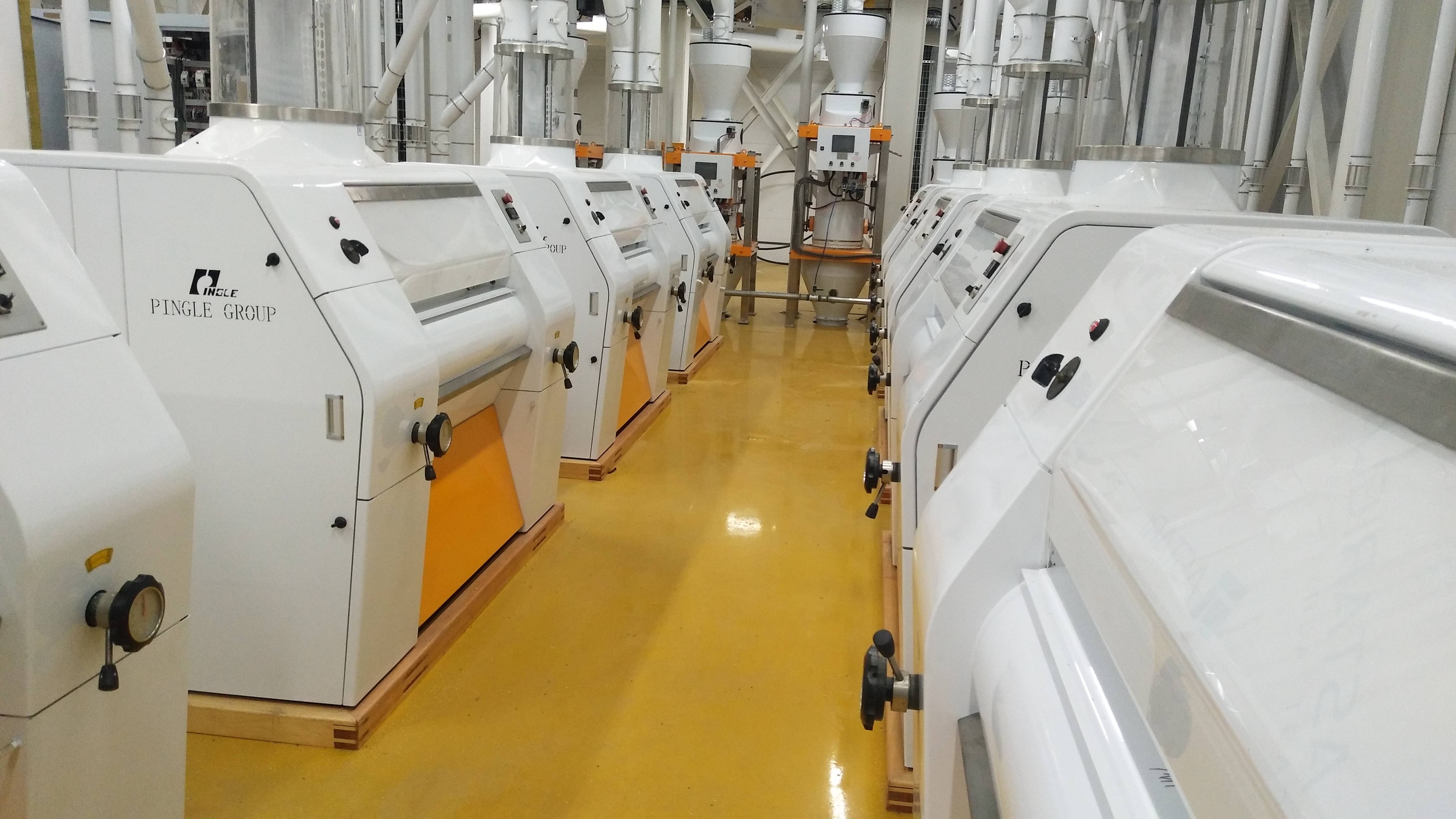
In the heart of modern manufacturing, smart mills are reshaping how we think about production—not with loud proclamations, but through a steady, almost invisible shift toward self-regulating systems. These facilities integrate sensors, data analytics, and machine learning to monitor every stage of the milling process, from raw material intake to final packaging. The result is a seamless flow where adjustments happen in real time, often without human intervention. Operators no longer react to problems after they occur; instead, predictive algorithms flag potential bottlenecks before they disrupt output, trimming downtime to near zero. It's a subtle transformation, yet its impact on bottom lines is anything but small.
What makes this wave particularly compelling is how it automates the mundane without displacing the human element. In a typical smart mill, repetitive tasks like temperature control, feed rate adjustments, and quality checks are handled by interconnected machinery that learns and adapts. Staff members pivot from monitoring dials to interpreting insights, fine-tuning algorithms, and tackling complex anomalies that still require a seasoned eye. This blend turns the factory floor into a collaborative ecosystem where automation handles the predictable, leaving people to focus on innovation and exception management. The quietness lies in the lack of fanfare; the efficiency wave doesn't announce itself—it simply delivers, day after day, by squeezing out waste in energy, materials, and time.
Beyond the shop floor, the ripple effects are redefining entire supply chains. Smart mills with embedded automation can sync with downstream logistics, adjusting production schedules based on real-time demand signals from distributors or even end consumers. This connectivity reduces overproduction and inventory bloat, cutting costs in ways that don't make headlines but steadily improve margins. In regions where labor shortages bite, these systems offer a path to maintain output without stretching teams thin. The wave isn't about replacing workers; it's about giving them leverage—turning a traditional mill into a responsive, lean operation that thrives amid volatility. And while the tech may be complex, the story is simple: the next era of industrial progress whispers, it doesn't shout.
Energy-Saving Breakthroughs Most Industry Reports Miss
While most analyses focus on incremental insulation gains or LED adoption, a handful of transformative approaches remain under the radar. Technologies like ultrasonic drying for textiles slash thermal energy use by up to 70% compared to conventional evaporative methods, yet they rarely headline sustainability roundups. Similarly, advanced heat pump systems that recover waste heat from industrial processes can achieve coefficients of performance above 5.0 in real-world conditions, but the data often gets buried in academic papers rather than commercial guides.
Another overlooked frontier is demand-side management through artificial intelligence that optimizes energy loads without sacrificing output. Instead of simple scheduling, these platforms learn from production rhythms and electricity pricing signals to shift heavy operations to off-peak hours automatically. Early adopters in discrete manufacturing have reported double-digit energy cost savings—not just through efficiency, but by avoiding peak demand charges that can account for 30% or more of a facility's electricity bill. The convergence of real-time metering, edge computing, and predictive algorithms makes this possible today, not years from now.
Beyond technology, behavioral design principles are quietly reshaping how organizations approach conservation. Evidence from behavioral economics shows that providing teams with peer comparison feedback can reduce energy consumption by 5–15% without capital investment. When combined with subtle nudges—like defaulting equipment to eco-mode during idle periods—the aggregate savings rival expensive retrofits. These breakthroughs are not capital-intensive; they require a shift in perspective that most reports gloss over in favor of gadget-heavy narratives.
Why International Buyers Are Switching to Chinese Machinery
The shift toward Chinese machinery isn’t just about price anymore. Buyers around the world are discovering that Chinese manufacturers have made huge leaps in quality, precision, and innovation. What used to be a purely cost-driven decision has evolved into a strategic move: companies are gaining access to advanced technology, flexible customization, and faster delivery times—all while still enjoying significant savings compared to legacy European or American brands. It’s a value equation that’s hard to ignore in today’s competitive landscape.
Another major driver is the rapidly expanding support infrastructure. Chinese equipment makers have invested heavily in overseas service centers, multilingual technical teams, and responsive spare parts logistics. The old stereotype of “buy it and forget it” no longer holds. From installation and training to after-sales troubleshooting, the experience now rivals—and sometimes surpasses—what established Western firms offer. This holistic support gives buyers the confidence to integrate Chinese machinery into critical production lines without fearing extended downtime.
Lastly, many international buyers are drawn to the pace of innovation. Chinese companies frequently update their product lines with features like IoT connectivity, energy efficiency enhancements, and AI-driven automation—often ahead of Western counterparts stuck in elongated R&D cycles. The willingness to co-develop solutions for specific industries also creates a partnership model rather than a simple transaction. For businesses looking to stay agile and future-proof their operations, Chinese machinery increasingly represents the smart path forward.
The Overlooked Role of Customization in Export Success
When companies chase export growth, they often obsess over pricing, logistics, and quality certificates. Yet the real differentiator in competitive foreign markets is frequently something far less discussed: the willingness and ability to customize products for local tastes, habits, and regulations. This isn't about minor tweaks—it's about fundamentally rethinking how your offering fits into the daily lives of people on the other side of the world.
Consider something as simple as packaging size. A bulk-friendly economy pack that sells well domestically might flop in a market where small households or high humidity demand single-use portions or resealable containers. Similarly, color symbolism, button placement on machinery, or even the language used in error messages can make or break a product's appeal. In many cases, local distributors know these subtleties intimately, but exporters rarely tap into that knowledge systematically, instead pushing a one-size-fits-all SKU.
The businesses that succeed internationally treat customization not as a cost center, but as a strategic investment. They build flexible production lines, maintain open communication channels with local partners, and see every export order as a chance to learn rather than just ship. In an era where global competition is furious, the overlooked art of making customers feel that a product was designed with them in mind isn't just nice to have—it's the silent engine of long-term loyalty.
Beyond Price: Quality Shifts Reshaping Market Perceptions
In an era of endless choices, consumers no longer reach for the cheapest option by default. There’s a quiet but forceful pivot happening—value is being redefined not by price tags, but by the integrity of materials, the thoughtfulness of design, and the consistency of the experience. When a product arrives with imperfect stitching or a service fails to deliver on its promise, the perception of its worth plummets, regardless of how low the cost. This shift has placed quality at the center of the decision-making process, transforming it from a secondary consideration into the primary lens through which brands are evaluated.
Markets are learning that trust cannot be built on discounts alone. A single disappointing interaction can undo years of brand loyalty, while a reliably excellent product fosters an emotional connection that price competition can’t touch. Businesses that prioritize premium materials, meticulous craftsmanship, and transparent practices are finding that customers willingly pay more—not out of obligation, but because they see those choices as reflections of their own values. The market, once fixated on bottom-line numbers, now rewards clarity and consistency, pushing companies to rethink their entire supply chain through the eyes of the end user.
FAQ
Intelligent automation and energy-efficient designs are dominating the landscape. Many Chinese manufacturers now integrate IoT sensors for real-time monitoring, reducing waste and optimizing milling performance. There's also a shift towards compact, modular machines that cater to small and medium-sized mills globally.
China has become a major supplier of affordable yet advanced equipment, enabling developing countries to modernize their food processing. The export of turnkey solutions—from cleaning to packaging—allows businesses in Africa and Southeast Asia to scale up without heavy investment, directly affecting food security in those regions.
Some firms are applying AI-driven quality control that adjusts roller gaps automatically based on grain moisture and hardness. Others are pioneering low-temperature grinding techniques that preserve nutrients, meeting the rising demand for healthier flour. These innovations reflect a move from cost-competition to value-added technology.
Surprisingly, yes. European and North American buyers are increasingly interested in Chinese equipment for specialty flours, such as ancient grains and gluten-free blends. Competitive pricing combined with customizable features is breaking the traditional dominance of Western brands, especially in niche segments.
Regulatory hurdles and quality perception remain issues. Some importers still associate Chinese machinery with low durability. To counter this, leading manufacturers are obtaining international certifications and setting up service centers overseas, but it's a slow process to change entrenched biases.
Energy recovery systems that reuse heat from motors, and dust control systems that exceed global standards, are becoming standard. Several companies now promote 'eco-mills' that cut electricity use by up to 30%, aided by government incentives aimed at greening the industrial sector.
Conclusion
China’s flour processing machinery sector is quietly reshaping global supply chains—not through headline-grabbing disruptions, but via a steady accumulation of smart automation, energy efficiency, and deep customization. Mills equipped with IoT sensors and real-time data analytics now adjust roller gaps and sifting rhythms without human intervention, slashing waste and raising consistency. Energy-saving breakthroughs, often overlooked in trade press, include advanced pneumatic systems that reclaim heat from exhaust air, cutting power consumption by double-digit percentages. This shift toward resource-aware engineering coincides with a broader trend: international buyers, from East African millers to Southeast Asian pasta makers, are increasingly moving away from legacy European equipment, drawn not just by upfront cost but by the reliability and rapid support Chinese manufacturers now provide.
What truly sets this evolution apart is the quiet pivot from price-based selling to quality-driven reputation building. Customization—once an afterthought—has become a core competitive lever, with factories co-designing lines for niche flours like teff or chickpea. In parallel, tighter process control and better steel alloys have elevated product life and output purity, slowly eroding old stereotypes of “cheap but shoddy.” The cumulative effect is a reimagining of China’s role: from a workshop of generic machines to a global partner that adapts technology to local grain realities, making modern milling accessible far beyond traditional industrial hubs.
Contact Us
Contact Person: Jiakuo Wu
Email: [email protected]
Tel/WhatsApp: +86-13011566087
Website: https://www.pinglemachine.com