

China Heterocyclic Intermediate: Essentials for Pharmaceutical Research and Development
2026-07-27
Heterocyclic intermediates are the unsung heroes of modern drug discovery, quietly shaping the efficacy of countless therapies. As pharmaceutical R&D races toward precision and innovation, China has emerged as a powerhouse in supplying these critical building blocks. Yet, navigating quality, scalability, and regulatory demands remains a persistent hurdle. This blog unpacks why heterocyclic intermediates are indispensable, how Chinese manufacturers like DSL Chemicals are redefining reliability, and what every drug developer should consider before choosing a synthesis partner. Ready to turn molecular complexity into clinical success? Let’s dive in.
Heterocyclic Cores: Unseen Architects of Tomorrow’s Drug Pipelines
The intricate scaffolds of tomorrow's medicines are being quietly shaped by heterocyclic cores, the ring structures that form the beating heart of countless pharmacologically active molecules. From the very beginning of drug design, chemists have harnessed the unique electronic and steric properties of these systems, embedding nitrogen, oxygen, and sulfur atoms into cyclic frameworks to craft agents capable of precise biological interactions. It is not hyperbole to state that without these molecular keystones, entire classes of life-saving therapies—antivirals, kinase inhibitors, and psychiatric medications among them—would remain conceptual sketches rather than clinical realities.
The real magic lies in the subtle yet profound influence of ring topology on a compound's behavior in living systems. A single atom substitution within a heterocycle can shift solubility, tweak metabolic stability, or unlock a new binding pocket, turning a mediocre lead into a blockbuster candidate. Modern medicinal chemistry has moved far beyond simple pyridines or piperazines, now exploring exotic bicyclic and spirocyclic motifs that were once considered purely academic curiosities. These structures are not merely scaffolds but pre-organized architectures that can present functional groups in rigid, predictable orientations—a feature that dramatically accelerates the rational design of selective compounds with fewer off-target effects.
Looking ahead, the pipeline of innovative therapies owes much of its promise to underexplored heterocyclic space. As fragment-based screening and DNA-encoded libraries continue to mature, the discovery of novel cores that violate classical drug-likeness rules is accelerating, opening doors to once “undruggable” targets. The unseen architects of drug pipelines are evolving in complexity and sophistication, promising a future where heterocyclic cores are tailored not just for potency, but for optimal tissue distribution, controllable clearance, and even stimuli-responsive activation—truly intelligent molecules waiting in the wings.
Why China’s Expertise Fuels Breakthroughs in Medicinal Chemistry
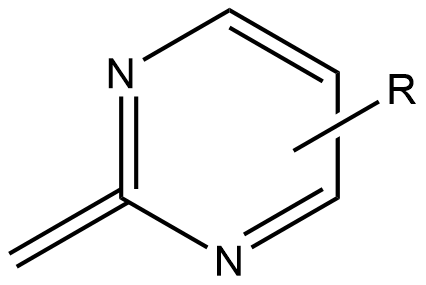
China's rise as a powerhouse in medicinal chemistry is deeply rooted in its unique synthesis of ancient wisdom and modern science. Traditional Chinese Medicine (TCM), with its vast library of natural compounds refined over millennia, provides an unparalleled starting point for novel drug discovery. Researchers harness advanced techniques like high-throughput screening and AI-driven molecular modeling to unlock the therapeutic potential of these natural products, often uncovering mechanisms that Western pharmacology has yet to explore. This blend of historical knowledge and cutting-edge technology creates a fertile ground for identifying lead compounds that might otherwise remain hidden, giving Chinese labs a distinct edge in the race to develop next-generation therapies.
Another driver is the sheer scale and collaborative spirit of China's research infrastructure. Massive government investment has built state-of-the-art facilities and attracted top talent, both from within the country and returning diaspora scientists. The dense network of universities, research institutes, and biotech clusters in regions like the Yangtze River Delta fosters a hyper-competitive yet cooperative environment. Here, chemists, biologists, and data scientists work side by side, iterating rapidly on synthetic pathways and biological assays. This ecosystem slashes the time from hit identification to candidate optimization, turning out patentable molecules at an impressive pace. It's a model where the cross-pollination of ideas is not just encouraged but structurally embedded, pushing the boundaries of what's chemically feasible.
Perhaps the most transformative factor is China's willingness to embrace unconventional approaches. While much of the global industry focuses on well-trodden target classes, Chinese medicinal chemists have shown remarkable agility in tackling difficult-to-drug targets and exploring underexplored chemical space. The proactive adoption of modalities like PROTACs, covalent inhibitors, and macrocyclic peptides, often ahead of Western counterparts, has led to a surge of innovative candidates entering clinical trials. Coupled with a regulatory environment that increasingly supports first-in-class innovation, this boldness translates laboratory breakthroughs into real-world impact. It's a dynamic landscape where expertise isn't just applied—it's constantly redefined, making China a crucible for the next wave of medicinal chemistry discoveries.
Decoding Intermediate Complexity: From Bench Ideas to Scalable Reality
Taking a raw concept from the lab bench and nurturing it into a fully scalable system is a journey laden with hidden friction points. The gap between a successful proof-of-concept and a production-ready solution doesn't just widen due to technical challenges; it expands because the context shifts dramatically. In the lab, conditions are controlled, the data is curated, and the edge cases are often ignored in favor of demonstrating core functionality. Yet, when that same idea encounters messy, unpredictable real-world environments—variable inputs, latency constraints, cost ceilings, and users who don't follow scripts—the fragile logic that worked in isolation begins to crack. The real art lies not in solving a problem once, but in architecting solutions that thrive amid the chaos of scale.
What often goes unspoken is the cultural and organizational transformation required to move from bench to production. A small team of researchers can iterate quickly, making tacit assumptions and manually tweaking parameters. Scaling that process demands systematic thinking: versioned data pipelines, observable metrics, and failure modes that are understood rather than feared. It's about embracing a different kind of complexity—one where the software must be robust enough to handle millions of requests while still being flexible enough to incorporate new insights. This shift calls for a change in mindset, from asking "Does it work?" to asking "Does it keep working when everything else breaks?" The most successful transitions happen when teams stop treating deployment as an afterthought and start designing for scale from the very first prototype.
Ultimately, decoding intermediate complexity means recognizing that scalability isn't an end-state; it's a continuous design philosophy. It's the deliberate layering of abstractions, the careful trade-offs between speed and reliability, and the humility to accept that no system is ever truly finished. The benchmarks that impress in a demo may mean little if the underlying architecture can't evolve. Those who navigate this space well understand that simplicity on the surface often requires intricate engineering underneath. They build not just for the users of today, but for the unforeseeable demands of tomorrow, turning fleeting bench ideas into enduring realities.
Quality Beyond Certificates: What R&D Teams Really Need to Know
Certifications can feel like a safety net—a way to prove your team follows industry standards. But anyone who’s spent time in the trenches knows that a framed piece of paper doesn’t prevent a critical bug from slipping into production. Real quality is embedded in daily habits, not audit checklists. It’s about how your team reacts when a test fails at 4 p.m. on a Friday, or whether anyone feels empowered to pause a release if something smells off.
Too often, the pursuit of certificates creates a false sense of security. Teams can become so focused on documentation and process compliance that they overlook the actual user experience. A product can tick every box on a certification spreadsheet and still frustrate customers with sluggish performance or confusing workflows. R&D groups that excel understand that quality is a moving target, shaped by real-world usage and evolving expectations, not a static badge.
The most reliable indicator of quality isn’t an auditor’s stamp; it’s the team’s ability to learn from failures and adapt quickly. When engineers habitually discuss edge cases, pair on risky changes, and treat every piece of feedback as a gift, the software reflects that mindset. That’s the kind of environment where quality grows organically—not because a framework demands it, but because the team wouldn’t have it any other way.
Supply Chain Resilience: Securing Critical Building Blocks Without Compromise
Building a supply chain that can withstand shocks isn’t about piling up inventory or simply spreading orders across more suppliers. It requires a deliberate design where resilience is woven into the fabric of procurement, logistics, and partnership networks—without letting costs spiral or quality slip.
The key lies in balancing risk and efficiency. This means using data to map hidden dependencies, qualifying alternative sources before they’re needed, and treating supplier collaboration as a strategic asset. When done right, resilience becomes a competitive edge rather than a costly insurance policy.
Green Chemistry and Next-Gen Synthesis: Redefining Intermediate Production
The chemical industry has long wrestled with the tension between efficiency and environmental stewardship, but recent shifts are pushing intermediate production toward a far more sustainable model. Rather than simply tweaking existing routes, laboratories are reimagining entire synthetic pathways—replacing stoichiometric reagents with catalytic cycles, swapping volatile organic solvents for bio-based or supercritical alternatives, and designing transformations that generate minimal waste from the outset. This isn't just about compliance; it's about recognising that the most elegant synthesis is often the one that harnesses atom economy and renewable feedstocks without sacrificing yield or scalability.
Next-generation tools are giving these principles real teeth. Flow chemistry, for instance, allows precise control over reaction parameters while shrinking the physical footprint of hazardous processes, and biocatalysis has moved beyond proof-of-concept to deliver robust, engineered enzymes that operate under mild conditions with exquisite selectivity. Photoredox and electrochemistry further expand the toolkit by activating substrates in ways that thermal methods simply cannot match, often eliminating the need for harsh oxidants or reductants. These approaches converge on a common goal: producing complex intermediates with fewer steps, less energy, and dramatically reduced toxic byproducts.
What makes this moment different is the genuine integration of green metrics into process design from day one, not as an afterthought. Teams are now using predictive models and life-cycle analysis to guide decisions early, ensuring that new routes are inherently safer and cleaner. The result is a growing portfolio of intermediates that not only meet the performance demands of advanced materials and pharmaceuticals but also align with a broader commitment to planetary boundaries. In redefining how intermediates are made, the field is quietly reshaping the entire chemistry enterprise.
FAQ
Heterocyclic rings are the backbone of most small-molecule drugs, influencing target binding, selectivity, and pharmacokinetics. They let chemists fine-tune lead compounds quickly. Without a steady supply of diverse, high-quality heterocyclic building blocks, the entire discovery pipeline would slow dramatically.
Decades of investment in chemical manufacturing, a large skilled workforce, and streamlined supply chains give China an edge. Many Chinese firms now offer end-to-end services—from gram-scale synthesis for screening to multi-ton production for clinical trials—while keeping regulatory standards aligned with Western expectations.
Pyridines, pyrimidines, indoles, quinolines, and piperazines are routine. Suppliers often have extensive catalogs of substituted variants—halogenated, boronic acids, amino groups—that save months of synthesis time. Imidazoles and triazoles are also heavily stocked due to their prevalence in antifungal and antiviral programs.
The best suppliers use ICH-compliant methods, backed by HPLC, LC-MS, and NMR data. Many operate under ISO 9001 or cGMP, especially for later-stage intermediates. Certificates of analysis are standard, and some offer stability data. Still, it's wise to audit new partners and request retention samples for independent verification.
Cost advantage doesn't automatically mean low quality. Many manufacturers have learned that pharma clients prioritize purity and consistency over price cuts. Competitive pricing often stems from economies of scale and integrated raw material sourcing, not shortcuts. That said, researchers should distinguish between bulk commodity suppliers and specialized pharma-service providers.
Fast access to key building blocks cuts synthesis bottlenecks. Many companies ship from stock within days and complete custom analogs in under four weeks. This responsiveness is vital during hit-to-lead and lead optimization, where waiting on in-house synthesis can delay projects by months.
Green chemistry initiatives are reducing solvent waste and energy use. Flow chemistry and photoredox methods are becoming more common. There's also a noticeable shift toward innovation—Chinese CROs now co-develop novel scaffolds and offer FTE-based med chem support, moving beyond simple catalog sales.
Conclusion
In modern drug discovery, heterocyclic scaffolds quietly determine the fate of tomorrow's therapies. These ring systems—often overlooked outside medicinal chemistry circles—form the backbone of countless active pharmaceutical ingredients, shaping binding affinity, metabolic stability, and selectivity. China has emerged as a powerhouse in synthesizing these complex intermediates, not merely through scale but through a depth of expertise that turns intricate benchtop reactions into robust, kilogram-scale processes. The journey from a proof-of-concept molecule to a reliable intermediate supply demands finesse: navigating regioselectivity, controlling impurities, and ensuring reproducibility under good manufacturing practice norms. R&D teams worldwide now count on Chinese partners to bridge this gap, translating elegant synthetic routes into practical, cost-effective solutions that keep pipelines moving.
Yet the conversation goes far beyond technical capability. As anyone deep in development knows, a certificate of analysis only tells part of the story—real quality assurance means understanding process residuals, mutagenic impurities, and long-term stability under real-world holding conditions. The resilience of supply chains has become equally critical; disruptions can halt clinical trials, making dual-sourcing and transparent logistics non-negotiable. Forward-looking manufacturers are also reshaping production through green chemistry: solvent recovery, catalytic cycles, and continuous flow techniques that cut waste and energy use. This isn't just about compliance—it's about building a sustainable model that can deliver tomorrow's high-demand heterocyclic building blocks without compromising on ethics, environment, or delivery timelines.
Contact Us
Contact Person: Wei Zhang
Email: [email protected]
Tel/WhatsApp: 862163529955
Website: https://www.dslchem.com