

CPP Film Masterbatch Factory: What to Look for in a Reliable Supplier
2026-08-19
Finding a CPP film masterbatch factory that doesn't ghost you after the first order is harder than it sounds. Color drift, inconsistent melt flow, and late shipments are the silent killers of your extrusion line. So how do you separate the dependable from the disposable? It starts with asking the right questions—and knowing which names actually deliver. One that keeps coming up in trusted supply chains is Xinwancai, a supplier that has quietly built a reputation for doing the unglamorous work: precise formulations, tight tolerances, and honest communication. Before you sign another contract, let's break down what 'reliable' really means.
Why Melt Filtration Tells You More Than a Spec Sheet
A spec sheet will list nominal micron ratings, pressure limits, and maybe a clean pressure drop. What it won't show is how that filter actually behaves once contaminated polymer starts flowing through it. Melt filtration is a dynamic process—screen packs blind off unevenly, gels smear across the media, and pressure builds in ways no static document can predict. The numbers on paper assume a uniform contaminant load, which almost never matches what's coming out of a real extruder.
Run a trial and you'll see the difference within minutes. A filter that looks identical on two spec sheets can respond completely differently to the same feedstock. One might hold a steady pressure for hours, then spike suddenly as a thin layer of fines locks up the surface. Another might load gradually, letting you stretch the change interval. That behavioral data—what the pressure curve does between cleanings, how quickly the melt temperature drifts, whether the final product shows visible defects before the filter trips—tells you far more about process stability than any published pore size.
This is why experienced processors treat melt filtration as a diagnostic tool, not just a consumable. When a screen blinds faster than expected, it's often pointing to upstream problems: inconsistent regrind quality, a degrading additive, or a screw design that's shearing too much. The filter doesn't just protect downstream equipment; it gives you a real-time read on what's happening in the melt stream. A spec sheet can tell you what the filter is supposed to do under ideal conditions. Only the actual filtration behavior tells you what's going on in your process.
The Real Cost of a Slightly Cheaper Carrier Resin
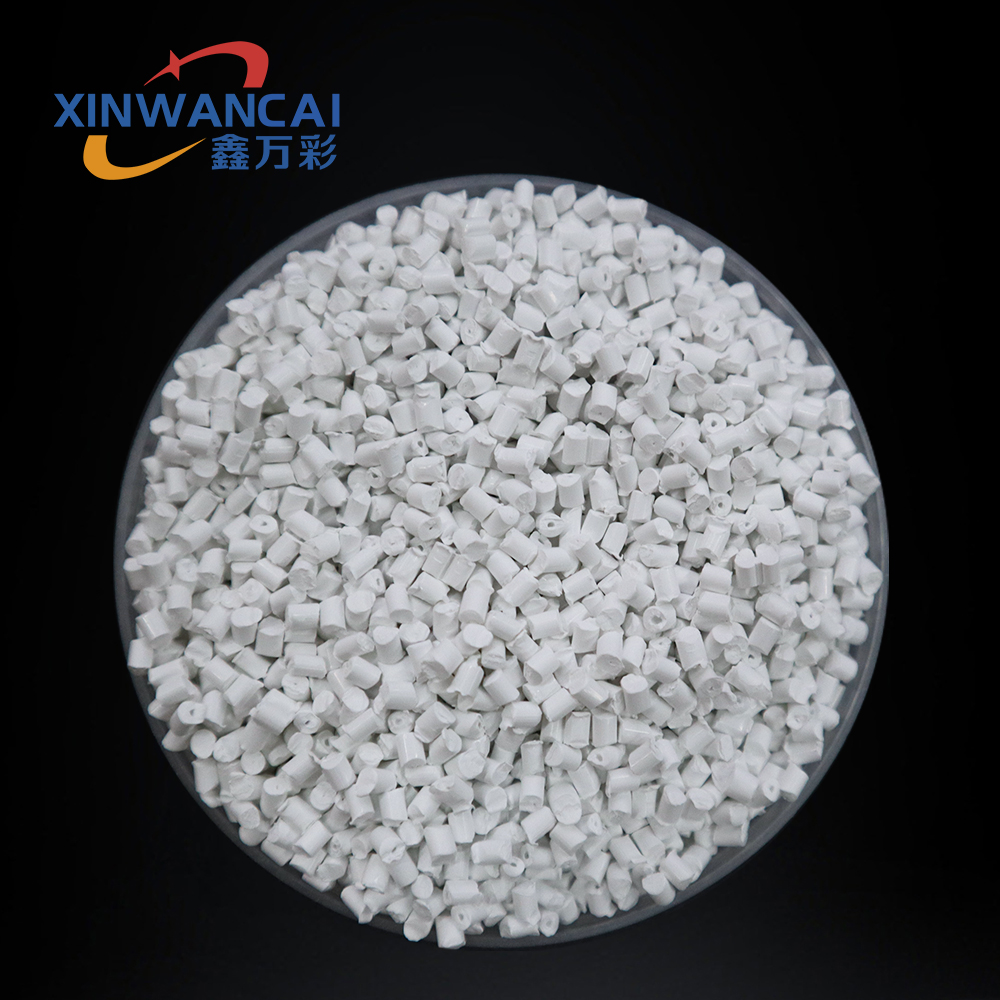
Swapping in a marginally cheaper carrier resin rarely shows up as a line-item saving by the time the batch cools. The lower price per kilogram evaporates once you account for melt-flow mismatches that force higher processing temperatures, slower screw recovery, and more frequent purging cycles. Operators end up chasing viscosity swings instead of running standard settings.
The hidden toll moves downstream. A carrier with uneven molecular weight distribution can leave color streaks, reduce letdown ratios, and create micro-gels that clog screen packs. Those defects don't just waste a few kilos; they trigger rework, downgraded product, and sometimes a lost customer over inconsistent surface finish.
The real cost shows up in the numbers nobody quotes upfront: longer cycle times, raised scrap rates, added QC hours, and the quiet drift toward extra regrind. A two-cent saving on the carrier often buys a dollar's worth of troubleshooting on the floor.
How Batch-to-Batch Drift Shows Up in Your Film Haze
批次间漂移在薄膜雾度中最直接的体现,就是同一卷膜内或不同生产卷之间的浊度读数出现没有规律的波动。你很可能在质检灯箱前遇到这样的场景:昨天切下来的膜样看起来清澈透亮,今天的样品却在斜射光下泛出淡淡的乳白,而雾度计只从2.1%跳到3.4%——这点数值变化肉眼几乎抓不住,但下游复合或印刷环节马上会反馈“膜面发闷、层次不清”。
更隐蔽的漂移往往来自原料粒子里的微小凝胶或添加剂分散不均。当挤出机某段温度波动几度,或者螺杆转速因电流保护微调时,未完全塑化的树脂微粒会以亚微米级散射中心的形式残留在膜层内部,造成局部雾度升高。这种缺陷很少整幅均匀铺开,而是沿着流延方向形成断续的条状雾影,只有把膜卷斜对着强光、视线贴近表面才能勉强分辨出来。
还有一种常见情况是母料批次更换后,爽滑剂或抗静电剂的迁移行为发生变化。新批号的助剂可能在薄膜冷却定型阶段就大量析出到表面,形成一层肉眼难辨的雾状膜,使下线时的初始雾度偏高;但放几天后,随着助剂继续向表面迁移并趋于平衡,雾度又会慢慢回落。所以当你发现雾度数据短期内上下浮动、工艺参数却没有任何调整时,基本可以怀疑是助剂批间差异在背后起作用。
What a Factory's Rework Policy Says About Quality Culture
On many production floors, rework is treated as a quiet inevitability—a line item buried in scrap reports and overtime logs. But the way a factory structures its rework policy reveals far more about its true quality culture than any mission statement pinned to the breakroom wall. A plant that routes defective units back through the same process, with the same tools and the same operators, is not really fixing problems; it is institutionalizing them. Quality becomes a filter applied at the end, not a discipline woven into each step. In such environments, rework is the expected cost of doing business, and the people on the line learn to protect throughput at the expense of first-pass yield.
By contrast, factories that view rework as a signal rather than a routine often build tighter feedback loops. A rejected part triggers a review of the upstream cause—was it a worn fixture, a vague work instruction, or a material lot that drifted out of spec? The rework policy becomes a diagnostic tool, not a Band-Aid. Operators are encouraged to stop the line when something feels off, knowing the goal is to prevent the next defect rather than just correct the current one. This shift changes the conversation on the floor: people start asking why a unit needed rework instead of simply how fast it can be salvaged. Over time, the rework rate drops not because inspectors get stricter, but because the process itself gets smarter.
There is also a cultural tell in who performs the rework. If it is a dedicated crew tucked away in a corner, separated from the main line, the message is clear—quality failures are someone else's problem. If the original operator is responsible for repairing their own mistakes, the learning is immediate and personal. The best factories blend both: a small rework cell for complex or high-risk fixes, paired with a requirement that the originating station receives feedback on every defect traced back to it. That layered approach turns rework from a hidden tax into a visible teacher. In the end, a rework policy is never just about saving parts; it is a mirror of whether a factory believes quality is a cost to be managed or a capability to be built.
Custom Formulations Without the Six-Week Wait
Custom work usually comes with a familiar caveat: expect to wait. Six weeks, sometimes longer, before you see a sample. That delay can stall a launch or force you to settle for off-the-shelf compromises. We built our process to skip that wait entirely—your formula starts taking shape right after the initial brief, with prototypes shipped in days rather than months.
The speed doesn't come from cutting corners. It comes from keeping everything under one roof: raw material checks, blending, stability testing, and filling happen on the same floor. That means fewer handoffs, fewer scheduling gaps, and no lost weeks waiting for an outside lab to get back to you. If a tweak is needed, we can turn it around immediately instead of pushing you to the back of a queue.
What you get is a custom formulation that fits your specs and your timeline. Whether you're adjusting viscosity, swapping an active ingredient, or refining a scent profile, the feedback loop stays short. You make the call, we adjust, and you're back on track—often before a traditional supplier would even confirm your first sample request.
When Technical Support Actually Answers the Phone
There’s a strange moment of disbelief when the robotic voice stops and an actual human says hello and asks how they can help. You were already bracing for hold music and transfer loops, so the sudden clarity throws you off. It feels less like customer service and more like spotting a rare bird in the wild.
Once the shock fades, you realize you can just explain the problem in plain sentences—no menu tree, no press four to repeat these options. The person on the other end asks a follow-up question that shows they’re actually listening. It’s not perfect, and sometimes they still need to put you on hold, but the fact that help is within reach changes the whole mood of the call.
Of course, the real test is whether the fix works. When it does, you hang up almost giddy, wondering why this felt like a small victory. In a world of automated systems, a live voice that solves something can make an otherwise forgettable Tuesday feel oddly triumphant.
FAQ
Look for multiple compounding lines with high-torque twin-screw extruders and precision gravimetric feeders. The factory should be able to run both small trial batches and large commercial volumes without changing dispersion quality. Ask about their annual output, typical lot sizes, and whether they have dedicated lines for CPP film grades to avoid cross-contamination.
Request batch-to-batch data for critical parameters such as melt flow index, filter pressure value, and color coordinates. A reliable supplier will share historical SPC charts showing Delta E values below 0.5 for color and stable dispersion over at least 20 consecutive lots. If they hesitate to provide this, treat it as a warning.
CPP film production often involves specific corona treatment levels, low-temperature sealing performance, and film clarity targets. A supplier with strong technical support will help you fine-tune masterbatch formulations, adjust letdown ratios, and troubleshoot issues like die lines, gels, or poor dispersion directly on your cast line rather than just selling you pellets.
The base resin and pigments must be compatible with polypropylene and stable at CPP processing temperatures. Ask the factory where they source carrier resins and pigments, whether they use food-contact compliant raw materials, and how they qualify incoming materials. Consistent raw material sourcing prevents sudden shifts in viscosity or color that can ruin film appearance and sealing performance.
Ask for a development process that includes a detailed brief, lab-scale matching, and a pilot trial on cast film equipment. The factory should provide physical samples, spectral data, and a technical datasheet before scaling up. If their answer is only a Pantone reference without understanding of CPP film haze or seal strength, they may not be the right fit.
A dependable supplier should provide a certificate of analysis with each shipment covering melt flow index, ash content, moisture level, and colorimetric data. They should also offer documentation for food-contact compliance such as FDA or EU 10/2011 statements, heavy metal test reports, and REACH or RoHS declarations when relevant. In-house testing should include film trials, not just pellet tests.
Strong R&D means the supplier can develop new formulations for anti-block, slip, or anti-fog masterbatches as your CPP film applications evolve. They should have pilot cast film lines or access to them, and their technical team should be able to respond quickly to performance gaps. This reduces your risk when entering new packaging segments or facing stricter regulatory requirements.
Watch for inconsistent lead times, reluctance to share batch records, frequent changes in raw material suppliers, or a lack of in-house testing equipment. If the factory cannot explain how they control dispersion quality or cannot provide customer references with similar CPP film applications, keep looking. Price far below market usually signals lower-grade pigments or reduced quality checks.
Conclusion
When evaluating a CPP film masterbatch factory, the most telling details often hide in places no one puts on a brochure. Ask to see melt filtration data from actual production runs rather than a polished spec sheet. Pressure rise across screens during extrusion reveals how much gel and contamination the masterbatch carries into your film—information that directly predicts downtime and surface defects. Meanwhile, a supplier that boasts about a slightly cheaper carrier resin is rarely offering a bargain. That savings can vanish the first time you face poor pigment dispersion, plate-out, or a film that tears at the draw line. And do not underestimate batch-to-batch drift. A factory without rigorous incoming raw material checks and stable compounding controls will eventually show up as inconsistent haze in your film, forcing you to adjust process parameters just to keep quality acceptable. Inconsistent haze is not a minor cosmetic issue; it signals that the masterbatch is not under statistical control.
A reliable factory’s rework policy tells you more about its quality culture than any certificate. If the supplier quietly blends off-spec batches back into future orders without your knowledge, that is a red flag. Ask directly how they handle rejected material and whether rework is segregated, tested, and disclosed. On the custom formulation side, speed matters. You should not have to wait six weeks for a tweak to pigment loading or a new additive package. A competent factory keeps a library of approved base formulations and can turn around a lab-scale sample in days, not months, because they already understand how each component affects CPP film clarity, coefficient of friction, and seal initiation temperature. Finally, test their technical support before you sign a contract. Call the number on their website and see who answers. If you get a knowledgeable engineer rather than a voicemail maze, you have found a supplier that treats your production line as their own problem. That kind of responsiveness is what separates a transactional vendor from a long-term partner.
Contact Us
Contact Person: JACK
Email: [email protected]
Tel/WhatsApp: 86 18650130917
Website: https://www.xinwancai.com/