

Custom Shaving Foam Manufacturer: Your Complete Guide to Private Label Formulations
2026-10-13
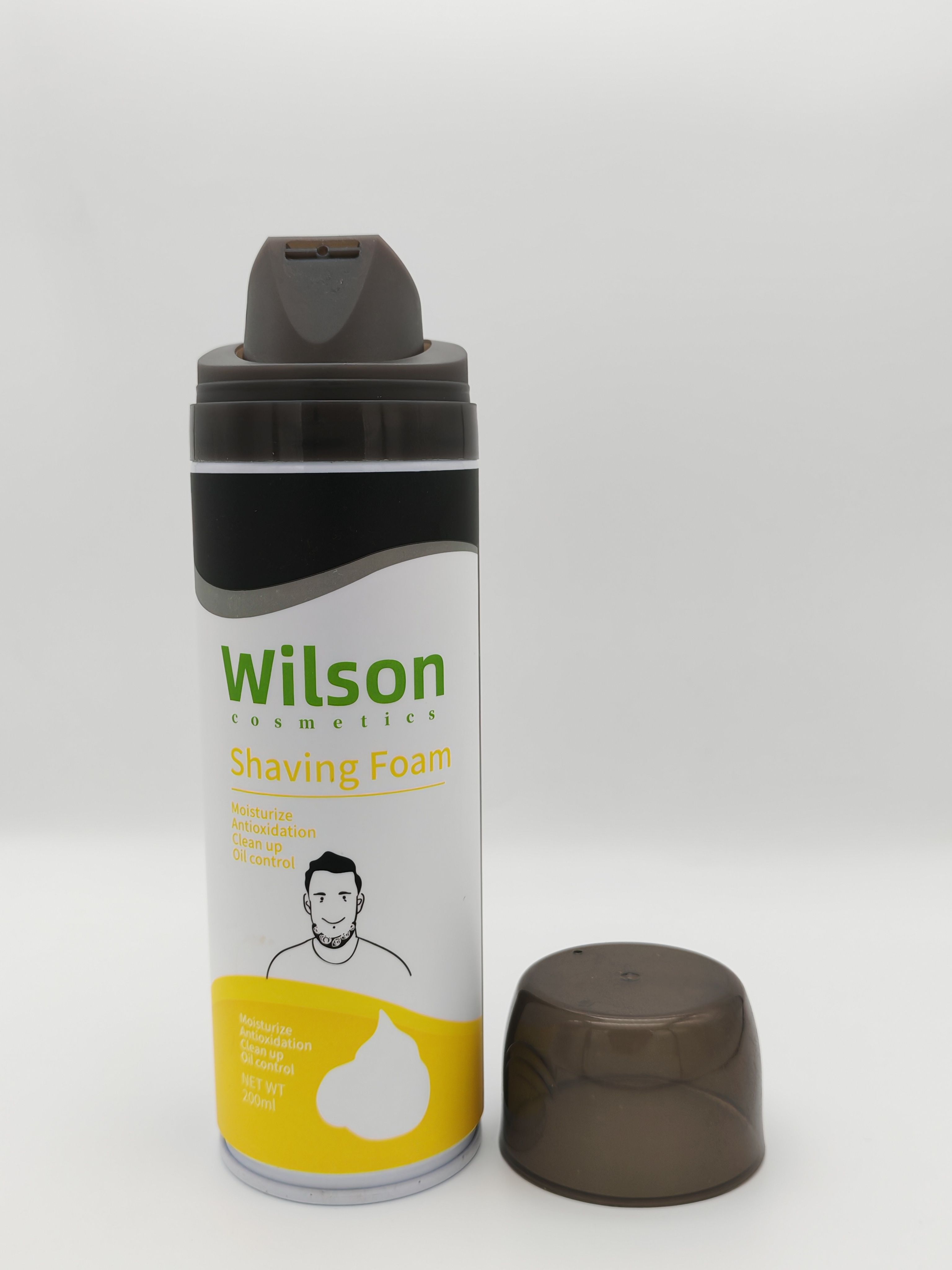
Ever wondered what separates a forgettable shave from a truly luxurious one? The secret often lies in the foam itself—and more specifically, in who crafts it. At Wilson, we believe custom shaving foam isn't just about filling a can; it's about engineering a formula that speaks directly to your brand's promise. Whether you're launching a men's grooming line or refreshing an existing range, the right private label partner can transform a daily ritual into a signature experience. This guide unpacks everything you need to know about custom formulations, from ingredient choices to branding nuances, so you can create a product that lathers above the rest.
Picking Your Base: Aerosol, Gel, or Brushless Formulations
Aerosol cans get a bad rap for feeling lightweight, but the convenience is hard to beat when you’re half-awake at 6 a.m. The foam expands instantly and spreads with zero effort, though it tends to dry out quicker and offers less cushion than you might expect from a richer lather. If your skin can handle the propellants and you value speed, it’s still a perfectly workable choice.
Gels are the overlooked middle child. They start out as a thick, almost sticky clear substance and transform as you rub them into your face, producing a dense, slick layer that many razors glide over easily. The trick is using enough water—most guys stop too soon and blame the gel for feeling tacky. Get the hydration right and you’ll get closer contact without the heaviness of a traditional cream.
Brushless formulations are for anyone who wants the slickness of a brush-built lather without owning or maintaining a brush. They usually come in tubes or tubs and rely on high concentrations of lubricating ingredients rather than airy foam. You sacrifice a bit of that old-school ritual, but the trade-off is a compact, travel-friendly product that won’t collapse on your face mid-shave.
Ingredient Choices That Build Trust and Reduce Irritation
A short ingredient label can do more for trust than a long list of exotic extracts. Think ceramide NP, squalane, panthenol, and oat beta-glucan—workhorses with decades of safety data behind them. When a formula leads with these instead of fragrance or dye, it tells users the priority is skin comfort, not shelf appeal.
Irritation often comes from well-meaning actives thrown together without buffers. Instead of stacking glycolic and salicylic at high percentages, choose a gentler polyhydroxy acid like gluconolactone and pair it with allantoin or centella asiatica. Swapping sulfate cleansers for amino acid-based surfactants also keeps the barrier intact, so redness doesn't become the trade-off for results.
Processing choices matter too. Cold-pressed jojoba and squalane from olive or sugarcane tend to feel lighter and break down less on the skin than highly refined mineral oil alternatives. Avoiding known sensitizers like drying alcohols and synthetic fragrance blends helps new users stay with a routine long enough to see actual change, not just a reaction.
Lather Feel: Tuning Airiness, Density, and Rinse-Off
Airiness often gets mistaken for a sign of richer lather, but it's really about how much gas gets trapped during the agitation step. A lather that pulls in too much air can feel pillowy on the first pass and then collapse before you've finished working it across the face, leaving a thin, watery film. By dialing back high-foam anionic surfactants just slightly and letting a nonionic co-surfactant carry more structure, the bubbles stay smaller and more uniform, which reads as a denser, creamier cushion rather than a fast-disappearing froth.
Density changes how the product sits between your palms and how it transfers onto skin. A loose, open lather tends to slide around and drip at the jawline, while a tighter, finer matrix gives more contact time without needing more product. Adjusting the ratio of lauryl glucoside to cocamidopropyl betaine, for example, can shift the feel from billowy to almost yogurt-like, and that shift directly affects how much water is needed to activate the wash.
Rinse-off is where most formulas lose their polish. A lather that feels dense but clings to the hairline or leaves a slick residue after three splashes isn't truly well tuned. The goal is a quick, clean break: water lifts the foam off in sheets, not in stubborn patches. That usually means keeping a small amount of a light ester or glycerin in the base to soften the rinse, but not so much that it fights the surfactants during wash-off.
Packaging Design: Letting the Can Do the Talking
A can is more than a container. It is a billboard, a handshake, and a story told in the few seconds between shelf and shopping cart. When packaging design lets the can do the talking, every curve and color becomes a silent salesperson. The label stops being decoration and starts being conversation.
Think of the way light hits a matte black surface, or how embossed lettering invites fingertips to linger. The best can designs do not shout; they lean in and whisper something worth hearing. They use contrast not to overwhelm, but to guide the eye through a narrative—origin, flavor, ritual. A can that talks is one that knows what to say and when to stay quiet.
In crowded aisles, the talking can earns attention without begging for it. It plays with negative space, unexpected palettes, and typography that feels like handwriting from a friend. The result is not just packaging but presence—a small, confident object that turns a routine purchase into a remembered encounter.
Quality Consistency: Small Batches, Tight Tolerances
We never chase volume at the cost of repeatability. Each production run is deliberately limited so every piece can be measured against the same reference points, not just spot-checked. This means the twentieth unit off the line should feel and perform exactly like the first, with no drift hiding in the middle of a large batch.
Tight tolerances are treated as a baseline, not a special request. Our inspection process checks critical dimensions, surface finish, and assembly fit at multiple stages, and any deviation that falls outside the allowed range stops the batch immediately. Because runs stay small, we can trace a variance back to a specific tool, operator, or material lot instead of guessing across thousands of parts.
The result is a consistency that shows up where it matters: mating parts slide together without persuasion, threaded holes align the first time, and coatings look uniform from edge to edge. For low-volume work where a single bad unit can stall an entire build, that level of control is worth more than a faster turnaround.
Differentiation Through Scents and Functional Add-Ins
Scent has quietly become one of the most underrated tools for setting a product apart. Instead of leaning on the same predictable lavender or citrus notes, brands are now exploring blends that feel more personal—think earl grey tea mixed with a touch of cedar, or a salt-air accord that recalls a specific coastline. These choices aren't just about smelling nice; they tap into memory and mood, making a daily moisturizer or hand wash feel like a small ritual rather than a chore.
Functional add-ins take differentiation a step further by giving consumers a tangible reason to switch. The key is avoiding the tired "enriched with vitamins" line and getting specific: a face cream that includes ectoine for barrier repair after exposure to city pollution, or a body lotion with a gentle dose of lactic acid to smooth rough patches without irritation. When the ingredient list reads like a solution rather than a marketing checklist, the product starts to justify its place on the shelf.
What really makes the combination work is when scent and function reinforce each other. A cooling gel with a crisp cucumber-mint scent instantly signals relief for tired legs, while a warming balm that carries a subtle smoked vanilla note suggests comfort without saying a word. It's this kind of quiet coherence—where every element points in the same direction—that turns a one-time buyer into someone who reaches for the same jar without thinking twice.
FAQ
Look beyond basic production capacity. Check if they offer formulation flexibility—can they adjust lather density, cooling agents, or moisturizing ingredients like aloe and witch hazel? Ask about their experience with aerosol filling, valve systems, and can lining because those affect product stability. A manufacturer that provides regulatory documentation (e.g., for Prop 65, EU cosmetics compliance) and has short trial-run options saves you from costly mistakes later.
Private label lets you control the foam’s texture, fragrance, and post-shave feel. You can choose between rich, dense lather for a barbershop feel or a lighter, quick-rinse foam for daily use. You might swap synthetic menthol for natural peppermint oil or add shea butter and glycerin for sensitive skin. The base can shift from traditional stearic acid to coconut-derived surfactants if you want a cleaner label.
Underestimating fragrance-pH stability interactions. Citrus oils can degrade certain can linings faster, causing off-notes. Another mistake is ignoring valve clogging—thick creams need wider actuators. Many brands also skip stability testing under hot/cold cycles, then find separation after shipping. Finally, rushing into large MOQs without first running a small batch can leave you with unsellable stock if the foam feel isn’t right.
Yes, some manufacturers offer low MOQs like 1,000–2,500 cans per SKU, though pricing per unit will be higher. Look for partners with “stock formula customization” where you tweak fragrance, label, and packaging but keep the base formula. That reduces upfront cost and lead time. You can later move to a fully bespoke formula once sales prove demand.
Aloe vera, glycerin, coconut oil-derived cleansers, chamomile extract, allantoin, and pro-vitamin B5 are popular. For a more premium feel, add jojoba oil or oat beta-glucan to reduce razor burn. Avoid high alcohol content if targeting sensitive skin; instead use witch hazel water as a mild astringent. Some brands even include hyaluronic acid for post-shave hydration.
Run a blind sensory panel with at least 15–20 men across different skin types (dry, oily, sensitive). Have them rate cushion, glide, rinse-off, and post-shave tightness after 10 minutes. Also do a 12-week accelerated stability test at 40°C/75% RH and check can pressure, valve spray pattern, and fragrance retention. Don’t forget a real-world usability test: leave a can in a gym bag for a week to see if the actuator clogs or leaks.
Aluminum cans with internal epoxy or polymer lining are standard because they resist corrosion from acidic ingredients. Bag-on-valve (BOV) systems are gaining traction—they use compressed air instead of butane/propane, giving a cooler, more even foam and allowing 360-degree spraying. For a luxury angle, consider brushed metal or matte soft-touch finishes with a wide-dome actuator. Label can be printed directly on the can or use a shrink sleeve for complex designs.
Typically 12–20 weeks from initial formula selection to shipping, depending on customization depth. Stock formula tweaks can be done in 8–10 weeks. Full bespoke formulations with new fragrance and stability testing may take 6 months. Packaging artwork approval and regulatory review (label claims, ingredient list) often add 2–3 weeks. If you need a fast launch, ask about pre-approved base formulas and in-house printing.
Conclusion
Building a private label shaving foam goes far beyond choosing a name and slapping it on a can. The base formulation sets the entire character of the product, whether it's a classic aerosol that delivers quick, even coverage, a gel that transforms into a rich cream during application, or a brushless option for those who want a no-fuss routine. Ingredient selection becomes a quiet promise to your customer: mild surfactants, skin-soothing botanicals, and shorter fragrance-free or low-allergen profiles all reduce the chance of irritation and build the kind of repeat trust that no marketing budget can buy. Then there is the lather itself. Adjusting airiness, density, and how cleanly the foam rinses off changes the perceived quality more than most brand owners expect. A too-airy foam feels cheap; one that lingers on the skin leaves buyers reaching for a different can next time.
Packaging design carries the entire first impression, and for shaving foam, the can really does do the talking. The weight, valve output, and label texture all contribute to whether someone picks it off the shelf or scrolls past it online. Yet a beautiful can means nothing if batch after batch doesn't perform identically. Working with a manufacturer that handles small runs while maintaining tight tolerances gives you the consistency of a big brand with the flexibility of an indie label. That is where true differentiation happens. A signature scent profile, a cooling menthol layer, or a functional add-in like oat extract or witch hazel can make the product feel bespoke rather than private label. The end result is not just another shaving foam; it is a carefully tuned daily ritual that carries your brand's fingerprint from the first press of the nozzle to the final rinse.
Contact Us
Contact Person: Simon
Email: [email protected]
Tel/WhatsApp: +86 13267966849
Website: https://www.wilsoncosmetic.com