

Custom Test Connector Strategies for Faster Integration Testing
2026-11-16
Most integration testing advice assumes the hard part is writing test cases. In practice, it's the connectors. A custom connector can mean the difference between a test suite that finishes in minutes and one that barely finishes at all. At REUNION, we treat connector design as a first-class strategy, not plumbing. This post breaks down the approaches that have helped us speed up integration testing without sacrificing reliability.
Stop Rebuilding Test Harnesses for Every Interface
A fresh scaffold for every endpoint can feel productive in the first week: you wire up a client, seed a few fixtures, stub authentication, and get a passing check. By the third or fourth interface, though, the small differences start to hurt. Token refresh logic drifts, error handling gets patched in slightly different ways, and the suite becomes a pile of near-duplicate scripts that no one fully owns. The problem is rarely the interface itself; it is the habit of treating each one as a blank slate.
A better move is to keep one shared harness with pluggable adapters. Let the transport, serialization, and credential handling live in a single place, while per-interface files only describe the shape of the data and the expected outcomes. Whether the target is HTTP, gRPC, a message queue, or a command line tool, the same retry rules, log capture, and cleanup steps apply. That consistency makes it much easier to read failures because the output format is already familiar before you even open the report.
The long-term payoff shows up during maintenance. When a contract changes, you update one adapter and a handful of fixtures instead of hunting through separate harnesses for outdated assumptions. When someone new joins, they learn a repeatable pattern instead of memorizing each script's quirks. There will always be edge cases that need a custom hook, but those should be exceptions added deliberately, not the default starting point for every new interface.
Give Each Connector One Clear Failure Mode
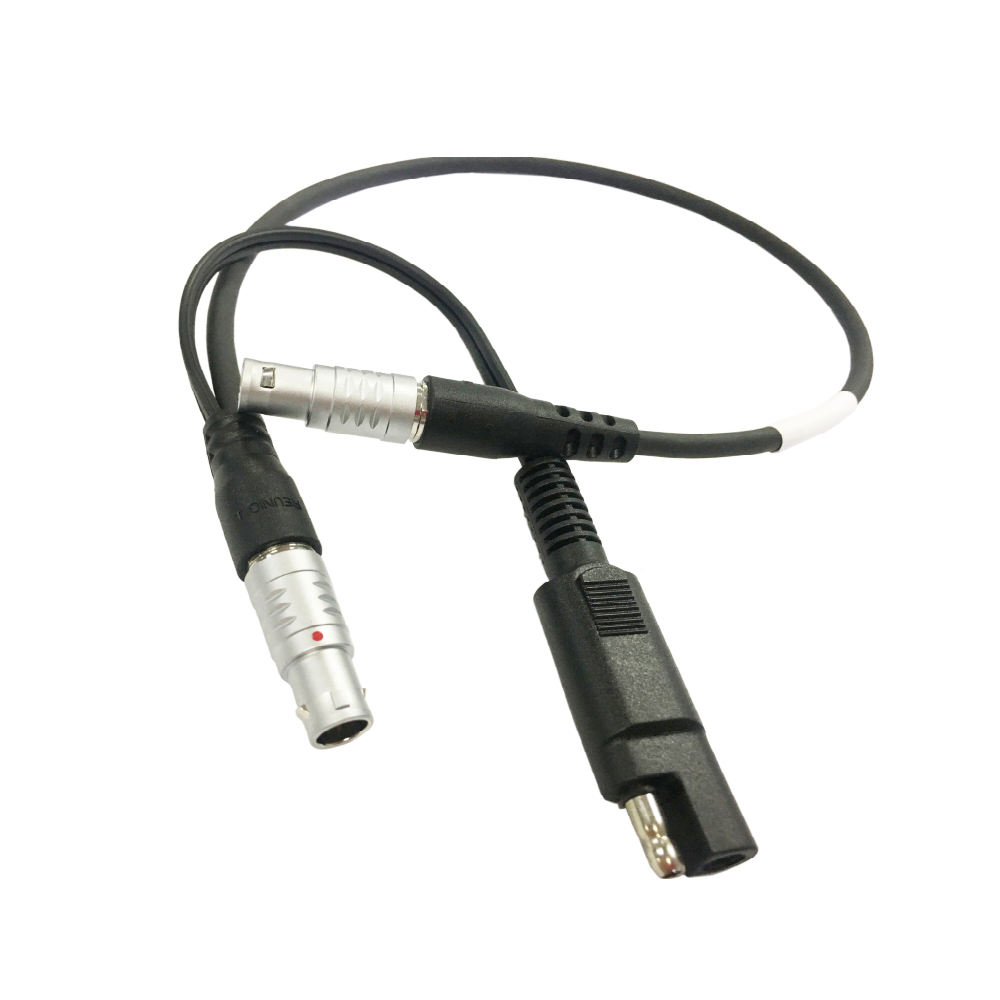
When a connector fails, the worst outcome is not the failure itself but the ambiguity that follows. A connector that can break in five different ways forces whoever is on call to work through a branching decision tree before taking action. Giving each connector one dominant failure mode turns that uncertainty into something closer to a reflex. The logs point one direction, the alert names one condition, and the next step is already written down.
This constraint also shapes the design before anything goes wrong. If a connector has to handle authentication, rate limits, retries, and schema drift all at once, the failure surface becomes too wide. Splitting those responsibilities or choosing one primary way for the connector to degrade keeps its behavior predictable. Predictability matters more than cleverness when a system is down at 3 a.m.
There is a side benefit that rarely gets mentioned: a single clear failure mode makes connectors easier to test. Instead of simulating a dozen rare edge cases, you can build one fault injection and watch the system rally around it. The failure becomes a contract, not an accident.
Feed Integration Tests with Shaped Data, Not Random Noise
Random strings and arbitrary numbers tend to make integration tests feel busy without actually proving much. They exercise code paths, but they rarely resemble the shape of real traffic, so false positives and missed edge cases hide behind the noise. Shaped data flips that: fixtures are built around actual relationships, constraints, and boundary values that matter to the system.
A good example is any flow where identifiers reference other records. If a test generates a user ID out of thin air while the rest of the payload expects a matching profile, the failure you get may be unrelated to what you are trying to verify. Hand-picked samples or sanitized slices of production traffic keep those links intact and make assertions more meaningful.
This also changes how you maintain tests over time. Instead of adding more random volume, you refine the shape: update fixtures when assumptions change, remove samples that no longer reflect the current contract, and keep boundary cases visible. The result is a suite that fails for clearer reasons and gives you more confidence when it stays green.
Version Connectors Alongside the Services They Touch
Keeping a connector tied to the exact service version it interacts with removes a whole class of silent drift. Teams often treat connectors as separate utilities, but that separation lets assumptions about payloads, field names, or auth flows go stale. When the connector lives in the same release train as the service, every contract change shows up as a diff in the same pull request, not as a surprise downstream.
This also makes rollbacks cleaner. If a service reverts, its matching connector reverts with it, so there is no window where a new connector tries to talk to an old endpoint or the reverse. The practice works best when the connector code stays small and focused on translation, leaving orchestration elsewhere. Otherwise the coupling starts to feel heavy rather than protective.
Make Slow Dependencies Optional, Not Blocking
Treat slow dependencies as features you can toggle, not as fixed parts of the request path. If a call to an external service adds noticeable latency, wrap it in a timeout and give the rest of the system permission to continue without it. The core experience should still hold up when that dependency is missing or takes too long.
A practical pattern is to keep the main flow on a fast path and move the slow work into a cleanup or background task. Instead of waiting for a recommendation engine or a logging endpoint before sending a response, capture the input, return immediately, and let the slower piece run separately. The trade-off is that some data may arrive late or not at all, but that is often acceptable when the alternative is a degraded session for everyone.
The goal is not to remove slow services entirely. It is to make their failure or delay a minor event rather than a system-wide stall. When a dependent system becomes optional, you can ship faster, degrade more gracefully, and avoid letting one weak link dictate the overall user experience.
Treat Connection Drift as a First-Class Test Signal
Most suites treat a steady connection as the baseline and treat latency shifts, packet reordering, or brief disconnects as noise. That habit hides real failure modes. A service can return correct payloads while still mishandling a socket that degrades slowly, and the first sign often appears only after a deployment reaches real users.
Treating drift as a first-class test signal means giving the connection its own assertions. Measure how often the client retries, how backoff responds under sustained jitter, and whether state survives a reconnect. Introduce small bandwidth drains, delayed ACKs, or short partitions as normal fixtures rather than chaos experiments. A test should fail when the system thrashes, drops useful work, or loses track of an in-flight operation, not only when a request times out entirely.
This changes triage, too. A latency increase of a few hundred milliseconds becomes a concrete regression instead of a flaky run to be ignored. Teams can tune timeouts, queue limits, and retry budgets against observed drift instead of guesswork. Once drift is measurable and expected, the connection stops being an invisible background condition and turns into an input with tolerances worth defending.
FAQ
They let you shape the interaction layer around the actual contracts and pain points of your system, so setup, data seeding, and teardown become repeatable instead of dominating every test run. Once the connector fits the way your services really communicate, a lot of the manual glue work disappears.
It usually comes down to how much time is spent fighting the generic tool. If the team keeps writing wrappers, ignoring unsupported message types, or patching mismatched authentication flows, that friction is a signal. A custom connector makes sense when the integration surface is stable enough to describe and narrow enough to maintain.
Points where protocol details, retries, ordering, or unusual payload shapes cause repeated delays are the best candidates. Message queues, payment gateways, legacy file drops, and services with strict header requirements often deliver the biggest speed gains because they resist generic test adapters.
Start by mapping the smallest set of operations tests truly need: send a request, wait for a state change, inspect a response, reset the dependency. Then lock those operations behind a simple interface. Avoid modeling every feature of the external system upfront; let test failures show what has to be added next.
They give you control over timing, retries, and cleanup in one place. Instead of every test sleeping and hoping a downstream service is ready, the connector can poll for a concrete condition or expose deterministic hooks. That consistency removes the race conditions that usually make shared environments unreliable.
They let the connector serve two modes: a fast simulated mode for local runs and a real mode for full pipeline checks. Keeping both behind the same interface prevents tests from forking into separate code paths, so developers get quick feedback without losing confidence in the actual integration.
Treat the connector like product code with versioned releases, focused tests, and a clear owner. When a service contract changes, the connector should expose a single migration point rather than forcing updates across dozens of tests. Small, documented extension points also make it easier to add new capabilities without rewriting the core.
Look at the time from test start to a useful pass/fail signal, the number of retries needed per run, and how often failures trace back to environment setup rather than a real code defect. A drop in developer wait time and fewer flaky-test investigations usually tell a clearer story than total test count alone.
Conclusion
Custom test connectors earn their keep when they stop duplicating harness logic for every interface and start acting as versioned extensions of the services they call. A connector tied to a specific service version exposes contract changes immediately, rather than letting a renamed field or shifted response shape surface as a confusing downstream assertion. Give each connector a single dominant failure mode: timeouts should look like timeouts, bad payloads like bad payloads, and dropped sessions like dropped sessions. That clarity removes the usual guesswork from flaky runs. It also helps to feed these connectors shaped fixtures that resemble actual production traffic instead of random data, because the goal is to detect boundary drift and schema mismatches, not to generate volume.
Slow dependencies should be attached as optional adapters so the main integration path stays fast and dependable; the expensive checks can run when the environment is stable, not as a permanent tax on every build. Connection drift works best as a first-class signal: unexpected latency shifts, header changes, or unannounced schema tweaks should fail the suite just like a broken assertion. That approach keeps integration testing focused on real contract risk, and the suite remains fast enough that teams actually trust its failures instead of muting them.
Contact Us
Contact Person: Hayley Liang
Email: [email protected]
Tel/WhatsApp: +86 13480625451
Website: https://www.reunion-china.com/