

Custom Wine Production Line Solution: Tailored Efficiency for Your Vineyard
2026-07-10
Every vineyard has its own rhythm, its own unique challenges—and its own definition of efficiency. Off-the-shelf wine production lines rarely fit like a glove. That's where INTOP Machinery comes in, crafting custom solutions that adapt to your workflow, your space, and your ambitions. This isn't about forcing your process into a rigid template; it's about building a line that moves with you—from grape to glass. In this post, we'll explore how tailored engineering can transform your production, boosting yields and preserving the character that makes your wines distinct. Ready to see what a truly personal approach looks like?
Crafting a Production Line as Unique as Your Vineyard
Just as no two vineyards share the exact same terroir, your production line shouldn’t be a carbon copy of someone else’s. It needs to reflect the nuances of your craft, the rhythm of your team, and the character of your final product.
We design manufacturing systems that are as individual as a winemaker’s signature. Instead of forcing your process into a standard template, we start by understanding what makes your operation distinctive—from the raw materials you choose to the way you handle finishing touches.
The result is a line that not only meets your output goals but also preserves the soul of your creation. Every station, every conveyor, every control system is chosen to enhance your strengths, not dilute them. It’s production engineering that respects the artistry behind the product.
Streamlined Processes from Harvest to Bottle
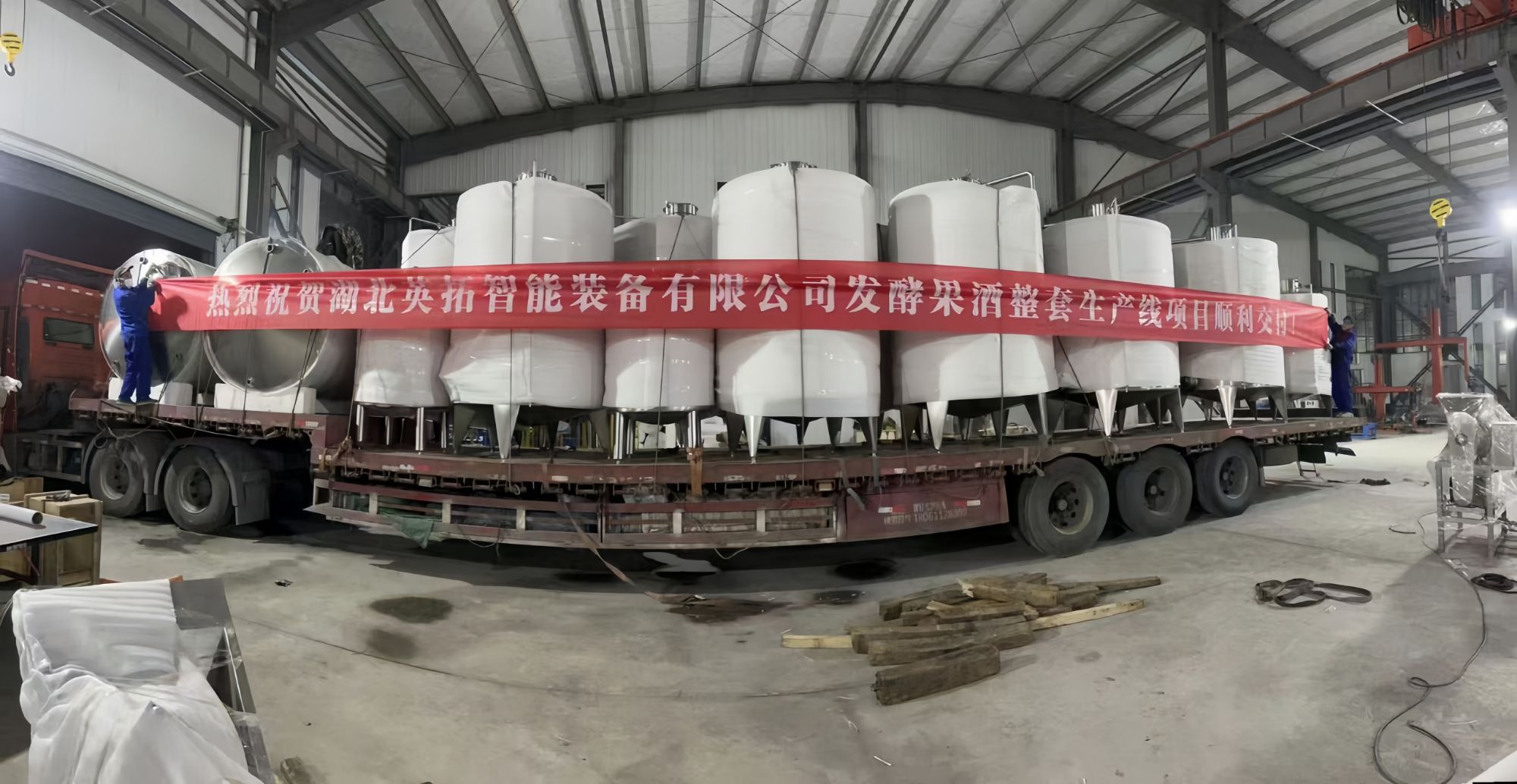
Every step from the vineyard to the final cork is designed to cut waste without cutting corners. We time our harvests to the exact moment the fruit hits peak flavor, then rush the grapes straight into gentle pressing—no idle waiting, no unnecessary oxidation. It’s a tight choreography that keeps the fruit’s raw character intact while slashing hours off traditional methods.
Fermentation doesn’t get bogged down in over-engineering. We rely on small, temperature-controlled tanks that monitor yeast activity in real time, nudging conditions rather than forcing them. This hands-off precision shortens the fermentation curve naturally, letting each varietal find its own rhythm without the months of babysitting you’d expect.
Bottling is where speed meets restraint. Our mobile line rolls right to the tanks, filling, corking, and labeling in one fluid motion—no extra transfers, no exposure to bottling-day jitters. The result is a wine that spends more time resting on its lees and less time in transit, landing in the glass with a freshness that’s hard to replicate.
Precision Engineering for Consistent Quality
Every component we produce starts with a maniacal focus on dimensional accuracy. Tolerance bands aren't just numbers on a drawing—they're the lifeblood of performance, and we chase them down to the micron with temperature-compensated metrology and in-process probing that catches drift before it becomes a defect.
That obsession carries through to tooling and fixturing designed in-house, where repeatability is engineered into the clamping and cutting strategy from the first cycle. We map variability the way a cartographer maps a coastline, identifying and eliminating the subtle shift that happens when a spindle warms up or a batch of raw stock lands a hair over nominal.
The result isn't just a part that fits the CMM report. It's the quiet confidence that shipment after shipment will land on your dock with the same fit, finish, and functional integrity—no hero samples, no batch-to-batch surprises, just the steady rhythm of a process that's been beaten into submission by data and disciplined craftsmanship.
Scalable Solutions for Boutique and Estate Wineries
Boutique and estate wineries often face a unique paradox: their appeal lies in small-batch artistry and hands-on care, yet growth demands systems that can flex without sacrificing that soul. Rather than forcing a one-size-fits-all template, the smartest expansions hinge on modular thinking—adopting processes that can be dialled up or down as production ebbs and flows. This might mean leasing shared crush facilities during bumper harvests instead of investing in permanent oversized tanks, or rotating seasonal crews for hand-sorting grapes to preserve quality while keeping overheads in check.
Technology, when chosen with a light touch, acts more as a quiet enabler than a disruption. Cloud-based vineyard management platforms let vintners track micro-climate data and fermentation curves from a phone, flagging issues early without needing a full-time IT team. Meanwhile, cooperative bottling lines—booked by the hour—transform a fixed cost into a variable one, letting a 500-case producer share equipment that would otherwise sit idle for months. Such arrangements not only cut waste but often spark informal knowledge exchange between neighbouring estates.
Ultimately, scalability for these wineries is less about sheer volume and more about preserving the story in every bottle while making room for more stories. Direct-to-consumer models thrive when paired with nimble fulfilment partners who handle seasonal spikes in wine club shipments. Small tweaks, like designing labels that work across multiple print runs or opting for lightweight glass to reduce freight costs, collectively unlock the capacity to grow on their own imperfect, human terms.
Reducing Waste While Maximizing Output
Lean thinking often gets reduced to slashing costs, but genuine efficiency stems from reimagining how resources flow. Instead of broad-brush cuts, we map every step a material or task takes, hunting for hidden friction—duplicate approvals, excess movement, or overprocessing that nobody questions. One manufacturer we partnered with discovered that 30% of their CNC runtime was spent on non-critical finishing passes that customers never noticed. By dialing those back, they unlocked capacity without spending a dime.
Output isn’t just about machines running faster; it’s about alignment. Teams often waste energy on busywork that inflates metrics but adds no value downstream. We flip the conversation: what if each hour contributed directly to what the next step truly needs? This shift turns wasteful handoffs into seamless pull systems, where work advances only when it’s ready to be used, not when a schedule demands it. The result? Defects drop because nothing sits idle gathering dust or getting damaged, and throughput climbs without piling up inventory.
Sustainability enters the picture naturally when waste reduction isn’t a separate initiative. Designing out scrap, energy drain, and redundant motions directly lightens environmental footprints while strengthening margins. A food processor we worked with re-routed organic byproducts from landfill to local farms, simultaneously meeting zero-waste goals and creating a revenue stream that covered the logistics cost six times over. That’s the sweet spot—where trimming waste and boosting output aren’t opposing forces, but two sides of the same coin.
Integrating Smart Technology into Traditional Winemaking
For centuries, winemaking has relied on the intuition of the vintner—the feel of the soil, the taste of the grape, the smell of the fermenting must. Today, that deep-rooted knowledge is being quietly supplemented by smart technology, not to replace tradition but to refine it. Sensors planted among the vines now track moisture and nutrient levels, sending real-time data to a tablet in the cellar. This allows for precise irrigation and feeding, ensuring each grape reaches its full potential without wasting resources. It’s a partnership between earth and innovation, where data becomes another tool in the winemaker’s belt.
Inside the winery, the transformation is subtle but profound. Temperature-controlled fermentation tanks are now monitored by algorithms that learn from each vintage, adjusting conditions to maintain the ideal balance of acidity and sweetness. Optical sorters, once a novelty, have become common, gently separating the best berries from the imperfect ones at dizzying speeds, yet with a delicacy that honors the fruit. Winemakers still taste, still smell, still decide—but the technology offers a safety net, catching variations that the human senses might miss. It’s as if the cellar has gained a sixth sense, one that runs on microchips and machine learning.
The result is a wine that stays true to its heritage yet sings with a clarity that was harder to achieve before. Bottles are tagged with tiny sensors that track temperature during shipping, ensuring that no bottle suffers heat damage on its way to the consumer. Even the cork might carry a digital history, telling the story of the wine from bud to glass. Traditionalists may raise an eyebrow, but many have come to see these tools as an extension of their craft—a digital evolution that respects the past while steadying the hand of the maker. In this blend of old and new, the grape remains the storyteller, and the technology simply helps it speak more eloquently.
FAQ
It’s a fully personalized setup designed around your vineyard’s specific grape varieties, production volume, and layout. Unlike off-the-shelf machines, every component—from crushers to bottlers—is chosen or modified to match your workflow, reducing bottlenecks and preserving the unique character of your wine.
Absolutely. By fine-tuning each stage to your grapes and desired style, you minimize harsh handling and oxidation risks. For example, gentle pump systems and precisely controlled fermentation tanks help retain delicate aromas and flavors that mass-production setups might compromise.
It's scalable. We’ve designed lines for boutique vineyards making a few thousand bottles a year, as well as for high-volume producers. The key is modularity—you can start with core components and expand as your business grows, without ever paying for capacity you don’t need.
We start with an on-site assessment of your existing facilities, production goals, and budget. Then we draft a layout and equipment list, refining it with your feedback. Installation includes hands-on training for your team, and we stick around until the line runs smoothly at your target throughput.
Flexibility is built in. We often integrate interchangeable modules or adjustable settings so you can switch between styles without extensive retooling. For instance, a press with variable pressure programs and a tank setup with removable lees-stirring gear cover both sparkling and still wine production seamlessly.
You get a dedicated support plan tailored to your equipment. That means priority access to technicians, scheduled preventive maintenance visits, and a stock of critical spare parts kept either on-site or in a nearby hub. This keeps downtime to a minimum during harvest.
Conclusion
Every vineyard carries its own signature in the soil, the microclimate, and the hands that tend the vines. A custom wine production line translates that uniqueness into every bottle without forcing your processes into a one-size-fits-all mold. Rather than settling for generic equipment, you can co-design a system that aligns with your winery's specific flow, from the way grapes are sorted to the nuances of fermentation management. This means the equipment adapts to your methods, not the other way around, preserving the character that makes your wine recognizable.
Beyond customization, the real power lies in how a thoughtfully integrated line streamlines everything from harvest to bottle while keeping quality at the forefront. Precision engineering ensures consistent results batch after batch, with sensors and gentle handling mechanisms that protect the fruit's integrity. The solution scales naturally as you grow, whether you're a small-lot artisan or expanding into broader markets, and it reduces waste through efficiency gains and by repurposing byproducts like pomace and lees. Smart technology fits into the background, monitoring fermentation kinetics, automating repetitive tasks, and providing insights without erasing the human touch that defines great winemaking. The result is a production line that feels like a natural extension of your vineyard, balancing tradition with forward-thinking efficiency.
Contact Us
Contact Person: Laura
Email: [email protected]
Tel/WhatsApp: +86 13957758832
Website: https://www.intopmachinery.com