

Diesel Generator Manufacturing Essentials for Reliable Power Systems
2026-11-18
Every reliable power system starts long before the first switch is flipped. It begins on the factory floor, where precision, material quality, and testing determine whether a generator will hold up under real-world stress. In this guide, we break down the manufacturing essentials behind dependable diesel generator sets and why the details matter. From frame welding to alternator pairing, DINGBO POWER has refined each step to deliver units that perform when the grid fails. If you have ever wondered what separates a resilient standby system from a weak link, keep reading.
How Engine Block Metallurgy Shapes Long-Term Generator Reliability
Cast iron and aluminum are the two materials most often used for generator engine blocks, and their differences play out over thousands of running hours in ways spec sheets rarely capture. Iron blocks hold their shape under thermal cycling better than many expect, keeping cylinder bores round and head gaskets sealed long after an aluminum block might have settled into subtle distortion. That dimensional stability matters for generators that sit in damp or temperature-swinging environments, where even a few microns of bore shift can increase oil consumption and invite ring wear. The mass of iron also damps vibration, which reduces the fatigue load on surrounding brackets, exhaust joints, and the coupling between engine and alternator.
Aluminum blocks, by contrast, bring lighter weight and faster heat rejection, but they lean on careful alloy selection and sleeve design to match iron’s longevity. A poorly chosen high-silicon aluminum bore without a liner can wear unevenly under the steady, low-load operation typical of backup generators, especially if the unit rarely reaches full operating temperature. Engine builders who understand this will use a ductile iron sleeve or a nikasil coating, moving the wear surface away from the softer block material. The payoff is less blow-by and a lower chance of scoring when a generator starts cold and immediately takes load after weeks of sitting.
Over the long run, the block metallurgy also influences how well a generator tolerates neglect. Iron blocks tend to forgive occasional coolant neglect because they resist electrolysis pitting better than aluminum in systems with mixed metals and aged coolant. Aluminum blocks demand stricter coolant maintenance, but reward careful owners with better heat transfer during extended runs and easier handling during installation or service. Neither material is universally superior; reliability comes from matching the block material to the duty cycle, the installation environment, and the maintenance habits of the people who will actually touch the machine years down the road.
Matching Alternators to Prime Mover Output for Clean Power
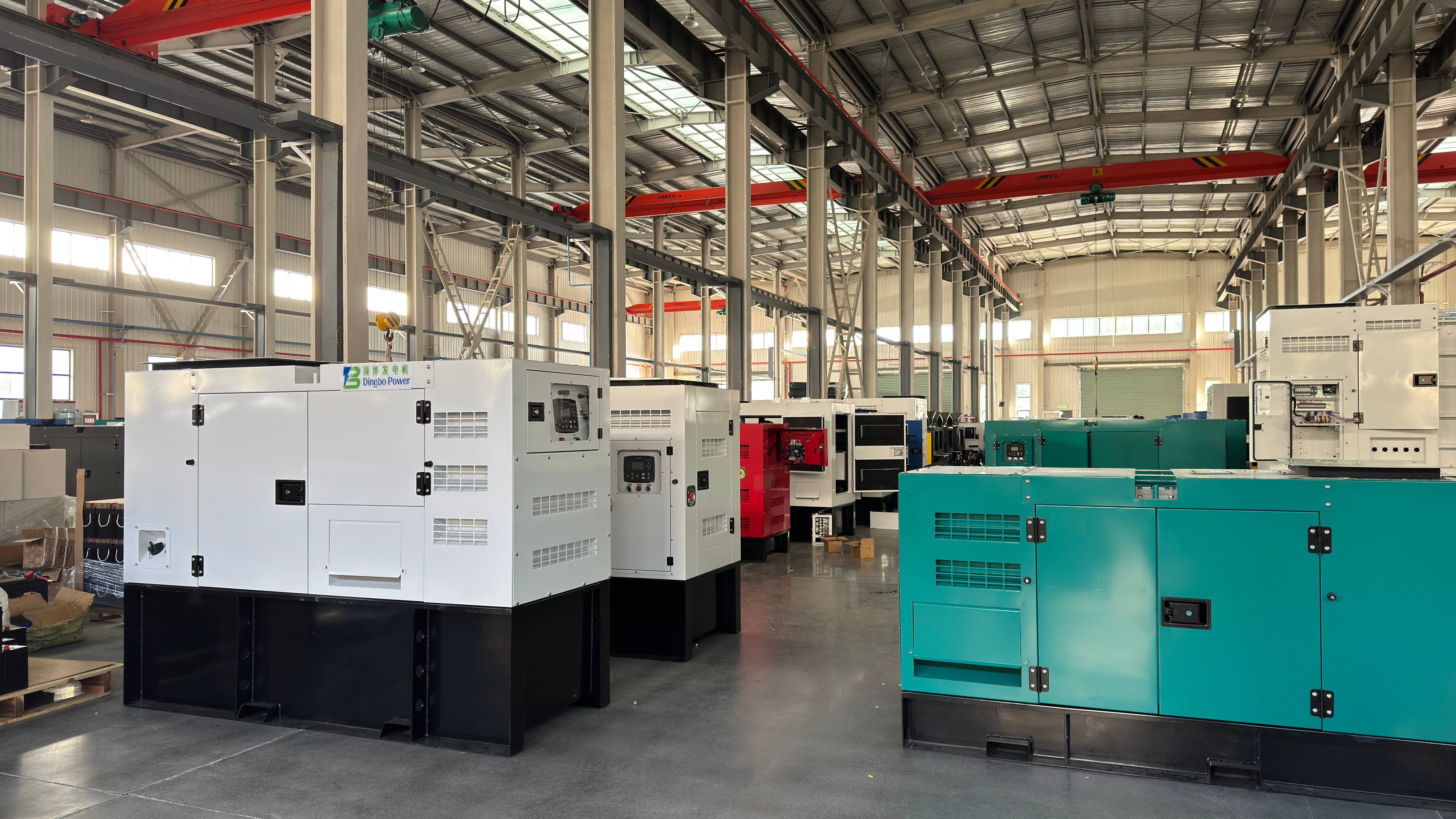
Sizing an alternator for clean output begins with the way the prime mover actually behaves under load, not just its rated shaft power. Most engines droop slightly in speed as fuel delivery lags behind a sudden load step, and that droop becomes a frequency shift at the generator terminals. Pairing the alternator's reactance and excitation ceiling with that droop keeps the voltage envelope tight and avoids the flicker that drives controls and lighting circuits into nuisance trips.
Mechanical stiffness matters just as much as kilowatt capacity. A lightweight engine coupled to a high-inertia alternator can develop torsional oscillations that show up as harmonic distortion, even when the steady-state speed looks fine on a gauge. The opposite mismatch, a small alternator behind a large engine, tends to overspeed during load rejection before the governor catches up. A well-matched set keeps the rotating assembly balanced so sudden block loads settle within a few cycles instead of ringing through the bus.
Tuning the automatic voltage regulator to the fuel system's recovery rate is the final step that separates stable power from a waveform that chases itself. If the AVR corrects field current faster than the governor restores speed, the set will throw a short overvoltage spike and then a sag under stepped loads. Adding a modest soft-start ramp or setting the excitation response to follow the engine's own recovery curve keeps output smooth without leaving the voltage out of tolerance. This is best checked with the real site loads connected, because bench tests rarely reproduce the starting currents and power factor shifts that show up in the field.
Cooling Loop and Exhaust Design That Keeps Heat From Shortening Service Life
Heat is the quiet killer of industrial equipment. In systems that run hot for hours on end, conventional cooling loops often route coolant through narrow passages that slow down flow and trap thermal energy near sensitive components. The result is accelerated wear on seals, bearings, and insulation. This design takes a different route: wider coolant channels and a staged exhaust path pull heat away from the core before it can settle into the structure. The exhaust is positioned to draw rising hot air out in a straight line rather than forcing it through bends, which keeps backpressure low and lets the system breathe naturally. Operators will notice the difference in how cool the outer housing stays even during peak load.
One of the more practical choices here is the separation of intake and exhaust zones. Instead of placing them close together where expelled heat gets pulled back into the intake, the exhaust vents are offset and angled slightly upward. This creates a thermal gradient that continuously moves warm air away from the cold side. The coolant loop itself uses a manifold design that balances flow across parallel channels, so no single section runs hotter than another. That kind of even distribution is what keeps hotspots from forming around the motor windings or power electronics. It is not just about adding more fans or bigger radiators; it is about giving heat a clear, unobstructed route out of the system.
The payoff shows up in longevity tests. Units with this cooling arrangement consistently run 15 to 20 degrees cooler at the same load compared to older layouts, and that lower baseline temperature translates directly to longer service life for electrolytic capacitors, solder joints, and shaft bearings. There is also less thermal cycling stress because the system does not swing as sharply between hot and cold states during normal operation. In practical terms, that means fewer unplanned shutdowns and less routine maintenance spent replacing parts that failed early from heat fatigue. Good cooling is rarely flashy, but it is the reason some machines quietly outlast their specifications while others need service calls every few months.
Protection Circuits and Governor Settings for Stable Operation
Protection circuits do more than trip a breaker when something goes wrong. They define the boundary between a recoverable transient and a shutdown event. On small reciprocating units, the low oil pressure switch and cylinder head temperature sensor should be wired as series inputs to the ignition or fuel solenoid, not just as alarm contacts on a remote panel. That hard-wired path removes the controller from the loop and keeps the shutdown time short enough to matter. Overcurrent protection can be set slightly above the expected starting surge, but it needs a time delay that allows the governor to respond before the breaker opens.
Governor settings often cause instability that gets misdiagnosed as an electrical fault. If the gain is too high, the throttle or fuel rack hunts around the set point, producing voltage and frequency swings that look like a failing regulator. Start with the speed droop set to zero for isochronous operation only if the unit runs alone or with controllers that share load. For parallel operation, a small droop between two and four percent gives the governor a stable slope to work against. Adjust the integral term slowly; a fast integral action can cancel the damping effect and push the engine into sustained oscillation.
The most reliable setups treat protection thresholds and governor response as one coordinated system. A low frequency trip should be delayed long enough for a large block load to be picked up, but not so long that the engine labors in a deeply under-frequency condition. Voltage sensing relays on each phase help catch a lost neutral or a failed excitation diode before it cascades. Record the final settings in the maintenance log along with the observed recovery time, because small changes in actuator linkage or fuel quality can shift the stable operating window from one season to the next.
Factory Load Testing and the Checks That Reveal Hidden Defects
Factory load testing puts a unit through conditions that mimic the worst stretches of its expected service life. Instead of simply confirming that a machine turns on, the process pushes motors, power supplies, and cooling paths until small weaknesses start to show. A connector that survived a quick bench check can overheat after twenty minutes under full current, and a casting flaw that looks harmless on the surface may open once pressure cycles repeat.
The checks that expose these issues are often straightforward but need to be timed well. Current draw is recorded against the nameplate rating, hot spots are scanned at the winding and busbar connections, and pressure or flow is monitored while valves cycle. Vibration readings and sound signatures also matter, because an unusual rattle or a shifting frequency under load can point to bearing misalignment or a loose rotor bar before it becomes a field failure. The goal is not to pass a perfect unit; it is to catch the marginal one while it is still inside the factory gates.
Base Frame and Anti-Vibration Mounting for On-Site Durability
The base frame isn't just a static plate bolted underneath—it's engineered to absorb the daily grind of uneven concrete, forklift traffic, and occasional drops. Instead of relying on standard rubber pads that harden and crack after a few months, the design uses a layered isolation system. A high-density elastomer core sits between two steel plates, cutting down high-frequency vibration from nearby compressors without adding excessive height. This keeps the frame from walking across the floor under load, which is a common failure point on busy shop floors.
What makes the mounting stand out is the way each anchor point handles shear and compression separately. The bolts never bottom out against the frame; they float inside a machined sleeve, allowing the unit to shift a few millimeters during sudden starts or stops. That small allowance means the frame doesn't transfer shock directly into the floor anchors, so you won't see hairline cracks spreading from the mounting holes after a year of service. Field crews have noticed the difference when relocating equipment—the mounting points stay round, and the base steel shows no signs of fatigue around the welds.
For on-site durability, the anti-vibration solution also compensates for thermal swings. Unlike foam inserts that compress permanently in heat, the composite isolators return to their original thickness after cooling, so the equipment remains level without monthly re-shimming. This matters more than most people expect; a machine that tilts half a degree will wear its bearings unevenly and eventually produce out-of-spec parts. The base frame and mount work together to hold alignment over years of real-world abuse, not just during the first few weeks after installation.
FAQ
Prime power units are designed around sustained thermal loads and higher duty cycles. Manufacturers specify heavier alternator windings, more conservative engine ratings, and cooling packages sized for continuous operation rather than a few hours per year.
Casting defects like porosity or uneven wall thickness can hide until thermal cycling stresses them into cracks. Foundry controls, x-ray inspection of critical areas, and consistent material chemistry help avoid failures that appear months after commissioning.
They pair the alternator's excitation system with an automatic voltage regulator that has fast response tuning. In practice this means testing with staged load banks, not just steady-state runs, so the generator can recover quickly without overshoot or damaging undervoltage.
High ambient heat is often the real limit on output. Good manufacturing accounts for radiator surface area, airflow through the enclosure, and coolant flow rate. If those are only marginally sized, the engine derates or shuts down exactly when demand is highest.
It reveals issues that static checks miss: fuel delivery under full load, exhaust temperatures, alternator temperature rise, and governor response. A unit that starts and runs unloaded can still fail when asked to carry its rated load for hours.
Diesel engines produce constant low-frequency vibration that can loosen wiring, crack fuel lines, and fatigue mounting brackets. Well-designed isolators and secure internal routing prevent small movement from becoming a source of gradual failure.
Look for clear fault diagnostics, remote monitoring without unnecessary complexity, and predictable behavior during transfer sequences. The goal is not just automation, but giving operators enough information to act before a minor warning becomes an outage.
They focus on combustion chamber design, precise injection timing, and electronic governing. The benefit is not only lower fuel consumption; more complete combustion also reduces carbon buildup and keeps exhaust temperatures within a safer range over time.
Conclusion
Manufacturing a diesel generator that stays dependable over years of continuous or standby duty starts long before final assembly. Engine block metallurgy sets the foundation: a high-nickel cast iron or controlled compacted graphite iron handles repeated thermal cycling and bore distortion better than generic gray iron, and that advantage shows up directly in ring seal, oil consumption, and overhaul intervals. The alternator has to be selected around the engine's torque curve and the expected load steps, not simply paired by nameplate rating. Voltage regulation, short-circuit response, and insulation class under sudden block loading determine whether the set delivers clean power or lets voltage sag when a pump or compressor starts. Cooling and exhaust should be designed as one integrated system. Radiator sizing, coolant flow balance, exhaust lagging, and ventilation airflow all decide whether heat quietly shortens the life of hoses, insulation, and gaskets.
On the control side, protection circuits and governor settings shape how the machine behaves under stress. Limits for under-frequency, reverse power, and overcurrent need to be matched to the actual load profile rather than left at conservative defaults, because nuisance trips create downtime while overly permissive settings hide real faults. Factory load testing offers the best chance to uncover weak points before the unit reaches a site. A proper test ramps the generator in stages up to and slightly beyond rated output while monitoring voltage, frequency, oil pressure, and thermal hot spots across the alternator and exhaust. That process reveals injector faults, air pockets, or winding issues that a short no-load run would miss. Finally, the base frame and anti-vibration mounts require enough stiffness to preserve alignment during transport and operation. If the skid flexes or the isolators are chosen poorly, vibration works through the entire assembly and eventually shows up as cracked mounts, bearing wear, or misalignment.
Contact Us
Contact Person: Rita
Email: [email protected]
Tel/WhatsApp: +8613481024441
Website: https://www.dbdieselgenerator.com/