

Elderly Mobility Wheelchair OEM: Key Factors for Choosing a Reliable Manufacturer
2026-09-15
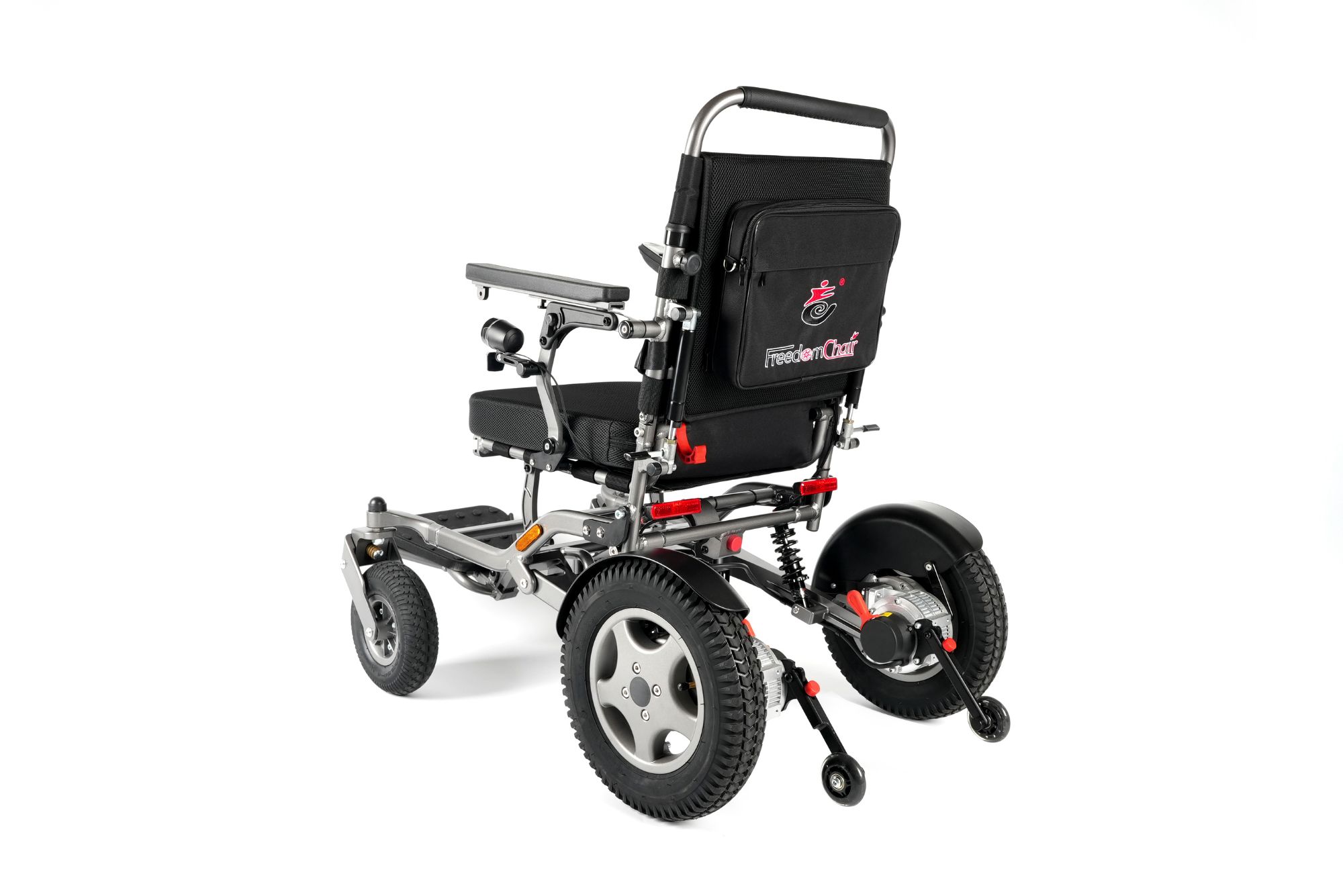
If you’re sourcing an elderly mobility wheelchair OEM, the usual checklist—price, lead time, minimum order—won’t protect you from a manufacturer that cuts corners on braking systems or seat stability. The real question is whether your partner treats mobility as mission-critical engineering. Below, we outline what to verify before signing a contract, and why Freedomchair has become a reference point for durable, user-first design.
The Welds You Never See Decide Real Safety
Most people judge a weld by what they can see—a smooth bead on a bumper or a clean seam on a handrail. But the welds that actually keep you alive are the ones buried inside a chassis, hidden behind a fireproof panel, or sealed under layers of paint. A pretty surface tells you almost nothing about penetration depth, fusion at the root, or whether the joint will hold when the load suddenly shifts.
Failures in these invisible connections rarely announce themselves. A tiny lack of fusion in a suspension mount might survive years of ordinary commuting, then let go on a hard pothole at highway speed. The difference between a weld that's merely acceptable and one that's truly sound often comes down to factors no camera or quick visual check can catch—heat input, interpass temperature, filler metal match, and the steadiness of a hand that's been doing this for fifteen years.
That's why serious fabricators rely on more than surface inspection. Radiographic testing, ultrasonic scans, and destructive sample welds are used precisely because the critical joints are the ones you can't open up later. Standards matter, but they're only as good as the people following them at 2 a.m. on a Friday. The weld you never see is either a quiet guarantee or a slow-burning risk—and you won't know which until it's tested by the real world.
Customization Starts With the Person, Not the Product
True personalization rarely begins with features on a spec sheet or a drop-down menu of options. It starts with paying attention to how a person actually lives, moves, and makes decisions. A runner who trains at dawn in the rain has different needs than one who runs on a treadmill after work. The product matters, but only as a response to the person—not the other way around.
This shift in thinking changes the entire design process. Instead of asking “what can we add to make this more customizable,” the better question becomes “what can we learn about this person that would make the product feel inevitable?” That might mean observing morning routines, listening to the language someone uses to describe frustration, or noticing the small workarounds they already rely on. Those details reveal more than any survey ever could.
When customization grows out of real human behavior, it stops feeling like a feature and starts feeling like common sense. The result isn’t a product with more options—it’s a product that fits so naturally it almost disappears into the user’s life. And that, more than any color choice or modular add-on, is what people remember.
Why Short-Term Savings Create Long-Term Mobility Gaps
A common piece of financial advice is to build an emergency fund before doing almost anything else. Yet that very order of operations can quietly limit how far someone moves up the income ladder. When paychecks are funneled into short-term savings month after month, the money is sitting idle instead of being used for a move to a better job market, a certification program, or even a modest side project. Those choices compound differently, and after five or ten years the person with a tidy savings account but no new skills or professional network finds themselves stuck in place.
Short-term savings also feel more successful than they are. Watching a balance grow from $500 to $5,000 creates a sense of security, but that cushion rarely converts into higher earnings. A car repair or a medical bill gets covered, which is valuable, yet the underlying income remains flat. Meanwhile, someone who used similar amounts to relocate or retrain may have less cash on hand in year one but far more earning power by year five. The gap isn't about irresponsibility; it's about what different financial tools are actually built to do.
Over a longer horizon, the difference becomes structural. People who keep their savings in cash or near-cash accounts miss out on asset appreciation—housing, retirement investments, even the equity in a business. Renters who wait to buy while holding a down payment in a savings account watch home prices climb beyond their reach. Workers who bank overtime instead of pivoting to a different field stay exposed to the same wage ceilings. That's how short-term prudence, repeated year after year, creates a long-term mobility gap that no emergency fund can close.
After the Invoice: Testing the Manufacturer's True Commitment
The real test begins after the invoice is issued. Sales reps who once called daily suddenly become hard to reach, and the promised 24-hour response window stretches into a three-day wait for an automated email. A manufacturer's true commitment shows up when a machine breaks down, not when the contract is signed. Take a recent case: a hydraulic pump failed three weeks after installation, and the supplier's first move was to request photos, serial numbers, and a detailed incident report. Two weeks passed before a technician was dispatched. That delay said more about their priorities than any warranty clause ever could.
A reliable way to gauge commitment is to watch how a manufacturer reacts when something goes wrong. Do they own the problem or shift blame to the operator, the shipping company, or the raw material? Some companies treat the invoice as a finish line, quietly signaling that after-sales support is a burden. Others track equipment performance long after payment clears, checking in to offer training, spare parts, or adjustments. This follow-up is not marketing; it is the difference between a vendor and a partner. The former disappears after the invoice, the latter stays to make sure the product actually works.
Before placing another order, ask existing customers what happened after they paid. If you hear stories of dropped calls and ignored emails, a lower price is not worth the risk. Commitment is not measured by what a manufacturer promises during negotiations but by what they do when the invoice has been paid and the sales team has moved on. The best manufacturers treat every invoice as an opening line, not a closing statement.
Not All Aluminum Frames Age the Same Way
The way an aluminum frame ages depends heavily on the alloy and the finishing process behind it. A cheap extrusion made from poorly sorted scrap with a thin anodized layer will show its years quickly, with pitting, chalky oxidation, and dull patches appearing after just a few seasons. Meanwhile, a well-controlled 6063 or 6061 alloy that goes through proper pretreatment and a thicker anodized or powder-coated finish tends to hold its color and surface integrity much longer, even in demanding weather.
Environment plays an obvious but often underestimated role. Frames near saltwater or exposed to intense sun and freeze-thaw cycles take a different beating than those used in mild inland climates. But two frames sitting side by side can still age unevenly because of hidden factors: how the metal was cooled after extrusion, whether the coating was applied to clean, dry surfaces, and how well the corners and joints were sealed.
This is why some ten-year-old aluminum windows still look almost new while others of the same age turn gray and rough. The difference usually isn't the aluminum itself but the care taken in sourcing, fabricating, and finishing it. When you compare products, it helps to look closely at the surface texture, edge quality, and coating thickness rather than assuming all aluminum will behave alike.
When a Wheelchair Becomes a Daily Companion, Not a Device
The first thing I notice now isn't the frame or the footrests—it's the way the left armrest has a slight creak when I shift my weight before coffee. That sound has become part of the morning, like the kettle clicking off. A wheelchair that's lived with you for a while stops being a piece of medical equipment. It starts carrying your habits: the bag hooked behind the backrest that holds a paperback and a half-eaten granola bar, the scuff on the right wheel from that one doorway you misjudged every single time for a month.
Somewhere around the second year, I stopped thinking about "using" it and started thinking about being in it the way you're in a favorite chair. You learn its moods—how it rolls easier on cold pavement, how it resists a little after rain. You adjust without looking. Your hands find the rims the way they find a mug in the dark. It becomes less of an object and more of a place. That shift matters because it changes how you move through the day. Not as someone operating a device, but as someone at home.
Friends have asked if I ever want to name it. I don't. A name would make it a companion in a cute way, but the reality is quieter than that. It's the thing that holds your keys when your hands are full, the reason you know exactly which café has a step you can manage alone. It doesn't need a personality to be close. It just needs to be there, familiar as a worn boot or a regular bus route, until the line between body and chair gets thin enough not to matter.
FAQ
Look beyond how many years they have been in business. Ask for specific examples of wheelchairs built for older adults, such as models with easy-to-reach brakes, adjustable armrests, or pressure-relief seating. A track record that includes feedback from nursing homes or rehab clinics often reveals more than a generic portfolio.
These certifications are a baseline, not a guarantee. They show the factory follows recognized quality management and safety standards, which is crucial for medical mobility devices. However, you should still request audit reports and sample-test data because certified plants can still cut corners on materials.
Yes, but the depth of customization varies. A reliable OEM will offer adjustments for seat width, backrest angle, footrest height, and even lightweight frame materials for users with limited strength. Be specific about the conditions you want to address, like arthritis-friendly push rims or anti-tip wheels for balance issues.
Dependable manufacturers run in-line inspections during assembly, not just final checks. They test weld strength, brake durability, and caster alignment on a sample basis from each batch. Ask how they handle a defect discovered after shipping; a clear rework or replacement process tells you a lot about their priorities.
Seniors often rely on the wheelchair daily, so downtime directly affects their independence and safety. You need a manufacturer that stocks spare parts for several years and can ship replacements quickly. Also, look for technical guidance on adjustments, because a poorly fitted wheelchair can cause pressure sores or falls.
Ask them to explain how their seating reduces pressure points or why they chose a particular armrest height. A team that talks about hip width distribution, footrest angle for leg swelling, or reduced rolling resistance for weaker arms is thinking about real elderly users, not just assembling parts.
Frame material matters more than it seems. Aircraft-grade aluminum or reinforced steel resists cracks from daily use, while cheap plastic casters wear out quickly. Request a list of component suppliers and check if they use branded bearings, puncture-resistant tires, and UV-stable upholstery to avoid premature failure.
Be wary if they agree to every customization without asking about usage scenarios or user weight range. Another red flag is vague answers about testing protocols or refusal to share previous client references in elder care. If they treat a wheelchair like a commodity rather than a personal mobility aid, the final product will likely miss important details.
Conclusion
When evaluating an elderly mobility wheelchair OEM, the details that never make it into a brochure are the ones that define real-world safety. The quality of welds hidden inside the frame, the specific aluminum alloy and its heat treatment, and the way stress points are reinforced all determine whether the chair remains stable after years of daily use. Not all aluminum frames age the same way, and a manufacturer that cannot explain its material choices is unlikely to deliver long-term reliability. Customization also needs to begin with the individual's posture, pressure points, and daily routines, not with a checklist of product options. A trustworthy partner starts by listening to how the wheelchair will actually be used, then adjusts dimensions, seating, and controls around that reality.
The lowest quote rarely reflects the true cost of ownership. Short-term savings often show up later as premature frame fatigue, loose joints, or seating that no longer fits a changing body, creating mobility gaps that are far more expensive to fix. What happens after the invoice matters just as much as the initial build: response times for spare parts, willingness to send a technician, and clarity of warranty terms all reveal whether the manufacturer sees itself as a supplier or a long-term support system. For an elderly user, a wheelchair is not a piece of equipment; it becomes a daily companion that enables independence and social contact. Choosing an OEM means choosing a relationship that must remain responsive and honest for years, not just through the procurement cycle.
Contact Us
Contact Person: Calvin Fan
Email: [email protected]
Tel/WhatsApp: 8618913265607
Website: www.freedom-chair.com