

Film Sandpaper Supplier: Your Guide to Quality Abrasive Film Solutions
2026-10-03
Most people blame their sanding technique when a surface turns out uneven. The real culprit is often the backing material—and that's where film sandpaper flips the script. If you're still using paper and wondering why your finish suffers, this guide is for you. It also introduces a supplier that's quietly setting the bar: SHENZHEN SUN ABRASIVES.
What Actually Makes Film Sandpaper Different?
Most people assume sandpaper is just paper with grit glued on it, but the moment you switch to a film backing, the rules change completely. Ordinary paper absorbs moisture, softens, and tears under repeated flexing, which is why traditional sheets fall apart on contoured surfaces or wet sanding jobs. Film, by contrast, is a dense polyester that shrugs off water and resists folding fatigue, so the abrasive stays intact far longer. That single material swap shifts how the grit behaves: instead of the backing degrading and dumping particles early, the abrasive wears down evenly, which means you spend less time swapping discs and more time actually cutting.
The flexibility also works differently than you might expect. Paper tends to crease at sharp edges, creating hard lines that dig into the workpiece, whereas film conforms to curves without losing its flatness. This matters most when you are smoothing rounded profiles or clearing between tight contours where a stiff backing would chatter or skip. Because the film is so uniform in thickness, pressure distributes more predictably under your fingers, reducing the chance of accidental gouges. That consistency is what lets detail-oriented finishers push through finer grits without fighting the tool or the surface.
There is also a less obvious benefit tied to lifespan. Film sandpaper generates less heat buildup during dry sanding because the backing does not insulate like paper fibers; the abrasive stays cooler and cuts cleaner for longer stretches. Combined with the fact that film rarely clogs the same way paper does when working with resins or paints, the difference becomes practical rather than theoretical. You are not just buying a fancier sheet—you are buying a backing that changes how the abrasive interacts with the material, and that trickles down to everything from scratch uniformity to how often you have to stop and clear the grit.
Spotting a Supplier That Won't Let You Down
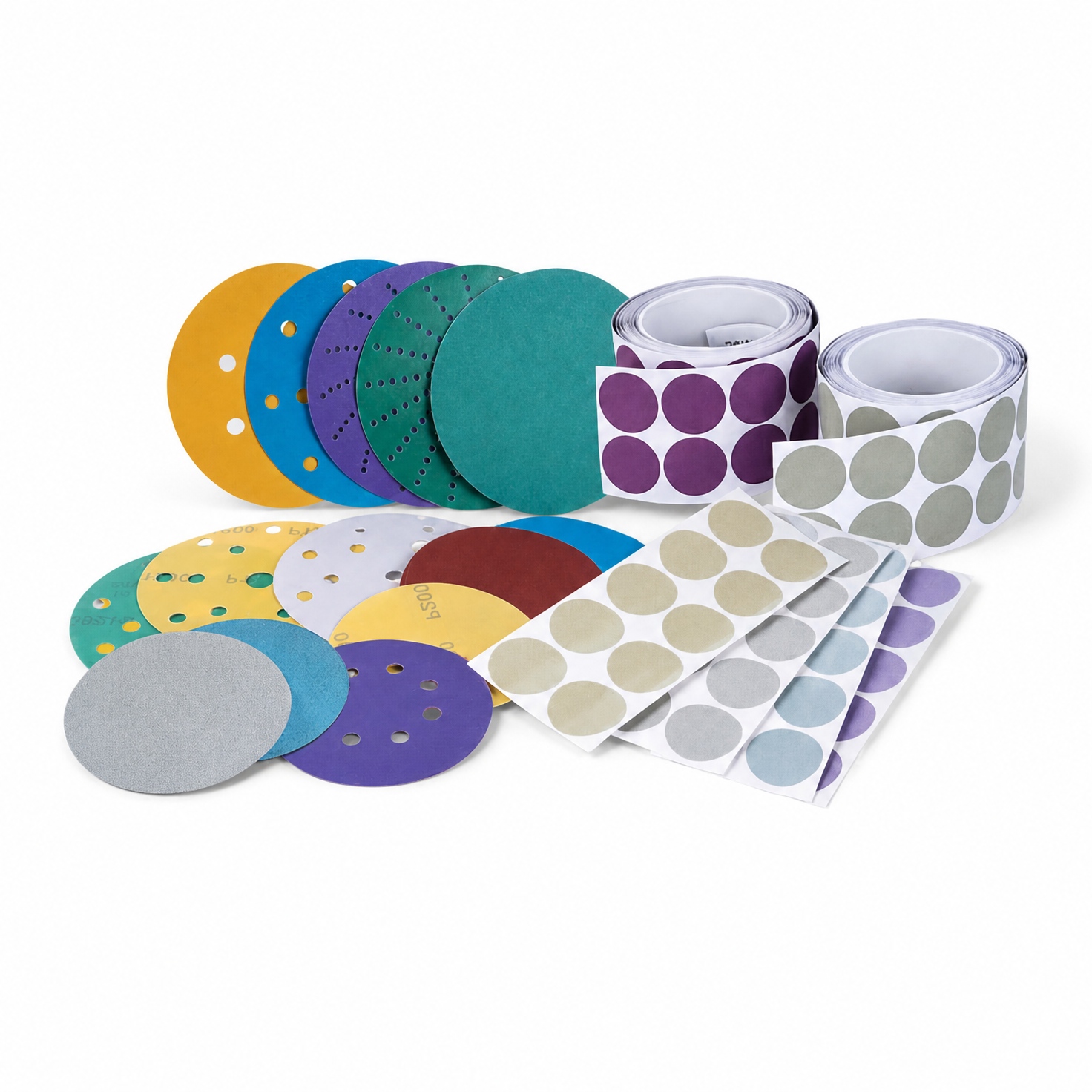
A supplier's response when you ask about their recent mistakes tells you more than their polished catalog. Ask for details on the last shipment that arrived late or the last batch that failed inspection, and listen for ownership. If they blame the freight company, the raw material vendor, or the weather without explaining what they changed, that pattern will repeat on your order.
Place a smaller trial order before committing to volume. Watch how they handle the unglamorous parts: invoice accuracy, packing lists that match the cartons, and whether they flag a two-day delay early or only after you chase them. A supplier who quietly fixes a minor label error and tells you about it is more valuable than one who promises perfection and hides the details.
Finally, check how they behave when you are not an easy customer. Ask for a custom spec sheet, a different packaging format, or a tighter tolerance. The ones worth keeping will ask clarifying questions rather than agreeing to everything, and they will tell you when a request is unrealistic before it becomes your problem.
The Grit, Backing, and Bond: Dissecting Quality
Quality rarely announces itself in a single flash. It hides in the small, unglamorous details—how evenly the abrasive grains are packed, whether the backing flexes without cracking, and how well the bond keeps everything anchored under heat and pressure. Pull apart a mediocre product and you’ll find uneven grit, a backing that tears too easily, or a bond that lets go long before the grit wears down.
Grit isn’t just about coarseness; it’s about consistency. High-end abrasives use grains with tight size control, so each pass removes material predictably instead of leaving random deep scratches. The backing has to balance stiffness and give—paper, cloth, or film—chosen to survive repeated flexing without delaminating. Then there’s the bond, the overlooked middleman. Too brittle and the grains shatter off unused; too soft and the abrasive dulls faster than it should. A well-matched bond releases spent grit gradually, exposing fresh edges at the right pace.
When all three work together, the tool cuts cleaner, lasts longer, and feels more predictable in your hand. That’s the difference between something built to a price point and something built to perform. You don’t need a lab to notice it—just run both across the same surface and watch how the dust builds, how the backing flexes, and how long the bite stays sharp.
From Automotive to Woodworking: Where Film Abrasives Shine
Film abrasives have earned a loyal following among auto body technicians for good reason. The polyester film backing holds up to wet sanding without breaking down the way paper can, so you get a flatter, more consistent scratch pattern on clear coats and primers. That means fewer rework cycles and a cleaner finish before polishing.
Woodworkers catch on quickly once they try film-backed sheets on tricky grain or curved profiles. The thin, flexible backing conforms to contours without creasing, and the abrasive grains don’t shed as readily when you’re working on hardwoods like oak or maple. Cabinetry and furniture makers often switch to film for final sanding passes because it resists loading and leaves a surface ready for stain or topcoat.
Between those two trades, film abrasives also prove themselves on metal and composite edges where tear resistance matters. Whether you’re knocking down a weld on a quarter panel or easing the edge of a tabletop, the material stays flat and predictable. It’s a small change in your sanding setup that pays off in time saved and finishes that need less correction.
Consistency Checks That Separate Pros from Amateurs
Amateurs treat consistency as a final formatting sweep, but professionals bake it into every revision pass. They cross-check numbers between the executive summary and the appendix, verify that every acronym is spelled out on first use in the same way, and scan for tonal drift between sections written days apart. A single mismatched figure or a sudden shift from “users” to “customers” can break trust faster than a typo.
One underrated habit is building a personal inconsistency list: date formats, capitalization of product names, serial comma usage, unit symbols, and the exact spelling of client names. Before delivery, pros run a targeted pass against that list rather than rereading from the top. This turns vague “proofreading” into a repeatable audit and catches errors that a generic spellchecker will never flag.
The real separator is not effort but suspicion. Amateurs assume their draft is mostly fine; professionals assume every cross-reference is wrong until proven otherwise. They open the linked file, recalculate the total, and compare the chart label to the caption. That habit — verifying rather than glancing — is what makes the final product feel seamless.
Building a Supplier Relationship That Pays Off
Most procurement teams treat supplier negotiations as a one-time transaction: push hard on price, sign the contract, and move on. That approach leaves money on the table. The suppliers that consistently deliver on cost, quality, and lead time are usually the ones you've invested in beyond the purchase order. A short call to flag a production issue or sharing a rolling forecast before it's officially due can turn a transactional vendor into a partner who gives you first access to scarce inventory.
Trust compounds in practical ways. When a supplier knows your team will not weaponize every delay, they're more willing to admit capacity constraints early enough for you to adjust. That early warning is worth more than a punitive late fee. In return, pay attention to their margins: a supplier squeezed below sustainable levels will eventually cut corners or deprioritize your orders. Negotiate savings in areas that don't erode their ability to deliver, like joint waste reduction or longer-term volume commitments.
The payoff shows up in moments of disruption. While competitors are scrambling for alternatives, you can pick up the phone and get a realistic answer about what's possible and when. That reliability doesn't come from a contract clause. It comes from a pattern of fair dealing, clear communication, and occasional flexibility on both sides. Build that pattern before you need it, and the relationship itself becomes a competitive advantage no tender process can replicate.
FAQ
Film sandpaper uses a polyester film base instead of paper, which gives it far greater tear resistance and flexibility. It won't crack or fall apart when folded, holds its shape on contoured surfaces, and delivers a more consistent scratch pattern because the backing doesn't absorb moisture or stretch the way paper can.
Automotive refinishing, metal fabrication, woodworking, and composite work all lean on film abrasives heavily. They're especially useful for wet sanding clear coats, prepping primer, finishing plastics, and any job that involves curves, edges, or repeated flexing where paper would tear quickly.
Start with the coarsest grit that removes the defect without gouging the surface, then step up through finer grits by no more than 50% increments. For example, P320 to P500 to P800 to P1200. If you're leveling orange peel from a clear coat, begin around P1000 or P1200; for raw metal shaping, P180 to P320 is common.
Consistent backing thickness, even mineral coating, and clear grit labeling are non-negotiables. A good supplier also offers sample packs, technical data on lubricant compatibility, and responsive support when a batch performs differently. Long-term partners tend to share batch traceability and don't hide the country of origin.
Yes, most high-quality film sandpaper is designed for both, but check the adhesive system. Waterproof film backings use a resin bond that resists water and many solvents. Dry sanding works fine too, though you'll get better dust clearance and longer life with a vacuum or open-coat designs on some products.
The polyester backing, uniform grain coating, and tighter thickness tolerances all add production cost. In practice, film outlasts paper many times over on tough jobs, produces fewer deep stray scratches, and reduces rework. If you value a flawless finish and predictable results, the higher price per sheet usually pays for itself.
Absolutely. The film's strength makes it ideal for die-cutting into discs, strips, or specialty shapes without edge fraying. It also runs well on orbital, DA, and inline sanders, though you should match the backing weight and hole pattern to the tool to prevent loading and tearing.
Uneven grit distribution showing as patchy cutting, backing that stretches or tears along edges, mineral that sheds quickly, and inconsistent thickness from batch to batch. If the product lacks clear grit markings or the supplier can't provide basic technical specs, treat that as a warning sign.
Conclusion
Film sandpaper isn't just a paper sheet with grit glued on. The polyester film carrier resists tearing, shrugs off water and solvents, and lays flatter against panels and profiles, so you get a more uniform scratch pattern with less edge rounding. That's why a good film sandpaper supplier will talk openly about film gauge, resin bond formulation, and whether the abrasive uses open or closed coating. These choices determine how long a disc lasts on a DA sander or whether it clogs on soft woods. You also want a supplier that treats grit classification as a science, not a guess—checking particle distribution, coating weight, and adhesion strength batch by batch. If a supplier can't tell you the difference between, say, a 3-mil and 5-mil backing for your application, or won't share how they control lot-to-lot variation, they're probably not equipped to keep your finish quality stable.
Beyond the specs, the best supplier relationships start with questions about your actual workflow: what substrates you sand, which machines you run, whether you're wet sanding clear coats or prepping raw hardwood. In automotive work, film abrasives excel at leveling clear coat, blending paint lines, and fine finishing without ghost scratches; in woodworking, they hold their edge on contours and dense species while leaving a surface that takes stain evenly. A supplier worth staying with will offer sample packs for side-by-side testing, give honest advice on when a cheaper abrasive is good enough, and never push a one-size-fits-all lineup. Consistency checks—like signed certificates of analysis, traceable lot numbers, and responsive technical support—separate professionals from amateurs. In the end, you're not just buying sandpaper; you're buying a partner who understands that your reputation rides on every panel and board that leaves your shop.
Contact Us
Contact Person: Amanda Wang
Email: [email protected]
Tel/WhatsApp: +86-13602569854
Website: https://www.sunabrasives.com.cn