

Glue Dispensing Machine Selection: How to Choose the Right One for Your Application
2026-11-16
Choosing the right glue dispensing machine can make or break your production efficiency—yet with so many options on the market, the decision often feels overwhelming. Whether you're bonding electronics, sealing automotive components, or assembling medical devices, the wrong system leads to wasted adhesive, rework, and costly downtime. In this guide, we'll walk through the key factors you need to evaluate, from viscosity and accuracy to automation level. Along the way, we'll spotlight how JATEN addresses these challenges with precision-engineered solutions designed for real-world applications. Let's cut through the noise and find the ideal dispensing technology for your line.
Let the Adhesive Dictate the Setup
Most assembly lines are built around the machine first, then the adhesive is forced to fit. Flip that logic. Look at the adhesive's viscosity, cure profile, and surface tolerance before touching any dial. A thick, thixotropic paste won't behave like a watery cyanoacrylate, so the dispensing pressure, needle gauge, and even the part orientation should come from those material traits.
This approach removes guesswork because the setup parameters become a direct translation of the datasheet and a few bench tests. Instead of tweaking the robot speed after a failed bond, you start with the adhesive's open time and build the pick-and-place sequence around it. If an anaerobic needs metal contact and the absence of oxygen, the clamp design and gap spacing are chosen to serve that need, not the other way around.
In practice, that means accepting a slower cure for a stronger joint, or changing the substrate cleaning step because the adhesive hates a particular residue. The payoff is fewer rejects and less rework. When the adhesive leads, the process follows its natural limits, and the bond line becomes predictable rather than a constant fight.
Viscosity: The Overlooked Deal-Breaker
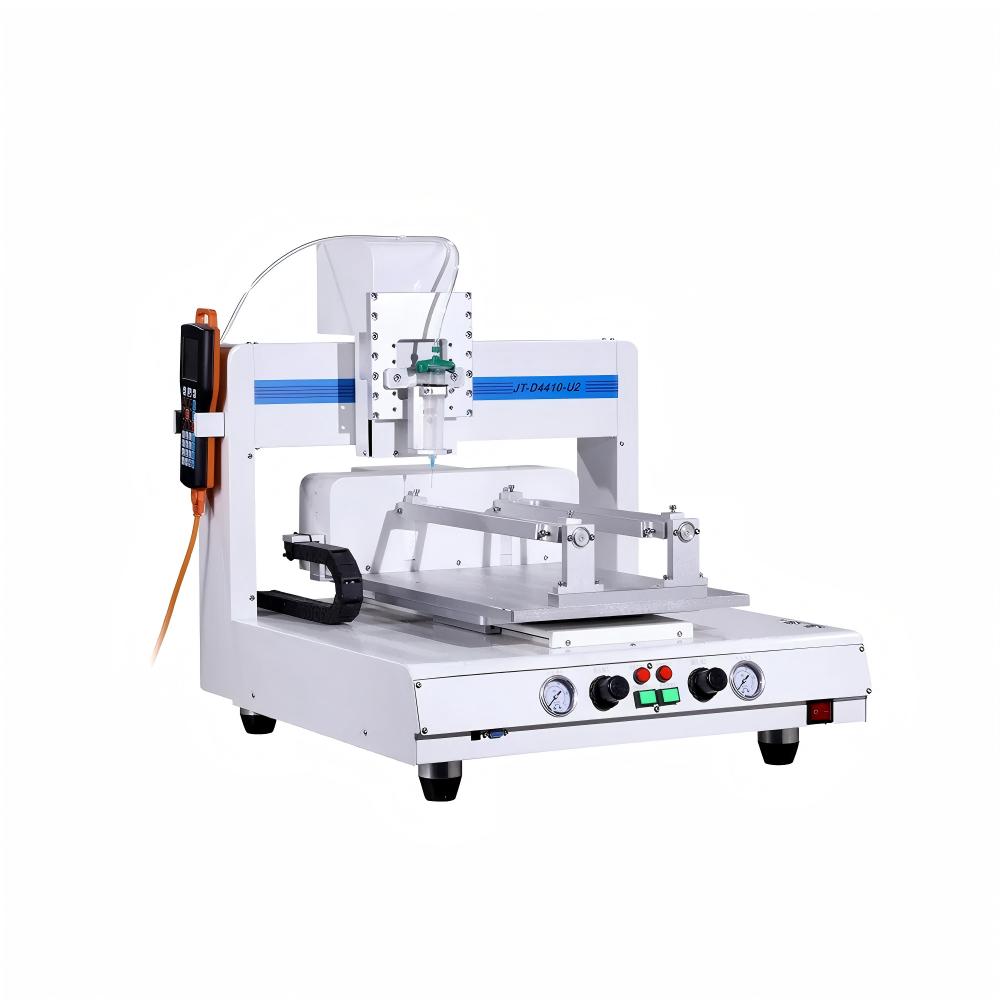
Most people never think about viscosity until a pump stalls, a bearing starves, or a spray nozzle clogs. It's the quiet variable that sits between a well-oiled machine and a costly rebuild. Thin it out too much and you lose the film strength that keeps metal from touching metal. Thicken it just slightly and you're suddenly fighting cold-start torque, higher energy draw, and uneven coating. Viscosity isn't a spec to glance at—it's the difference between a process that runs unattended and one that demands constant intervention.
The trouble is that viscosity rarely announces itself. It drifts with temperature, shear, and contamination, often long before anyone notices a change in performance. A formulation that pours perfectly at room temperature can turn syrupy in a chilled feed line or shear down to water-thin under high-speed mixing. Maintenance teams chase symptoms—strange noises, fluctuating pressures, premature wear—while the root cause hides in a simple rheology curve no one bothered to pull.
The fix isn't more additives or a fancier base oil. It's treating viscosity as a design input, not an afterthought. Measure it under real operating conditions, not just the label claim. Watch how it behaves at startup, under load, and after hours of shear. Once you respect viscosity as the deal-breaker it truly is, the mysterious failures tend to disappear.
When Precision Beats Speed
In high-stakes work, rushing often creates costly rework. When precision beats speed, the slow, deliberate path can be the fastest way to a result that actually holds. Consider a surgeon closing an incision or a watchmaker seating a gear; a single misstep means starting over. The apparent slowness is not hesitation—it's knowing which details cannot be traded for a deadline.
This principle shows up in the way experts read a room before speaking, or how a coder writes a few careful lines instead of a sprawling patch. Precision clarifies intent. It removes the guesswork that speed leaves behind. By the time the precise worker ships, the rushed worker may already be debugging their second or third attempt.
Choosing precision does not mean being slow by default. It means refusing to let velocity become the only measure of progress. In fields where trust, safety, and durability matter, a well-aimed move outperforms a flurry of near misses. Good work often looks unhurried because it was done right the first time.
Automation Level: From Benchtop to Inline
The journey from benchtop systems to fully inline automation is rarely a single leap; it is a continuum shaped by throughput needs, sample complexity, and operator skill. Early benchtop setups offer unparalleled flexibility—scientists can tweak parameters mid-run, visually inspect each step, and handle fragile or variable inputs with ease. Yet this freedom comes at a cost: manual transfers create bottlenecks, and reproducibility often depends on the steady hand of a single technician.
Inline automation inverts that logic. Instruments are embedded directly into production or high-throughput analytical lines, where samples flow from one module to the next without human touchpoints. This configuration excels when protocols are locked, volumes are high, and turnaround time is critical—think continuous process monitoring or clinical diagnostics running hundreds of samples per hour. The trade-off is rigidity: any change in reagent, temperature profile, or assay design demands a revalidation of the entire line, not just a single station.
The smartest implementation often lives between these poles, using modular robotic arms that bridge benchtop flexibility with inline speed. Such hybrids let a lab automate the repetitive core—pipetting, incubation, detection—while keeping sample preparation or result review in human hands. This staged approach reduces validation burden and lets teams shift capacity as needs evolve, avoiding the classic trap of buying a fully automated line that sits idle when assay variations arrive.
Repeatability Is the Real Quality Metric
Most teams still chase the thrill of a flawless one-off result. A single successful build, a lone passing test suite, or a spotless demo gets celebrated like a championship win. But that kind of quality is fragile. It can vanish the moment someone changes a line of code, updates a library, or runs the same process on a different machine. The real question isn't whether you can produce something good once—it's whether you can produce it again, identically, without heroics.
Repeatability shifts the focus from outcomes to systems. When a process runs reliably every time, the quality isn't just in the output; it's baked into the pipeline itself. Think of a manufacturing line that stamps out identical parts hour after hour, or a test environment that spins up in minutes instead of days. If your team has to invent new steps each time to make things work, you don't have quality—you have luck. And luck doesn't scale, doesn't document itself, and doesn't survive personnel changes.
The metric that matters is not how impressive a single run looks, but how boring it is. A truly repeatable process produces consistent, predictable results with minimal variation. That consistency is what allows you to trust your release process, debug with confidence, and onboard new people without tribal knowledge. So the next time someone boasts about a one-time win, ask them to do it again—and again. If it still works without special effort, then you're looking at real quality.
What Maintenance Costs Really Look Like
When people picture maintenance costs, they often think of oil changes and tire rotations. But real ownership expenses are far more scattered. A failing sensor here, a worn suspension component there, and suddenly you're looking at a repair bill that feels out of proportion to the car's age. It's not the predictable items that drain your wallet—it's the slow trickle of parts that were never on your radar.
Depreciation quietly outspends most mechanical repairs, yet nobody receives a monthly invoice for it. Meanwhile, routine upkeep like brake pads, coolant flushes, and battery replacements arrives with steady regularity. The uncomfortable truth is that maintenance cost is less about the sticker price and more about how the vehicle was engineered, how it's driven, and whether you address wear items before they cascade into larger failures.
If you track expenses over three years, the pattern becomes obvious: some cars demand a constant stream of small fixes, while others only ask for scheduled service. The difference rarely shows up in a brochure. It lives in owner forums, repair shop receipts, and the sinking feeling of a warning light on a Tuesday morning.
FAQ
Start with your adhesive's viscosity, required bead size, and production speed. If a machine can't handle your material's flow characteristics or won't hit your cycle time, no amount of extra features will make up for it.
Look at your daily output and operator involvement. Manual works for low-volume prototyping; semi-automatic suits moderate batches with a foot pedal or timer; fully automatic makes sense once you need consistent, repeatable dispensing across long runs or multiple shifts.
Yes, heavily. Cyanoacrylates, epoxies, silicones, and UV-cure resins each have different viscosities, pot life, and curing behavior. The machine's wetted parts, valve type, and dispensing method have to match the adhesive or you'll fight clogs, stringing, or inconsistent dots.
It depends on accuracy and repeatability needs. Time-pressure is simple and budget-friendly but varies with temperature or viscosity shifts. Volumetric and auger systems hold their shot size better with changing conditions, so they're often worth the extra cost for critical bonds.
A properly set automated system usually wastes far less than manual application because it controls shot placement and bead length precisely. You also reduce rework from misplaced adhesive, which saves material and labor in the long run.
Very important if you're not running standalone benches. Check whether the dispenser can be mounted on a robot, triggered by a PLC, or fitted with vision guidance. Retrofitting later tends to cost more than choosing a compatible unit from the start.
Frequent nozzle clogging, inconsistent bead size across a shift, adhesive curing inside the valve, or having to slow the line below target output are all red flags. These usually mean the valve, material delivery, or temperature control isn't matched to the adhesive.
Run your actual adhesive on the machine under production-like conditions, not just water or a demo fluid. Measure shot weight or bead width over several hours, check maintenance access, and ask about spare part lead times before you sign.
Conclusion
Choosing a glue dispensing machine starts with the adhesive itself, not the machine specs. A cyanoacrylate that cures in seconds demands an entirely different valve and nozzle setup than a two-part epoxy with a thirty-minute working time. You can't simply drop any fluid into a generic dispenser and expect clean dots or beads. Viscosity, the often-ignored property, decides whether you need a positive displacement pump, a pinch valve, or a simple air pulse. Thin solvents wick and drip unless the controller closes instantly, while thick pastes require auger or piston drives to avoid clogging. Ignoring this leads to ruined parts and wasted material. When precision beats speed, you often sacrifice cycle time for positional accuracy under a millimeter. High-speed jetting works for broad coverage, but microelectronics or medical device bonding demands slower, needle-based deposition with vision guidance. The machine must match the joint geometry and tolerance, not the other way around.
Automation level ranges from a handheld benchtop unit to a fully inline robotic cell with conveyor integration. The right choice depends on batch size and changeover frequency: a semi-automatic fixture with foot pedal suits prototyping, while high-mix production needs quick tooling swaps and programmable patterns. Repeatability, not just advertised accuracy, is what you should measure over thousands of cycles. A machine that drifts by half a millimeter after an hour of operation will cause more scrap than a slower but stable one. Look at thermal stability of the valve, pressure regulation, and software compensation for viscosity shifts. Finally, maintenance costs are rarely limited to spare parts. You'll pay for technician time to clean hardened adhesive, replace worn seals, and recalibrate after every material change. Some low-cost dispensers hide weeping seals or proprietary cartridges that lock you into expensive consumables. A slightly higher upfront price with modular, easy-to-service components often pays back within six months through reduced downtime and lower rework rates.
Contact Us
Contact Person: Volien
Email: [email protected]
Tel/WhatsApp: +86 18029161762
Website: https://www.jatentech.com/