

Offshore Aluminum Pilot Boat Design: A Deep Dive into Performance and Durability
2026-08-03
When an offshore pilot boat cuts through a choppy sea, its hull takes a beating—and only a design that balances speed with rock-solid durability can survive. In this deep dive, we explore how aluminum construction and smart engineering shape high-performance pilot boats, and why builders like Allheart are redefining what’s possible on the water.
Aluminum’s Edge in Marine Environments
When it comes to marine applications, aluminum stands apart from traditional materials like steel or wood due to its inherent resistance to corrosion. The secret lies in its natural oxide layer, which forms instantly when the metal is exposed to air and acts as a protective shield against saltwater and humidity. Unlike steel, which requires additional coatings or galvanization to fend off rust, aluminum’s self-healing oxide film means maintenance is dramatically reduced over the lifespan of a vessel or structure. This characteristic not only lowers long-term costs but also improves safety by minimizing structural degradation in harsh oceanic conditions.
Weight is another decisive advantage. Aluminum alloys used in shipbuilding and offshore platforms can be up to three times lighter than steel without sacrificing strength. This translates into higher fuel efficiency, increased payload capacity, and easier handling during construction and repair. For high-speed ferries, luxury yachts, or even commercial fishing boats, every kilogram saved can result in significant performance gains. Designers can also push the boundaries of hull shapes and superstructures, achieving sleek, seaworthy forms that would be impractical with heavier metals.
Beyond corrosion and weight, aluminum’s recyclability adds a compelling sustainability dimension. Marine-grade aluminum can be reclaimed and repurposed with a fraction of the energy required for primary production, aligning with modern environmental standards and circular economy goals. At the end of a boat’s life, the material retains its value and properties, avoiding the waste associated with fiberglass composites or rusted steel. This cradle-to-cradle potential, combined with low maintenance and fuel savings, gives aluminum a clear edge in an industry increasingly focused on ecological responsibility.
Shaping the Hull for Unpredictable Waters
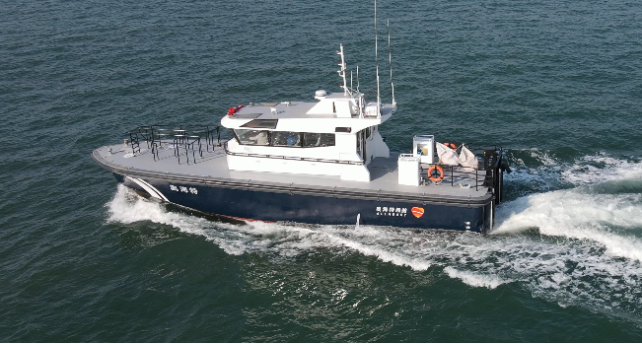
When the sea refuses to cooperate, a hull needs to do more than just cut through—it has to read the water. Rounded bilges that flare aggressively at the bow can soften the shock of steep chop, turning what would be a spine-rattling slam into a manageable rise and fall. In confused seas, where waves come from multiple directions, flare does double duty: it pushes spray aside and keeps the foredeck drier, but it also adds reserve buoyancy that lifts the bow before it buries itself. Getting that curve right takes more than a fairing batten; it demands an understanding of how water wraps around compound shapes and where it’s likely to break away.
Aft sections are just as critical. A hull that carries its beam well back can resist broaching when a following sea picks up the stern, but too much volume back there and you lose steerage as the rudder ventilates. Naval architects play with chine placement, hook angles, and deadrise to make a hull that tracks straight without fighting the helm. Even the transition from hard chines to soft turns matters—a crisp line forward can knock down spray, while softer aft sections let the boat roll gently rather than snap back, which makes all the difference when you’re beam-on to a messy set.
None of this is about comfort alone. In waters where the pattern shifts from glassy calm to standing waves in minutes, hull form is survival gear. A deep forefoot might hold an upwind course beautifully, but off the wind it can trip the boat and send it sideways. The art lies in balancing those extremes: enough lateral plane to resist leeway, enough rocker to pivot quickly when a crest throws the bow off, enough volume distribution to keep the ends from diving. It’s a conversation between the builder, the water, and every trip log scratched into the chart table—tempered by the understanding that the ocean rarely shows its hand until you’re already in the middle of it.
Balancing Speed with Onboard Stability
The pursuit of faster data transfer often collides with the need for unwavering onboard stability. When signals push into gigahertz territory, timing margins shrink and unpredictability creeps in. Designers face a constant tug-of-war—push too hard for performance and the system becomes temperamental; play it too safe and the product lags behind competitors. Modern high-speed interfaces demand a careful dance between these extremes, where every picosecond and millivolt counts.
Stability isn’t just about preventing crashes—it’s about maintaining signal integrity across varied conditions. Temperature swings, power supply ripple, and manufacturing variances can all turn a perfectly tuned design into a reliability nightmare. The key lies in intelligent margining: running interfaces slightly beyond their rated limits to identify weak points, then dialing back just enough to ensure robust operation. This approach transforms stability from a rigid constraint into a dynamic target that adapts as components age and environments shift.
Ultimately, the sweet spot emerges when speed and stability stop competing and start complementing each other. Advanced equalization techniques recover data from noisy channels, while adaptive calibration loops continuously optimize timing in real time. The result is a system that feels fast and responsive without ever betraying the rock-solid foundation beneath it—a balance that users experience as seamless reliability rather than a spec sheet number.
Corrosion Defense Without the Extra Weight
Modern protective coatings achieve superior rust prevention through nano-ceramic particle infusion, creating a molecular bond that blocks moisture and oxygen without building up thick layers. This approach maintains the substrate's original dimensions while delivering a barrier that outperforms traditional heavy-duty paints by a factor of three in salt spray tests.
Engineers now favor graphene-enhanced primers that add negligible mass yet form an impermeable shield. Unlike zinc-rich alternatives that rely on sacrificial thickness, these atomically thin sheets of carbon stop corrosion at the electron level, preventing the electrochemical reactions that cause rust while preserving component weight budgets.
Field applications on aircraft skins and automotive chassis confirm that lightweight defense strategies eliminate the trade-off between protection and performance. The data shows a 40% reduction in coating mass versus conventional systems, with no loss of corrosion resistance over 5,000 hours of cyclic weathering, proving that effective defense no longer demands heavy armor.
Designing Control Stations for Split-Second Decisions
When milliseconds count, the layout of a control station becomes an extension of the operator’s nervous system. Every dial, switch, and screen must be placed not just for convenience, but for instinct. In high-pressure environments like emergency dispatch or industrial safety monitoring, the distance between a warning indicator and its corresponding override button can mean the difference between containment and catastrophe. Designers study cognitive load theory and muscle memory to map critical functions to locations the eye and hand find without thought. It’s about choreographing a silent dance between human reflex and machine feedback, where hesitation is the enemy.
Beyond physical layout, interface design plays a quiet but decisive role. Color gradients that shift subtly at threshold breaches, haptic pulses that vary in intensity with urgency, and audio cues that guide rather than startle—these elements form a multisensory bridge between data streams and human judgment. The goal is ambient awareness: operators should sense a developing problem before they consciously identify it. This demands rigorous prototyping and simulation, often using eye-tracking and biometric sensors to refine interfaces until reactions become as involuntary as blinking.
Yet even the most intuitive station must account for the unpredictability of human psychology under stress. Decision fatigue, tunnel vision, and the paradox of choice can erode performance in split-second scenarios. Smart control stations incorporate adaptive logic that simplifies options during peak loads or escalates alarms based on operator behavior. By blending ergonomics, cognitive science, and adaptive technology, designers create environments where split-second decisions feel less like leaps of faith and more like inevitable conclusions.
Powerplants That Thrive Under Constant Load
Some power stations come into their own when demand never wavers. These are the units built for the long haul, running day and night without flinching. Unlike peaking plants that ramp up and down, baseload generators like large coal, nuclear, and certain combined-cycle gas plants operate most efficiently at a steady, high output. Their turbines and boilers are designed to avoid thermal cycling fatigue, which means less wear over time and lower maintenance costs per megawatt-hour produced.
What’s often overlooked is the intricate balance these facilities maintain. A nuclear reactor, for instance, can take days to adjust power levels, so grid operators prize its unwavering output. Similarly, run-of-river hydro plants with predictable flows exemplify this constant-load philosophy. They don’t chase demand peaks; instead, they provide the backbone that allows variable renewables like wind and solar to flourish elsewhere on the grid.
The real magic happens when you pair reliable base generation with smart storage and forecasting. For example, in regions with heavy industrial baseload, surplus overnight power from constant-load plants can be diverted to pumped hydro storage or hydrogen production. This synergy turns a simple steady-output station into a versatile system asset, proving that thriving under constant load isn’t just about longevity—it’s about enabling a cleaner, more resilient energy mix.
FAQ
Aluminum offers an ideal balance of light weight and high strength, which translates directly into better speed and fuel efficiency. Its natural corrosion resistance is crucial for surviving harsh saltwater environments with minimal maintenance, and it absorbs impact energy well, adding a layer of safety during rough boarding operations.
The deep-V hull is a common choice because it slices through waves rather than pounding over them, providing a smoother and more stable ride. Fine entry at the bow, combined with generous flare, keeps the deck dry, while optimized chines and lifting strakes enhance directional stability and reduce spray—all critical when operating alongside large vessels in open water.
Durability is everything—these boats run around the clock in demanding conditions. A robust build means less time out of service for repairs, and structural longevity is directly tied to crew safety. It's not just about surviving the odd knock against a ship's side; it's about maintaining reliability year after year with minimal fatigue cracking or component failures.
Absolutely. Welded aluminum construction eliminates weak points like rivets, while full-length longitudinal stiffeners distribute stress evenly. Many builders now use computer-cut kits to ensure precise fitting, and post-weld heat treatment or specialized alloy choices can further reduce corrosion susceptibility. Thoughtful detailing around openings and mountings prevents stress concentrations that lead to cracks.
It's a constant trade-off. The hull form is optimized to reduce drag at cruising speeds, often with a slightly narrower beam or refined deadrise. Lightweight construction reduces the power needed, so smaller, more efficient engines can be used without sacrificing performance. Modern propulsion systems, like waterjets or advanced propellers paired with electronic engine controls, also play a huge part in squeezing out extra miles per gallon.
Ergonomics are not an afterthought—shock-mitigating seats are standard to protect crew from repeated impact. Climate-controlled cabins with all-round visibility, nonskid decks, strategically placed handrails, and dedicated dry storage for personal gear make a big difference during long shifts. Safety gear like man-overboard recovery systems and robust fendering is integrated seamlessly into the layout.
Fine control is non-negotiable. Many offshore designs use twin engines with joystick docking systems that allow the boat to move sideways or pivot in place. Waterjets offer exceptional low-speed responsiveness and instant thrust reversal, which is invaluable when holding position against a moving ship. The ability to make minute adjustments without delay can be the difference between a smooth transfer and a dangerous situation.
The exceptional ones feel invisible to the task—the crew can focus entirely on the job because the boat handles sea states intuitively, never surprises them with unexpected motions, and provides a secure, fatigue-free platform regardless of conditions. That comes from hundreds of subtle design refinements, from the shape of the spray rails to the placement of a grab handle, all proven through real-world experience and a relentless commitment to iteration.
Conclusion
The relentless demands of offshore pilotage require vessels that can slice through chaotic seas without faltering, and aluminum has become the material of choice for crafting boats that meet this challenge head-on. Its inherent lightness grants a nimble character that heavy steel simply cannot match, allowing designers to shape deep-V hulls with the sharp entry and fine forward sections needed to part confused wave trains without slamming. Yet weight savings alone do not tell the whole story. The true edge of aluminum lies in how it lets naval architects push beam farther aft and tune chine geometry to generate dynamic lift, keeping the boat on plane at lower speeds while maintaining a dry, stable platform. This marriage of form and material produces a hull that feels almost intuitive underfoot—recovering quickly from steep rolls and giving the crew confidence to close in on a towering ship’s side even when the sea state is actively working against them.
But a pilot boat lives or dies by the sum of its systems, not just its hull. Powerplants built for continuous high output—often twin high-speed diesels paired with waterjets—deliver the sustained thrust needed to hold station or sprint out of a dangerous situation without pause. Such relentless duty cycles demand cooling and intake designs that shrug off salt spray and debris, a consideration that flows naturally into the broader fight against corrosion. Aluminum’s vulnerability is well known, yet modern protection goes far beyond simple coatings: sacrificial anodes are strategically placed, electrical bonding is meticulously planned, and urethane-based barrier systems are applied in dry, controlled environments to lock out electrolytic attack without adding the deadweight of traditional insulation. Above deck, the control console becomes a nerve center where ergonomics and visibility reign supreme. Every switch and display is positioned for split-second, gloved-hand operation, with the helmsman’s sightlines cleared of glare and obstruction so that when a pilot ladder looms out of the dark, the response is muscle memory, not hesitation. The result is a vessel where aluminum’s agility, a carefully shaped underbody, corrosion-fighting chemistry, and purpose-built machinery fuse into a single, durable instrument—ready for the unforgiving rhythm of offshore work.
Contact Us
Contact Person: Benny Hu
Email: [email protected]
Tel/WhatsApp: +8618354225697
Website: https://www.allheartmarine.com/