

Professional Food Grade Anti-caking Silica: Boost Food Quality and Safety Naturally
2026-05-17
In the world of food manufacturing, nothing frustrates a production line—or compromises consumer trust—quite like clumpy, hardened powders. But what if you could eliminate this challenge naturally, without compromising on quality or safety? Enter professional food grade anti-caking silica, a game-changing solution that keeps powders free-flowing while maintaining clean-label appeal. At the forefront of this innovation stands Zhonglian, delivering high-purity silica that not only boosts efficiency but also meets the strictest food safety standards. Discover how this invisible ingredient is quietly transforming the industry, one smooth pour at a time.
What Food-Grade Silica Does That Others Can't
Most anti-caking agents merely coat particles to reduce friction, but food-grade silica goes deeper—it absorbs moisture from inside the powder itself. Its microscopic pores trap water molecules, keeping dry mixes like spices or powdered sugar free-flowing even in humid kitchens. This internal moisture control is something simpler starches or clays can’t match, which often just sit on the surface and leave the core vulnerable to clumping.
Beyond hydration control, silica acts as a suspension stabilizer in liquids without altering taste or texture. In flavored oils or liquid seasonings, it prevents spice particles from settling, ensuring every pour carries the intended punch. Other additives might thicken the liquid or leave a gritty residue, but silica remains inert and invisible, preserving the product's original mouthfeel and clarity.
Thermal resilience sets it further apart. Where organic carriers like cellulose break down under high heat, silica stays stable, making it indispensable in baked goods and instant beverage powders that face harsh processing. It ensures that your cocoa mix doesn't turn into a stubborn brick mid-production, tolerating temperatures that would render many alternatives useless.
The Natural Path to Clump-Free Ingredients
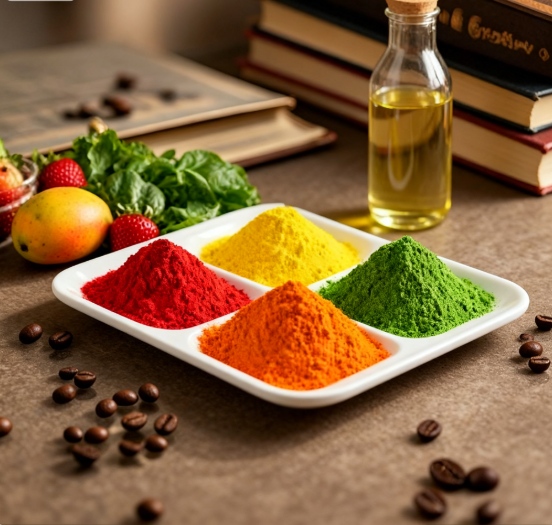
Powdered ingredients like spices, flour, or protein blends often turn into stubborn clumps when exposed to moisture or humidity. It’s a common frustration in any kitchen, but the usual fix—adding synthetic anti-caking agents—can feel at odds with a clean-label approach. The good news? Nature already provides several gentle, effective solutions that keep your powders free-flowing without chemical additives.
A handful of plant-based options work wonders for absorbing excess moisture. Rice powder, for instance, is an unassuming hero that can be blended directly into spice mixes or stored in a small sachet within the container. Arrowroot powder and tapioca starch are equally handy, doubling as subtle thickeners while preventing granules from sticking together. Even something as simple as a few dried beans placed in a salt shaker can tackle humidity at a microscopic level.
Beyond the pantry, how you store ingredients plays a huge role. Keeping powders in airtight glass jars away from steam and direct sunlight makes a noticeable difference. For those who make their own blends, sieving ingredients together before storage helps distribute natural moisture barriers evenly. With these straightforward tricks, clump-free cooking stops being a guessing game and becomes a natural part of your routine.
Safety Credentials That Meet Global Standards
When you’re sourcing components for sensitive applications, safety isn’t a feature you can afford to gamble on. The credentials our products carry aren’t just paper badges—they’re proof of endurance under conditions that replicate real-world stress, from voltage spikes to prolonged heat cycles. We work exclusively with accredited labs that push prototypes past their published limits, ensuring the certificates we display reflect actual performance, not optimistic estimates.
What often gets overlooked is that standards differ sharply across borders. A mark that satisfies one market might not even be recognized in another. Our approach cuts through that noise by aligning with harmonized frameworks like IEC and ISO, then layering on region-specific certifications where they add genuine value. The result is a product that can unify procurement across continents without forcing you to juggle multiple compliance chains.
But beyond the paperwork, there’s a simpler truth: trust is earned through consistency. That’s why we share failure threshold data openly and encourage clients to request third-party audits of our manufacturing sites. We’ve found that when people see the rigorous follow-up testing we conduct on random production samples, the credentials stop being abstract symbols and become a story of reliability they can cite with confidence.
Keeping Dry Mixes Silky and Pour-Ready
Achieving that effortlessly smooth pour from a dry mix starts with understanding how ingredients interact with moisture and air over time. Even in a sealed container, tiny shifts in humidity can turn a free-flowing powder into a stubborn block. The secret often lies in the careful selection of anti-caking agents—not just any, but those that complement the specific texture of your blend. For instance, a touch of rice concentrate or finely milled tapioca starch can create a lightweight shield around each particle, preventing clumps without adding a detectable grit or aftertaste.
Temperature plays a quieter yet equally critical role. Storing mixes in a cool, stable environment keeps fats and natural oils from softening and binding powders together. But it's not just about storage—how you process the dry ingredients matters too. Sifting or using a low-speed blender to aerate the mix before packaging introduces tiny air pockets. These act as buffers, allowing the powder to cascade smoothly when you tilt the container, much like sand in an hourglass. This step is often overlooked in mass production but is a game-changer for small-batch quality.
Finally, consider the order in which components are added. Layering denser ingredients with lighter ones, then gently rotating the container rather than shaking, can maintain that silky consistency far longer. Some makers even include a reusable desiccant pack tucked into the lid—a simple addition that quietly combats ambient humidity every time the jar is closed. Small details like these transform a basic mix into something that pours as beautifully as it tastes, cup after cup.
How Silica Locks Out Moisture, Naturally
Silica gel’s secret lies in its microscopic architecture. Each bead is riddled with countless tiny pores that act like a maze of molecular sponges. When moisture-laden air passes over these surfaces, water vapor naturally condenses inside the pores, held in place by physical adsorption rather than chemical reaction. This process doesn’t alter the silica itself—it simply traps humidity the way dew collects on a cool morning leaf, only on a scale you can’t see with the naked eye.
Unlike many synthetic desiccants that rely on reactive compounds or hefty chemical loads, silica harnesses pure physics. It’s essentially cleaned and refined sand, inert and non-toxic. Because it works through capillary condensation and surface attraction, it can capture moisture even in environments that feel dry to us. Even better, when you gently heat the beads, the captured water evaporates back out, leaving the silica ready to protect again—a renewable cycle that sidesteps single-use waste entirely.
Think of silica as a silent sentinel in your pantry, your camera bag, or your toolbox. It doesn’t just suck up dampness and call it done; it actively buffers the microclimate around your valuables. As humidity creeps up, the beads pull it in; when conditions drop, they release just enough to keep everything stable. That natural balancing act is why a small packet tucked into a box can prevent rust on tools, preserve the crispness of crackers, and keep electronics safe—without any of the fuss or residue that harsher moisture-control methods can leave behind.
A Staple Ingredient from Spice Blends to Protein Powders
Turmeric's warm, earthy notes have anchored spice blends for centuries, most notably in curry powders and masalas where it provides color and depth. Its role goes beyond flavor; the root's natural preservative qualities helped it become indispensable in tropical cuisines long before refrigeration.
Today, you'll find this same vibrant powder scooped into protein shakes and post-workout smoothies. Fitness enthusiasts prize it for curcumin, the compound behind its anti-inflammatory properties. Unlike synthetic supplements, turmeric blends seamlessly into vanilla or chocolate proteins without overwhelming the taste.
What makes it truly versatile is how effortlessly it bridges the gap between the kitchen and the gym bag. A pinch can enrich a homemade garam masala just as easily as it can elevate a morning protein pancake batter, proving that some ingredients transcend their original purpose.
FAQ
It's a high-purity amorphous silicon dioxide powder specifically processed for food use. Unlike crystalline silica, it's safe for consumption. The particles have a large surface area and porosity, which allows them to absorb moisture and coat food particles, preventing them from sticking together without altering the taste or appearance.
By absorbing excess moisture, it significantly reduces the risk of clumping and caking that often ruins powdered products. This moisture control also helps inhibit mold and bacterial growth, so items like spices, protein powders, drink mixes, and baking ingredients stay free-flowing and fresh for much longer.
Yes, it's widely recognized as safe by major food safety authorities including the FDA and EFSA when used within specified limits. It has been used in the food industry for decades without evidence of health risks. Always ensure you're using a product explicitly labeled as food grade to avoid contaminants.
You'll find it in a vast array of dry and powdered goods: seasoning blends, grated cheese, coffee creamers, instant soups, baking powder, powdered sugar, nutritional supplements, and even some dried egg products. Any product where flowability and freedom from lumps are critical can benefit.
Silica offers a unique combination of high absorption capacity, chemical inertness, and neutral taste. It doesn't introduce any off-flavors or react with food components. Unlike some agents, it works well in both high-acid and alkaline formulations, and it's effective at very low use levels, often less than 2% by weight.
The USDA National Organic Program does not include synthetic silicon dioxide on its list of allowed non-organic ingredients, so it cannot be used in certified organic products. For organic applications, manufacturers often turn to alternatives like rice hull powder or organic starches, though these may not perform as efficiently.
Professional-grade silica is characterized by high purity (over 99% SiO2), consistent particle size distribution, and low levels of heavy metals and other impurities. It should come with thorough documentation including certificates of analysis. This ensures reliable performance batch after batch in manufacturing settings.
It's typically added at a very low inclusion rate, usually 0.5% to 2% of total weight, during the blending stage. To maximize its effectiveness, it should be well dispersed without excessive shear. Many producers pre-blend it with a small portion of the main ingredient before combining with the full batch to ensure uniform distribution.
Conclusion
Food-grade anti-caking silica offers something truly distinctive: a completely natural, mineral-based solution that prevents clumping without altering flavor, color, or nutritional value. Its microporous structure acts like a moisture trap, drawing in ambient humidity and locking it away so that even the finest powders remain free-flowing. Whether you're working with pungent spice blends, delicate protein powders, or instant drink mixes, silica keeps them silky and scoopable from the first use to the last. This moisture-controlling power operates on a purely physical principle—no chemical reactions, no off-tastes—just clean, dry ingredients that behave as they should. Unlike organic anti-caking agents that can break down over time or under heat, silica remains stable and effective across a wide range of conditions, making it the go-to for manufacturers who demand consistency.
What really sets food-grade silica apart is its unwavering safety record, backed by compliance with the strictest international food safety standards, including those from the FDA and EFSA. It is chemically inert, meaning it doesn't interfere with the body's natural processes; it passes through without absorption, making it safe for daily consumption across all age groups. This transparency fits perfectly with the growing consumer demand for clean, understandable labels. From large-scale industrial blending to artisan spice mixes, silica has become a quiet, reliable workhorse—ensuring that every shake of garlic powder, every scoop of whey, and every spoonful of cake mix comes out light, dry, and ready to perform. By choosing food-grade silica, producers not only enhance product quality but also demonstrate a commitment to both natural origins and rigorous safety, building trust in every package.
Contact Us
Contact Person: Levin Wang
Email: [email protected]
Tel/WhatsApp: 8618668999988
Website: https://www.silicaplant.com/