

Professional LED Light Therapy Benefits and How It Works
2026-08-29
LED light therapy might look like a simple glow, but behind those red and blue panels is a precise science that has made it a staple in professional dermatology. The benefits—clearer skin, faster healing, reduced wrinkles—are well documented. The real question is how it works and what "professional grade" truly means. In this post, we'll unpack the mechanisms and key advantages of professional LED light therapy, and explain how Omeina is making that clinic-level technology more accessible than ever.
The Cellular Wake-Up Call Behind LED Therapy
The initial event in LED therapy is not heat or surface stimulation but a direct interaction between photons and mitochondrial chromophores, particularly cytochrome c oxidase. When light at specific wavelengths reaches the deeper layers of the skin, it displaces inhibitory nitric oxide from this enzyme's active site, allowing electron transport to resume more efficiently. The downstream effect is a measurable increase in ATP production, but that is only part of the story. Cells also experience a transient shift in redox balance, which functions as a signaling trigger rather than a simple energy boost.
That subtle redox shift prompts fibroblasts and keratinocytes to upregulate genes involved in repair, collagen synthesis, and antioxidant defense. Instead of forcing cells into a single pathway, the light creates conditions under which damaged or sluggish cells can recalibrate their own metabolism. This is why LED therapy can appear to work on so many different tissue types: it does not instruct cells what to do as much as it removes a metabolic bottleneck and lets the existing cellular machinery wake up and respond more intelligently to its local environment.
Why Clinic-Grade Panels Outperform Home Devices
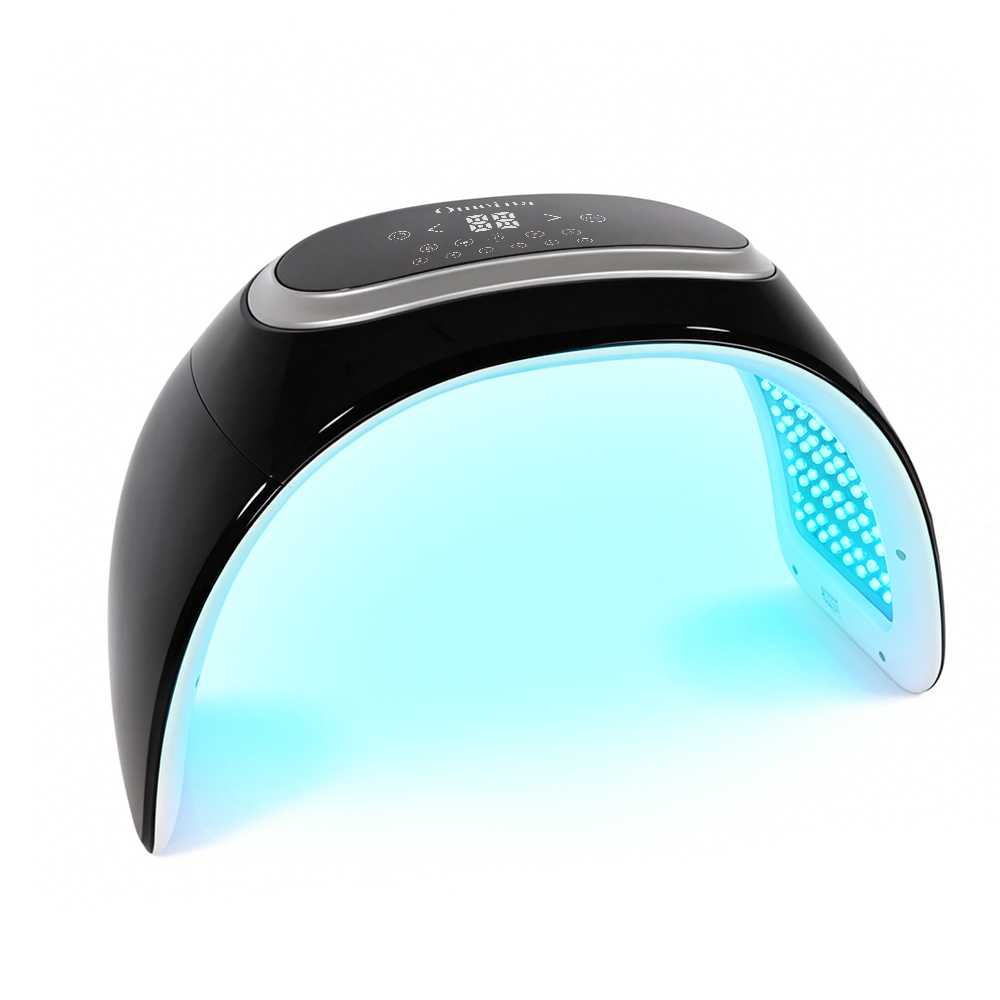
The gap starts with the light itself. Clinic-grade panels use large arrays of tightly binned LEDs that deliver consistent irradiance across the entire treatment area, often in the 30–100 mW/cm² range. That means the dose your skin receives at the edge of the panel is nearly identical to the center. Most home devices, by contrast, rely on smaller diode counts and diffusers that drop off noticeably toward the edges. The result is patchy exposure, longer sessions to compensate, and a higher chance of missed spots.
Build quality also separates the two categories. A clinic panel is designed to run for hours a day, day after day, without drifting in output or overheating. They include active cooling, medical-grade power supplies, and sometimes integrated skin sensors or dosage tracking. Home devices are built to a price point. Their plastic housings, passive cooling, and unregulated drivers can lead to thermal throttling after ten or fifteen minutes, changing the output spectrum and intensity mid-session. You simply cannot rely on them to deliver the same session twice.
Finally, there is the matter of protocol flexibility. Professional panels usually allow precise adjustments to wavelength, pulse duration, and intensity, which lets a clinician tailor treatment to a specific skin type or concern. Many also accept firmware updates and interchangeable heads. A consumer device locks you into one or two presets. That may be fine for general upkeep, but it cannot match the repeatable, adaptable performance that makes clinic-grade equipment worth the investment.
Collagen Production Without Needles or Downtime
For years, boosting collagen meant accepting a trade-off: needles, redness, or days hidden away from the world. That's no longer the only path. Technologies like fractional radiofrequency and targeted ultrasound heat the deeper layers of your skin just enough to trigger a natural repair response, all while the surface stays cool and comfortable. You might feel a warm tingling, but you can return to your normal routine right after the session.
What makes these approaches stand out is how they work with your biology. Instead of overriding it, they send precise signals that fibroblasts—the cells responsible for collagen synthesis—interpret as minor injury. Your body then rushes to rebuild with fresh, tightly woven collagen fibers. Over the following weeks, this translates into smoother texture, firmer contours, and a subtle lift that doesn't look artificial.
Because there's no wound to heal, there's no downtime to plan around. A single session may take thirty minutes, and you can apply makeup immediately if you wish. Results build gradually, often peaking around three months, and maintenance sessions once or twice a year are usually enough. It's a gentler rhythm that fits real life, yet the changes are tangible—skin that looks rested, resilient, and genuinely younger.
Sore Muscles and Stiff Joints: How Light Eases the Ache
That deep ache after a hard workout or the morning stiffness that makes you shuffle to the coffee maker often feels like a signal to stay still. But the right kind of light can do more than just brighten the room. Red and near-infrared wavelengths reach past the skin and nudge your cells into a better repair mode. They help quiet the low-grade inflammation that keeps muscles tender and joints creaky, so your body stops fighting itself and starts rebuilding.
You don't need a clinic or a complicated setup to test this. A handheld light device or a simple panel used for ten to twenty minutes over a sore shoulder, lower back, or achy knees can boost local blood flow and loosen the surrounding tissue. Many people notice that the tight, guarded feeling fades after a few sessions, making it easier to stretch, walk, or finally get comfortable in a chair. The warmth isn't the point here; it's the way the light stimulates the mitochondria inside your cells to produce more usable energy.
Consistency matters more than intensity. Using light therapy a few times a week, especially after activity or before bed, tends to yield steadier relief than a single marathon session. It's gentle, drug-free, and doesn't come with the grogginess of painkillers. If soreness has become your constant companion, replacing one evening of scrolling with a short light session over the worst spots might be the nudge your muscles and joints have been waiting for.
The Mood and Sleep Benefits Nobody Mentions
Most people chase the obvious perks of solid sleep—more energy, sharper focus—but the quieter shifts are often the ones that stick. You start catching yourself before a small annoyance turns into a full spiral. That pause, the half-second where you used to snap, becomes a little wider. It’s not that problems shrink; your baseline simply stops hovering near empty.
Another overlooked payoff shows up in how you read other people. Sleep debt makes neutral faces look hostile, but with enough rest, a coworker’s short email no longer feels like a personal jab. You stop drafting mental replies to conversations that never happened. In that space, the urge to ruminate loses its grip and the day feels less like a series of small battles.
Then there’s the odd one: dreams become less like static and more like a coherent afterthought. Not every night, but often enough that waking up feels like finishing a chapter instead of being yanked from noise. It’s a subtle reminder that your brain isn’t just recovering—it’s actually making sense of things while you’re out.
Your First Session: What Actually Happens Under the Lights
You won’t be thrown straight into the glow. Most first sessions start with a few minutes of adjustment while the team positions the key lights, softboxes, and reflectors around you. It feels a bit like being the center of a quiet machine—wires taped down, stands locked, and someone checking the intensity on a handheld meter. The heat from the bulbs reaches your skin before the actual work begins, and you might catch yourself squinting until your eyes settle. Nobody tells you how much of it is just standing still while the room gets tuned.
Once things kick off, the lights do most of the talking. They’ll shift between warm and cool, sometimes harsh enough to make you blink, other times so soft the shadows almost disappear. You’ll hear small instructions—turn your chin a fraction, relax your shoulders, maybe hold a pose for a few seconds longer than feels natural. The weird part is how quickly your body forgets the brightness. After ten minutes you’re not thinking about the lamps anymore; you’re just trying to follow the rhythm of the session and not laugh when the operator says something unexpectedly casual while adjusting a gel.
By the end, the lights get switched off and the room feels oddly dim, like walking out of a matinee into an evening street. Your eyes might sting a little or your skin might feel warm, but that fades fast. What sticks is the realization that being under those lights isn’t about performing—it’s about letting the setup do its job while you simply exist in the frame. Next time you’ll know to bring eye drops and maybe a long-sleeve layer for the cool-down.
FAQ
It’s a skin treatment that uses specific wavelengths of light—usually red, blue, and near-infrared—to trigger natural repair processes in the skin. Unlike lasers or peels, it doesn’t remove any tissue; it simply energizes cells so they work more efficiently.
The light penetrates the skin and gets absorbed by mitochondria, the energy centers inside cells. This boosts ATP production, which gives cells more fuel to repair damage, reduce inflammation, and build collagen. Different wavelengths target different depths and concerns.
It’s particularly effective for inflammatory acne, fine lines, uneven texture, and dullness. Red and near-infrared light are great for collagen support and healing, while blue light targets acne-causing bacteria. Some clinics also use amber or green light for redness and pigmentation.
Professional panels deliver much higher irradiance, so the light reaches deeper and works faster. Treatments are also tailored to your skin’s condition, and the session often includes a full-face panel rather than a small handheld device. The result is more noticeable change in fewer visits.
Yes, it’s generally safe across the Fitzpatrick scale because it doesn’t rely on heat or UV radiation. There’s no risk of hyperpigmentation from the light itself, which makes it a solid option for deeper skin tones that may not tolerate lasers well.
Many people notice a glow after the first session, but lasting changes in acne or fine lines usually take a series—often 6 to 12 sessions spaced a week or two apart. Maintenance sessions every month or so help keep the skin in a good rhythm.
No downtime. You might feel a mild warmth, but it’s not painful. Some people experience slight redness immediately after, which fades within an hour. You can apply makeup and go about your day right away.
Absolutely. It’s often used after microneedling, chemical peels, or extractions to calm the skin and speed up recovery. The light boosts the skin’s repair mode, so pairing it with other treatments tends to enhance overall outcomes without adding irritation.
Conclusion
Professional LED therapy is less about sitting under colored bulbs and more about triggering a cellular response. When red and near-infrared wavelengths hit the skin, photons interact with cytochrome c oxidase in mitochondria, boosting ATP production and signaling repair pathways. Clinic-grade panels stand apart because they deliver much higher irradiance and uniform coverage across multiple wavelengths—typically 630nm, 660nm, and 830nm—so the energy actually reaches fibroblasts in the dermis rather than scattering at the surface. That's how you get measurable collagen and elastin remodeling without needles, heat damage, or downtime. Sessions feel uneventful, but the metabolic shift is ongoing.
The benefits go beyond smoother skin. The same wavelengths penetrate into muscle and joint tissue, increasing local circulation and lowering inflammatory markers like TNF-alpha, which is why stiff knees and sore shoulders often loosen up after a series. Less discussed are the mood and sleep effects: red light exposure can support melatonin regulation and boost serotonin, helping people who sit under panels in the morning feel more alert and sleep deeper at night. A first appointment is straightforward—you remove makeup, put on protective goggles, and sit or lie near the panel for 10 to 20 minutes. There's no burning, no peeling, just a warm glow and a quiet sense that your cells are finally getting the light they've been missing.
Contact Us
Contact Person: Tina Liu
Email: [email protected]
Tel/WhatsApp: 8618681405932
Website: https://www.omeinabeauty.com/