

Swiss CNC Lathe Factory: Precision Machining Solutions for Complex Parts
2026-07-26
When it comes to manufacturing complex, high-precision components, Swiss CNC lathes have become the backbone of modern industry. At the heart of this technology is WINNRUI CNC, a factory dedicated to delivering precision machining solutions that push the boundaries of what's possible. From intricate medical devices to aerospace fasteners, their advanced Swiss turning centers handle the most demanding geometries with ease. In this post, we'll explore how their expertise turns raw stock into flawless parts—and why engineers are taking notice.
Mastering Micro-Tolerances Where Others Fall Short
Precision isn’t just about hitting the mark once—it’s about doing it consistently when every micron counts. While most stop at standard tolerances, the real art lies in controlling those near-invisible deviations that accumulate into visible flaws. It’s the difference between a part that fits and one that performs flawlessly under stress, time after time.
Mastery here means understanding not just your tools, but the material’s personality under heat, pressure, and fatigue. When others accept ±0.005 as close enough, the real work begins in that silent space between 0.0049 and zero—where scrap rates drop, assemblies click without force, and clients stop asking for rework.
This isn’t about expensive gear or buzzwords; it’s a mindset of refusing to normalize what’s barely acceptable. By chasing what others dismiss as overkill, you build a reputation that’s measured not in promises, but in parts that speak for themselves long after delivery.
Swiss Turn-Mill Agility for Intricate, Multi-Feature Parts
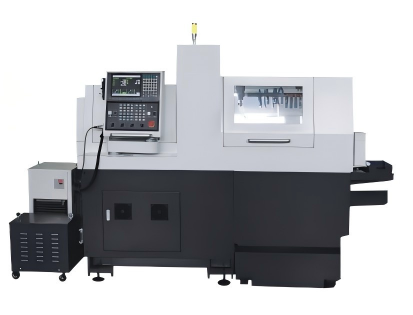
Producing parts with intricate geometries and multiple features used to mean juggling setups across several machines, adding time and risk at every handoff. Swiss turn-mill centers flip that equation on its head by combining turning, milling, drilling, and even gear hobbing into a single, seamless workflow. The sliding headstock design delivers outstanding stability for long, slender workpieces, while live tools and sub-spindle capabilities enable one-hit completion of complex contours, cross holes, and backworking operations. The result is a level of agility that shrinks lead times dramatically and makes it practical to prototype and run small batches without sacrificing precision.
Where a conventional approach might require multiple fixtures and alignments, a Swiss turn-mill keeps the part clamped once and moves the tooling around it. This eliminates stack-up errors that accumulate each time a part is repositioned. For components with tight concentricity demands, off-axis threads, or tiny milled flats, maintaining reference surfaces throughout the machining sequence means tolerances can be held to microns, not just thousandths. The machine’s ability to synchronize spindles, orient the C-axis, and apply high-pressure coolant through the tool shank also unlocks opportunities to mill deep pockets and produce flawless surface finishes without secondary handwork.
The real-world advantage shows up in the freedom to rethink part designs. Engineers no longer need to avoid certain features for fear of manufacturing complexity; they can consolidate assemblies into single-piece designs, integrate angled fluid ports, or add intricate knurling and engraving directly in-cycle. Swiss turn-mill centers thrive on medical implants, aerospace actuators, and watch components where every feature has a purpose and there’s no room for compromise. Coupled with quick-change tooling and offline programming, the technology makes it possible to shift from one high-mix part to the next in minutes, keeping production fluid even when order quantities fluctuate wildly.
Material Intelligence: From Exotic Alloys to Medical-Grade Plastics
True material intelligence isn’t just about knowing properties off a data sheet. It’s the ability to steer a project around the hidden quirks of exotic alloys that work-harden mid-machining, or the cold-flow tendencies of certain medical-grade plastics that can quietly distort under sustained load. You learn to read between the ASTM lines, to anticipate how a cobalt-chrome femoral knee will respond to five million cycles of simulated gait, or why a particular PEEK grade holds tolerance right up to the autoclave but another creeps unacceptably once the steam hits.
The real art lies in choosing materials not for what they are, but for how they behave across the entire product lifecycle. An alloy might boast the ultimate tensile strength required for a spinal implant, but if its corrosion-fatigue performance degrades in the saline environment of the human body, that number means nothing. Similarly, a USP Class VI plastic can pass every cytotoxicity screen and yet fail in the field because nobody accounted for the plasticizing effect of lipids from adjacent tissue. That’s where experience bleeds into intuition: you start to see materials as dynamic systems, shaped by processing, sterilization, and the subtle chemistry of the application environment.
Populating a truly capable materials library demands more than a checklist of biocompatibility standards. You have to capture the tribal knowledge that doesn’t appear in supplier literature—the fact that a certain grade of titanium likes a slower feed rate in thin-walled sections, or that an FEP heat-shrink tubing will relax just enough after EtO sterilization to compromise a catheter bond. Over time, you build a mental catalog of such behaviors, making it possible to cross-map from aerospace alloys to orthopedic trauma plates, or from automotive-grade thermoplastics to single-use surgical instruments, without ever losing sight of the regulatory and clinical implications.
Sprinting from Concept to Production without Sacrificing Precision
Moving fast doesn't mean cutting corners—it means building smarter. When you race from concept to production, the real challenge isn't just speed; it's holding onto the details that separate a functional product from a flawless one. We've seen too many teams burn rubber only to end up with a prototype that limps through testing. The trick is to embed precision checks into every sprint, not as an afterthought but as the engine that drives momentum.
Instead of treating accuracy as a bottleneck, we reframe it as your acceleration lane. Early collaboration between designers, engineers, and fabricators catches mismatches before they become costly reworks. Rapid iteration thrives when your feedback loops are tight and your specifications are crystal clear—even if the first sketch is rough. That's how you shave weeks off development without leaving fit, finish, or function to chance.
The result? A process where velocity and exactness aren't enemies but allies. Tools like parametric modeling, live prototype testing, and real-time data sharing let you pivot fast while locking in the tolerances that matter. By the time you're scaling up, you're not patching a hasty build—you're refining a solid one. Speed gets you to the starting line; embedded precision gets you across the finish line first.
Embedded Quality Checks That Catch Flaws Before They Cost You
Mistakes buried deep in code or production processes often stay hidden until they trigger expensive failures. Embedded quality checks work like sentinels placed right at the pressure points—running unit tests in the CI pipeline, scanning every pull request for risks, or monitoring real-time data streams for anomalies. These aren't afterthoughts tacked on at the end; they're woven into the fabric of daily work, catching assumptions that could unravel downstream.
When a developer commits a change that breaks integration, an automated gate blocks it before it infects the main branch. In manufacturing, sensors along the line halt operations the moment a component drifts out of spec. This shift-left mindset prevents small deviations from snowballing into rework, recalls, or trust erosion. The cost of fixing a flaw multiplies tenfold at each later stage, so these embedded checkpoints aren't just safety nets—they're the difference between a quiet morning and an all-hands firefight.
The magic lies in designing checks that feel invisible yet are relentless. They don't slow the team down with noise; they filter the signal so only genuinely broken things surface. Over time, this builds a culture where quality isn't inspected in but built in, making the final output predictably solid. It's the discipline of catching a bolt that's slightly off-thread now rather than explaining a collapsed structure later.
Tailored Fixturing and Tooling for Your Hardest-to-Machine Components
When a component pushes the limits of conventional machining, off-the-shelf workholding and standard cutting tools rarely rise to the occasion. We design fixturing that accounts for every subtlety of your part—thin walls, complex contours, or delicate features—so clamping forces are distributed exactly where needed, eliminating distortion and chatter. Instead of forcing your part to adapt to generic setups, the tooling is engineered around your component’s unique fingerprint, turning what was once a high-risk operation into a stable, predictable process.
This approach goes beyond simple CAD models. By analyzing material behavior under load, we create fixtures that use hybrid location strategies—combining zero-point clamping with custom soft jaws or dynamically adjustable supports—to hold even the most irregular workpieces rigidly without inducing stress. On the tooling side, geometries, coatings, and substrate grades are matched precisely to the material’s abrasiveness, hardness, and thermal conductivity. Special chip-breaking edges and coolant-through designs often get integrated right into the holder, keeping the cutting zone cool and clear in deep cavities or tight spaces where standard tools would quickly fail.
The difference shows up on the shop floor immediately: reduced setup times, longer tool life, and parts that come off the machine within tolerance on the first try. One recent job involved a thin-walled aerospace bracket that had previously required four separate operations and constant operator intervention. By co-designing a multi-axis fixture and a specialized long-reach milling tool with vibration-dampening geometry, we consolidated the work into a single setup with a 60% cycle time reduction and zero scrap. That’s the kind of result that makes tailored fixturing and tooling not just a technical advantage, but a genuine manufacturing strategy.
FAQ
Swiss CNC lathes use a sliding headstock and guide bushing, which supports the workpiece very close to the cutting tool. This design minimizes deflection and vibration, allowing for highly precise machining of long, slender parts that would be difficult on a traditional lathe.
These machines excel at manufacturing small, intricate parts like medical bone screws, dental implants, watch components, and electronic connectors. Any part that requires tight tolerances and complex geometries with diameters often under 32mm is a good fit.
Absolutely. While they're commonly used for stainless steel, titanium, and aluminum, they can also machine plastics, brass, and even some superalloys. The key is selecting the right tooling and speeds for each material.
It starts with rigorous process control: stable setups, high-quality tooling, and regular in-process inspection using precision measurement equipment. Many facilities also employ automated bar feeders and real-time tool monitoring to maintain repeatability without constant operator intervention.
It can be, especially if the part design is already optimized for Swiss machining. While setup times can be longer than simpler lathes, the ability to complete a part in a single cycle—often including milling, drilling, and threading—reduces secondary operations and overall lead time, which offsets the initial setup cost.
The medical device and aerospace sectors are major users due to their stringent quality demands. Automotive, electronics, and defense industries also depend on Swiss machining for fuel injection components, connector pins, and various small precision parts.
Specialized factories not only have the right equipment but also deep expertise in programming and fixturing for complex parts. They understand the nuances of guide bushing sizing, toolpath optimization for minimal burrs, and efficient material usage, which can significantly impact part quality and cost.
Typical tolerances are within ±0.0002 inches (or about ±5 microns), but with careful setup and environmental controls, even tighter tolerances are achievable. This makes them ideal when other machining methods can't meet the required precision.
Conclusion
At this Swiss CNC lathe factory, mastery lives in the microns. While most shops meet their match at tight tolerances, here the team routinely holds dimensions that others walk away from. Swiss turn-mill agility is what makes it possible: parts with intersecting bores, eccentric turned profiles, and coned features come off the machine in a single handling, eliminating the stack-up errors that plague multi-setup jobs. The result is components—whether an orthopedic bone screw, a microfluidics manifold, or an aerospace trigger housing—that fit and function right out of the tray, with surface finishes that rarely need polishing.
Speed never tramples precision because the process is built to anticipate trouble. Material intelligence means programs are tuned for the quirks of 17-4PH, titanium, or medical-grade PEEK before the first chip flies, and unattended overnight runs are nested with thermal stability in mind. In-process probing checks every critical feature against the 3D model mid-cycle, flagging drift early enough to adjust, not scrap. When standard workholding cannot grip a fragile lattice structure or a wafer-thin disk, the in-house fixturing team cuts custom soft jaws and vacuum pallets that immobilize the part without distortion. That blend of foresight and hands-on ownership turns a difficult blueprint into a reliable reality—no excuses, just parts that measure up.
Contact Us
Contact Person: Tim
Email: [email protected]
Tel/WhatsApp: +86 15522553731
Website: https://www.winnrui-cnc.com/