

tFUS Transducer Brand Comparison: Top Picks for Precision Neuromodulation
2026-09-05
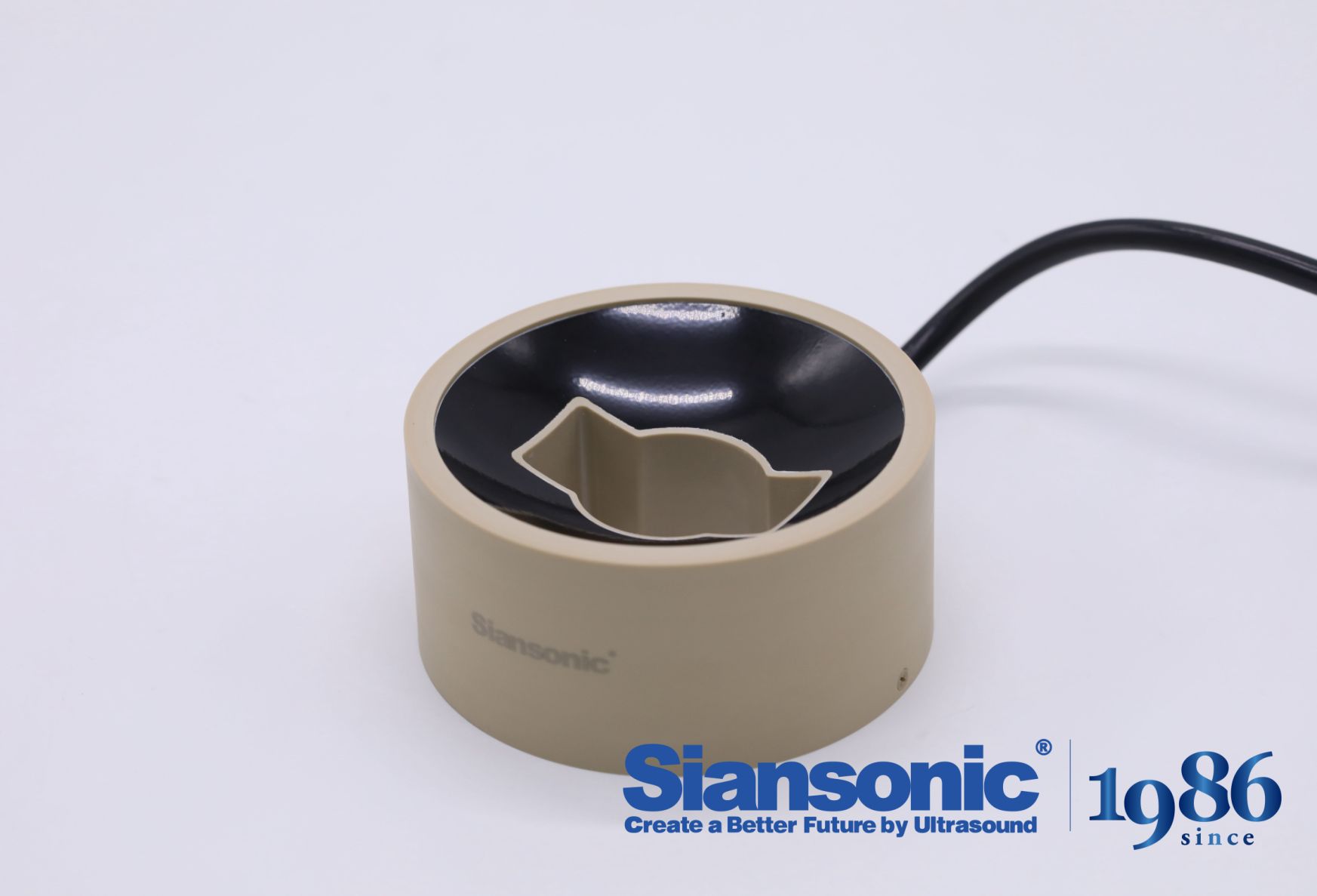
Transcranial focused ultrasound lives or dies by the transducer you pair with it. Too many teams learn this the hard way—after the grant is spent and the data looks noisy. That’s exactly why we’re comparing the field’s leading tFUS transducer brands, not by datasheet alone but by how they hold up in real neuromodulation workflows. One name that consistently earns a closer look is Siansonic, particularly for its tight fabrication tolerances. Stick with us as we break down what separates a precision instrument from an expensive paperweight.
How Transducer Geometry Shapes the Ultrasound Field
The radiating surface of a transducer is rarely an afterthought. A circular single-element transducer with a large diameter produces a long near-field zone and a narrow beam at the focus, while a small square element spreads energy quickly. The shape also dictates how the pressure wavefronts overlap: curved elements focus naturally, flat ones rely on a lens or electronic delays.
In arrays, geometry becomes even more influential. A linear array with rectangular elements has an elevation focus fixed by an acoustic lens, but its azimuthal focus can be steered electronically. Convex arrays create a diverging sector format, which changes the effective aperture at depth. Phased arrays use a small footprint with tight element pitch to steer a sector beam from a flat surface; that compact geometry can increase side lobe energy if the pitch exceeds half wavelength.
Subtle geometric features also leave a mark. Rounded corners on rectangular elements lower edge diffraction and reduce near-field ripple. The ratio of element height to width determines the elevation slice thickness. Annular arrays offer circular symmetry and a smooth focus but sacrifice electronic steering in the elevation plane. Transducer geometry sets the boundary condition that launches the entire acoustic field.
Material Choices That Quiet Thermal Drift
Precision instruments often drift because their structural metals expand unevenly as ambient temperature shifts. Aluminum and stainless steel, common in machine frames and optical mounts, carry coefficients of thermal expansion near 23 and 16 ppm per degree Celsius. A mere 5°C swing in a laboratory can push a mirror position or a sensor mount several micrometers off target. Swapping these for Invar 36, a nickel-iron alloy with an expansion coefficient under 1.5 ppm/°C, cuts that drift by an order of magnitude. The trade-off is machinability and cost, yet for metrology stages and laser cavities the quiet performance justifies the expense.
Carbon-fiber-reinforced polymers offer a different route. Unidirectional carbon fiber can actually shrink slightly along the fiber axis when heated, while the epoxy matrix expands. By stacking plies at deliberate angles, engineers tune the net coefficient to near zero in one or two directions. Satellite optical benches and telescope trusses exploit this trick, though the anisotropy demands careful finite-element modeling to avoid unexpected bending when the temperature changes.
For the most demanding optical surfaces, glass ceramics like Zerodur or ULE provide expansion coefficients below 0.05 ppm/°C across a broad temperature band. These materials combine a crystalline phase with negative expansion and a glassy phase with positive expansion, canceling each other almost perfectly. Large telescope mirror blanks rely on them because a 10-meter substrate can hold its figure to tens of nanometers even as night air cools. Pairing such a mirror with a steel mount would reintroduce drift, so designers often match the support structure to the glass ceramic or use flexures that isolate differential expansion entirely.
Calibration Routines for Repeatable Focal Pressure
Achieving consistent focal pressure starts with a stable zero reference. Before each session, place the probe or tool against a non-compliant reference block and hold for ten seconds while logging the raw output. If the baseline drifts more than 2% from the previous day’s value, the gain offset needs trimming rather than a full recalibration.
A stepped loading routine catches nonlinearity that single-point checks miss. Apply 25%, 50%, 75%, and 100% of the target pressure in ascending order, then reverse the sequence without pausing. Record the output at each step and compare the two directions. Hysteresis gaps above 1.5% usually indicate mechanical stiction in the actuator or a worn seal, not an electronic fault.
For repeatable results across operators, lock the approach speed and dwell time into the calibration protocol. Small variations in how quickly pressure is applied can shift the sensor’s elastic response enough to matter in tight-tolerance work. Re-run the full sequence at the start of every shift, or after any change in ambient temperature greater than 5°C, and keep a simple logbook—pattern drift often shows up there before it appears in the product.
What Real-Time Feedback Reveals About Coupling
Real-time feedback strips away assumptions by showing how two systems actually respond to each other in the moment. When one side changes, the other reacts with a delay, intensity, or pattern that static snapshots miss. This live signal exposes whether the connection is rigid, adaptive, or drifting toward instability.
In practice, coupling strength becomes visible through small, repeated interactions rather than occasional big events. A tightly coupled pair may look smooth on the surface, yet the feedback loop amplifies tiny errors into oscillations. By contrast, loose coupling absorbs shocks more gracefully, but real-time observation often reveals hidden lags that build up unnoticed.
What stands out most is that feedback doesn't just measure coupling—it changes it. Watching the response in real time lets teams adjust the connection itself, tightening where too much slack causes confusion or loosening where rigid links create cascading failures. This continuous loop of observation and adjustment turns coupling from a fixed trait into a tunable relationship.
Comparing Acoustic Efficiency Across Leading Brands
Raw sensitivity ratings tell you very little until you dig into how each brand gets there. Bose tends to lean on elaborate porting and digital signal correction to squeeze usable output from relatively modest drivers, which keeps distortion low but sometimes masks a less efficient transducer. JBL, by contrast, often chooses higher-sensitivity compression drivers in portable and PA lines, accepting a slightly larger cabinet to deliver more sound per watt before any DSP touches the signal.
In the professional reinforcement world, the gap becomes even clearer. Yamaha's DXR series prioritizes flat response and thermal headroom, so the efficiency number looks conservative on paper but holds up during long, loud sets. QSC's K.2 family pushes Class-D output modules harder and uses a matched waveguide to reach higher SPL per watt, which is great for throw distance but can sound a bit forward if you are not careful with placement. Neither approach is objectively superior; it depends on whether you value consistency or raw projection.
Consumer multi-room systems muddy the water further. KEF's Uni-Q driver array trades some raw sensitivity for remarkably even off-axis coverage, whereas Sonos relies on sealed enclosures and aggressive limiting to protect small drivers while still filling a room. Measuring acoustic efficiency without noting the intended use case gives a distorted picture; an efficient studio monitor and an efficient party speaker are solving completely different problems.
The Operator’s Perspective: Setup Time and Error Recovery
For the operator standing at the machine, setup time isn't an abstract metric on a dashboard—it's the stretch of minutes spent swapping fixtures, jogging tools, and double-checking offsets while production waits. Every extra turn of a wrench or hunt for a misplaced gauge chips away at the rhythm of the shift. When setup drags, it's not just idle equipment; it's the feeling of falling behind before the first good part even comes off the line.
Error recovery hits differently from the floor. A crash or a misloaded blank stops the flow, and suddenly the operator's attention splits between diagnosing the fault, clearing the jam, and mentally replaying the last few steps to figure out what went wrong. The best recovery paths aren't the ones documented in a binder—they're the shortcuts learned through repetition: the quick jog back to home, the known sweet spot for restarting a cycle without scrapping the workpiece, the instinct to check tool wear before blaming the program.
What operators actually want is setup and recovery that respect their working memory. Clear, well-marked clamping points, tool presetters that eliminate guesswork, and error messages that say more than "Alarm 27" all shave minutes off the clock. More importantly, they reduce the mental load—the split-second decisions that accumulate over a ten-hour shift. When setup is predictable and recovery is familiar, the operator can keep their eyes on the process instead of the clock.
FAQ
Sonic Concepts, Ultran, and Imasonic are the names you'll see most often in lab setups. Sonic Concepts tends to dominate for ready-to-use single-element and annular arrays, Ultran is favored when labs want tighter control over piezoelectric material and housing, and Imasonic gets pulled in for high-channel-count phased arrays or unusually shaped apertures.
Their H-series bowls and annular arrays come with well-characterized acoustic field maps and integrated matching layers, so you spend less time calibrating before animal or phantom work. The mounting hardware and impedance matching are consistent across units, which helps when you need reproducible focal gain run to run.
Ultran is more of a custom shop. You can specify composite versus monolithic PZT, odd aperture sizes, or unusual frequency ranges without paying for a completely new design program. Their engineering team tends to work closely with groups that need low-profile transducers for MRI-compatible setups.
If your protocol requires a 2D matrix array for electronic beam steering or you're pushing beyond conventional 500 kHz to 2 MHz ranges into multi-MHz territory with high duty cycles, Imasonic is often the safer bet. They also handle large radiating surfaces and complex piezocomposite machining that smaller vendors may decline.
Focal length, F-number, center frequency, and the true -6 dB focal zone should be checked before anything else. A smaller F-number gives tighter focus but shallower penetration, while the bandwidth affects whether you can cleanly modulate envelope without ringing. Also look at the acoustic matching layer design, because that influences transmission efficiency into tissue.
Yes. Sonic Concepts typically ships with hydrophone scans and simulation overlays, Ultran will run impedance and beam profile checks on request, and Imasonic provides detailed SPL maps for custom arrays. You still need to verify in your own tank setup, but the baseline documentation can save weeks of troubleshooting.
Expect commercial off-the-shelf units from Sonic Concepts to ship in days to weeks, while custom work from Ultran or Imasonic can stretch from three to eight months depending on array complexity. Pricing ranges from roughly $5,000 for a single-element bowl to over $100,000 for a dense phased array, so budget realistically before committing.
Start with a Sonic Concepts H-115 or similar annular array. The documentation is approachable, replacement parts are straightforward, and you can benchmark your setup against published work. Once your stimulation paradigms mature, consider Ultran or Imasonic for tailored focal geometries or higher channel counts.
Conclusion
The transducer geometry dictates whether a tFUS system reaches deep targets without skull-induced defocusing. Brands favoring a spherical-segment aperture with a large f-number produce tighter, more predictable focal volumes; flatter arrays can struggle above the temporal bone. Material choices then show up as thermal drift—lead-free composites and low-hysteresis piezoceramics keep the acoustic output steady over long sessions, which matters more than peak intensity on a spec sheet. Calibration routines separate the practical from the merely impressive: a vendor whose five-minute hydrophone scan against a known load cell works in the clinic beats one that requires an overnight water-tank ritual. Those details push a few models ahead for anyone treating tFUS as a precision instrument rather than a generic ultrasound source.
Real-time feedback reveals what static specs do not. Built-in impedance and acoustic coupling sensors catch gel breakdown or hair interference before the focus weakens, and brands without this sensing leave operators guessing. Acoustic efficiency comparisons show a 30 to 40 percent gap between top and mid-tier transducers at the same focal pressure—less input power means less case heating and longer portable runtimes. From the operator’s chair, setup time and error recovery decide daily usability: quick-release mounts, tangle-free cable routing, and software that flags a coupling loss instead of forcing a manual retest keep sessions moving. When those practical metrics are weighted together, a shortlist emerges—one single-element design with a disposable coupling membrane wins on repeatability, while a modular array system earns points for fast reconfiguration despite slightly lower raw efficiency. Neither is perfect, but both outperform the crowded middle.
Contact Us
Contact Person: Ivy Zhang
Email: [email protected]
Tel/WhatsApp: +86 1081502288
Website: https://www.siansonic.com/