

Top 10 Aluminum Intake Manifold Upgrades for Maximum Power
2026-07-08
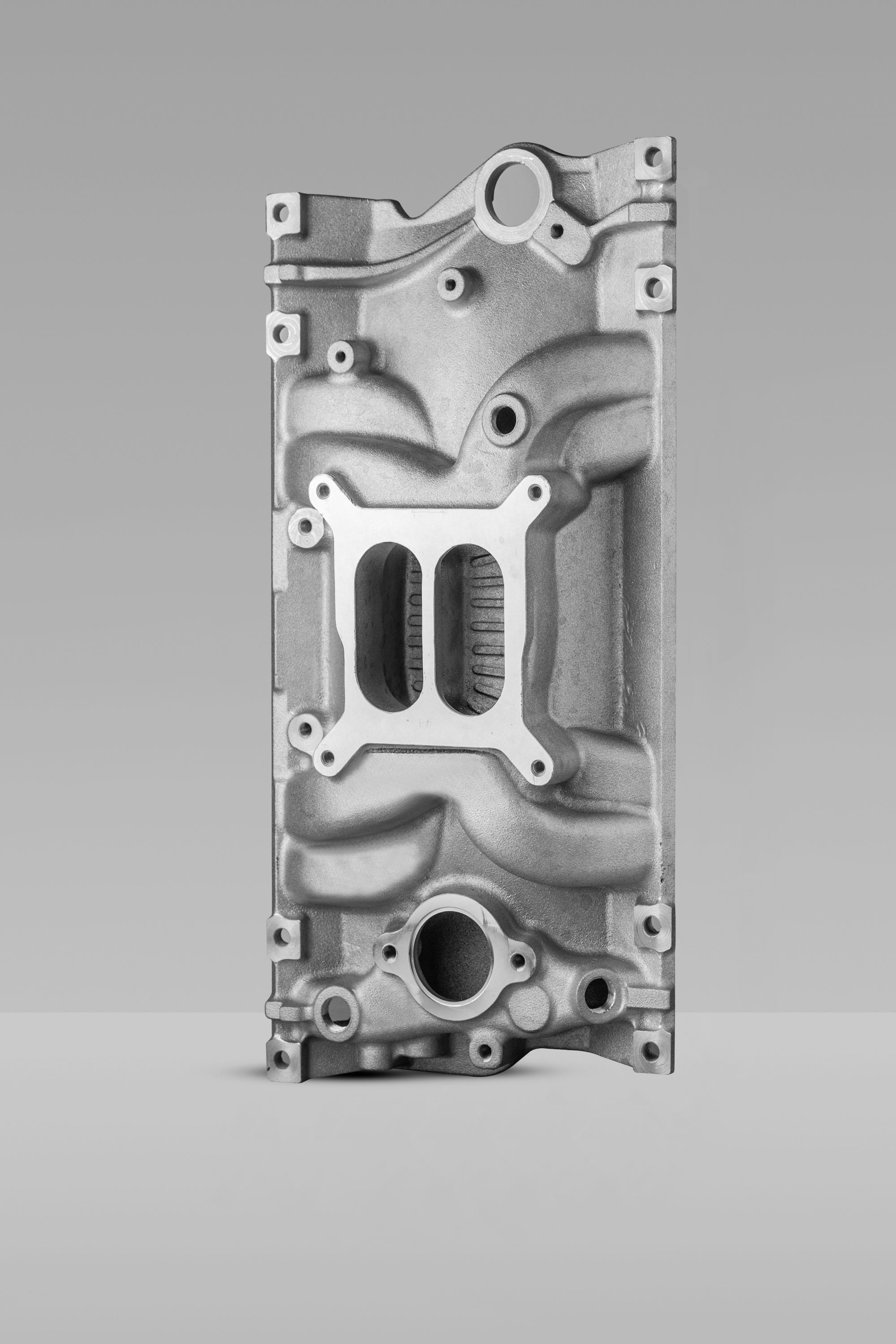
Unlocking serious horsepower often starts with one overlooked component: the intake manifold. Upgrading to a high-flow aluminum design can transform throttle response and top-end power, but sorting through the options can be daunting. We’ve tested and ranked the 10 best aluminum intake manifold upgrades that genuinely deliver gains, including standout performers from DDR that rival custom fabrications. Whether you’re building a street dominator or a track beast, this list will point you to the perfect match for your setup. Let’s dive in and find the manifold that wakes up your engine.
The metallurgical advantage aluminum brings to high-flow intake design
Aluminum’s natural affinity for high-flow intake design starts with its density—or lack thereof. At roughly one-third the weight of steel, it lets engineers create larger, more complex core geometries without saddling the vehicle with a mass penalty. This is critical in a part that sits right over the engine, where every gram counts toward throttle response and front-axle balance. The low density also means the intake can feature thinner walls and carefully drafted internal runners that maintain velocity while cutting turbulence, something that would require impractical wall thickness in cast iron or plastic.
But the real hidden advantage is thermal. Aluminum pulls heat out of the incoming air charge far better than composite polymers, and its oxide layer naturally resists corrosion from blow-by gases and humidity cycles. That combination lets designers push the envelope on runner shape: you can CNC-machine or 3D-print-sinter aluminum into a single, joint-free tract that flows like a velocity stack but fits under a factory hood. No gasket fretting, no step mismatches, and a surface roughness you can tune for boundary-layer management. When you need every last cfm, that metallurgical flexibility becomes a power adder in its own right.
There’s also a fatigue-life story that doesn’t get told often. Aluminum intakes can be post-weld heat-treated to remove residual stress, and they don’t suffer from the long-term creep and embrittlement that plague plastic manifolds under thermal cycling. For high-boost applications where the intake sees both pressure and vacuum spikes, the material’s isometric stiffness—especially in 6061 or A356 alloys—keeps plenum volume stable and runner cross-sections consistent. That predictability translates directly to repeatable MAF readings and a torque curve that doesn’t wander session to session.
Airflow dynamics that actually show up on the dyno sheet
Horsepower lives and dies by how well an engine breathes, but the dyno only cares about measurable gains—not theoretical flow bench numbers. What actually moves the needle are things like velocity profile stability through the intake port and how the combustion chamber manages swirl and tumble under real cylinder pressure. When port energy stays consistent across the pull, you see a torque curve that builds early and hangs on, not just a peak number that looks good in a catalog.
The camshaft's role in airflow dynamics is often misunderstood as simply "more lift equals more power," but on the dyno, what matters is the area under the valve lift curve and how it interacts with the induction system's resonant tuning. A mild cam with well-phased intake runner lengths can create a supercharging effect at specific rpm, punching a hole in the fuel curve that the dyno's wideband immediately catches. Conversely, a too-aggressive cam might bleed off dynamic compression, showing up as a soggy mid-range that no amount of timing can fix.
Exhaust scavenging is the silent partner in this dance, and its impact on the dyno sheet is brutally honest. A merge collector that cracks the pressure wave just right can pull the intake charge harder during overlap, sending the torque curve upward where competitors fall flat. You don't need a simulation to see it—just look for a combo that carries power past peak without a cliff drop, because that's airmass sticking around when others would have already choked.
Machining tolerances that separate a real upgrade from a shiny paperweight
In the world of precision components, the line between a genuine performance upgrade and an overpriced paperweight often comes down to a handful of microns. Tighter machining tolerances directly influence fit, finish, and function; when a part is crafted with exacting specifications, it mates flawlessly with adjacent surfaces, reduces unwanted play, and maintains critical clearances under thermal stress. Conversely, a part that looks identical on the outside but is manufactured to looser standards may wobble, leak, or fail prematurely—regardless of its aesthetic appeal or marketing hype. It’s the invisible rigor of tight tolerances that transforms a raw billet of metal into a component that truly enhances a machine’s capability.
What separates a real upgrade from a shiny paperweight isn’t the anodized surface or the laser-etched logo—it’s the dimensional consistency that ensures every sample performs identically to the engineering intent. A true upgrade will hold your tool or assembly in a perfect, repeatable position, eliminating vibration and deflection that degrade accuracy. Without this precision, even the most visually stunning part will introduce more problems than it solves, acting as nothing more than an expensive conversation piece that fails under real-world conditions.
Installation missteps that drain power instead of building it
Even when an installation looks fine, hidden mistakes can slowly bleed power. A terminal that wasn’t torqued properly or a connector that’s just a little loose creates extra resistance. That resistance turns into heat, and every bit of heat is energy that should have been doing something useful. It’s easy to gloss over these small details, but they add up to a constant, silent drain.
Another trap is getting the wiring even slightly wrong. Swapping a phase or skimping on a solid ground path might not trip a breaker immediately, but it often forces equipment to run less efficiently. Motors might hum a little louder, power supplies work harder, and the whole system draws more current just to compensate. The extra cost on your bill month after month can be a quiet reminder of that rushed hookup.
Then there’s ignoring where and how things are mounted. Stuffing a unit into a dusty corner without airflow or placing it somewhere damp invites trouble. Corrosion creeps in, insulation breaks down, and components drift out of spec. What felt like a time-saver during installation eventually turns into steady energy waste and early failures that no one connects back to that initial shortcut.
How heat management turns a basic manifold into a powerhouse
A manifold's true potential lies dormant until thermal dynamics are properly harnessed. Without deliberate heat control, expansion warps sealing surfaces and flow paths degrade, sapping energy that should drive the system forward. By embedding strategic thermal breaks and directing heat where it strengthens rather than distorts, a once-ordinary manifold becomes robust and responsive, channeling every bit of available force with minimal loss.
The magic happens when exhaust heat is no longer viewed as waste but as a resource to be managed. Clever routing retains thermal energy in the core while allowing peripheral areas to dissipate it safely, preventing hot spots that lead to fatigue. This balanced approach transforms a simple conduit into a self-stabilizing channel that thrives under continuous thermal cycling, handling loads that would overwhelm a stock design.
Durability isn't just about thicker walls; it's about smarter heat flow. Precision-engineered passages, combined with materials that expand uniformly, turn thermal stress from an enemy into an ally. The result is a manifold that actually grows stronger as temperatures rise, maintaining seal integrity and flow consistency through even the wildest temperature swings. Suddenly, what was once a bottleneck becomes the heart of the system, pumping performance without complaint.
Pairing your cam profile with the right runner geometry
Getting the most out of your cam profile starts by matching it with a runner geometry that respects the cam's intended motion. A lifter's shape, diameter, and edge radius directly influence how the cam lobe's acceleration and velocity translate into valvetrain action. When these geometries are misaligned, you lose effective duration, invite instability, and often create unnecessary harmonics that punish the entire system. Relying solely on bench tests without considering dynamic deflection under real loads is a common oversight. The real magic happens when your runner geometry complements the cam's acceleration curve, ensuring the valve responds predictably across the RPM range without excessive side-loading or bounce.
Runner geometry isn’t just about static alignment; it’s about how the interface behaves at high RPM. A cam profile with aggressive ramps demands a runner that can maintain consistent contact without scrubbing or digging. Using a larger wheel diameter can soften the effective acceleration profile, while a smaller one intensifies it. The edge radius on the runner also plays a subtle but critical role—too sharp and you risk skidding; too rounded and you lose precise motion transfer. Surface finish and materials further complicate the equation, as friction and wear alter the geometry over time. Every choice here reflects back on the cam’s ability to deliver the breathing characteristics you designed for.
Often builders blindly pair a wild cam with stock-style runners and end up chasing valvetrain instability. Thinking in terms of the combined system—cam, runner, rocker, and pushrod—reveals that each piece interacts dynamically. When you treat the runner as an extension of the cam’s lobe, you start to optimize not just peak power but also area under the curve. Test different runner profiles, keep meticulous notes about airflow and valve motion, and don’t be afraid to step outside typical catalog matches. A cohesive design approach replaces the guesswork with predictable performance, reducing the risk of catastrophic failures and unlocking the true potential of your engine’s architectural intent.
FAQ
Aluminum manifolds handle heat better, won't crack under high boost, and often feature larger runners that unlock serious airflow gains.
On a built engine, absolutely. Reducing restrictions and matching the manifold to your cam can easily pick up 10 to 20 extra horsepower.
Heat soak can creep in during stop-and-go driving, but ceramic coatings or heat shields pretty much cure that. You'll also need a proper tune afterward.
Look at runner length, plenum size, and what throttle body it accepts. The goal is to align peak airflow with the RPM range where your engine lives.
It'll work, but gains will be sleepy unless it's paired with a bigger throttle body, cold air intake, and a tune. Forced induction really makes it wake up.
Long runners fatten up the torque curve down low, while short runners scream up top. Pick the length that suits where you want the powerband to hit hardest.
Without a doubt. The airflow change throws off fuel and spark, and skipping the tune is a fast track to engine trouble.
Conclusion
Aluminum intake manifolds unlock serious power through metallurgical and design advantages that cast-iron or plastic units simply cannot match. The material's high strength-to-weight ratio permits thinner walls and larger internal cross-sections without adding bulk, enabling more aggressive runner layouts that feed cylinders evenly. On the dyno, this translates to a fatter torque curve and higher peak numbers, especially when the manifold's plenum volume and runner length are tuned to resonant frequencies that supercharge cylinder filling at specific rpm. But airflow gains don't come from smooth bores alone—machining tolerances down to thousandths of an inch ensure port-matching perfection and eliminate steps that trip the boundary layer, keeping velocity high. The best upgrades are the ones where every internal transition feels invisible to the incoming charge, turning a shiny paperweight into a legitimate power adder.
Real-world performance hinges just as much on what you avoid. Botched installations—uneven torque sequences, reusing fatigued gaskets, or ignoring fuel rail alignment—create vacuum leaks and stumbling idle that bleed horsepower. Heat management is the unsung hero here: a manifold that stays cooler keeps intake air denser, and smart builders will insulate the base, route coolant lines thoughtfully, or even ceramic-coat the runners to shed heat soak. Finally, all the flow in the world won't help if the cam profile fights the manifold. Long runners boost mid-range torque for street cams, while short, straight runners feed top-end power for aggressive lobes. Matching that geometry to your valve events is where the combination comes alive—otherwise you're just leaving time on the table.
Contact Us
Contact Person: Shelly
Email: [email protected]
Tel/WhatsApp: 8613967667688
Website: https://www.yongyu.com/