

Top N52 Magnets for Unmatched Strength and Durability
2026-08-19
Finding an N52 magnet that actually lives up to its specs can be frustrating—many lose strength or chip after a few uses. That’s why we focused on options that combine maximum magnetic energy with robust coatings and real-world durability. From heavy-duty industrial pulls to precision DIY projects, the following list covers the best N52 magnets available, including several proven models from DAWA that don’t compromise on performance.
The Real Reason N52 Magnets Outpull Everything Else
Most people assume N52 magnets pull harder simply because they are labeled stronger, but that label hides a more interesting story. The real reason lies in how the neodymium-iron-boron alloy is processed to achieve an exceptionally high energy product—around 52 MGOe. That number represents the maximum amount of magnetic energy stored per unit volume, and when paired with a tightly controlled microstructure, it translates into a punch that other grades struggle to match.
What sets N52 apart is not just the raw elements but the precision during sintering and grain alignment. Each magnetic domain is forced into near-perfect orientation, reducing internal resistance and allowing the magnet to project a denser field from the same footprint. This means an N52 disc can outperform larger, lower-grade magnets in pull force tests, which surprises people who expect size to matter most.
There is also a practical edge: N52 reaches that peak without exotic additives, so it stays cost-effective for designers. The result is a magnet that feels almost unfair in side-by-side comparisons—same dimensions, better hold, and no obvious trade-off except brittleness and temperature sensitivity. Once you see the energy-density math, the reason behind its pulling power becomes impossible to ignore.
Why Two N52 Magnets of the Same Size Can Feel Completely Different
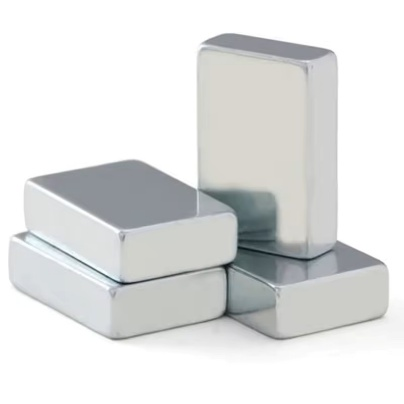
Two N52 magnets with identical dimensions can mislead you if you assume the grade guarantees a specific pull force. The N52 label tells you the maximum energy product, but manufacturers work within tolerances. One batch might be slightly undercharged, have a small internal crack from sintering, or use a thinner nickel coating than the other. Even a 0.2 mm difference in plating thickness changes the air gap between magnet and steel surface, which has an outsized effect on holding strength. So the “same” magnet can easily lose 20–30% of its expected pull without looking any different.
Magnetization direction is another hidden variable. Two discs of the same size can be axially magnetized or diametrically magnetized, and if you compare them by feel alone, one will seem radically stronger because the poles are on the wrong face for your test. Similarly, the charging process matters: a magnet that wasn’t fully saturated in the magnetizing fixture will behave more like an N42 or lower, even though the raw material was N52 grade. You can spot this by checking the field strength at the surface with a gaussmeter rather than relying on your fingers.
Surface finish and edge geometry also play a quiet but powerful role. A magnet with sharp edges and a perfectly flat ground face will sit tighter against a steel plate than one with slight chamfers or a rough, concave face. When you test by hand, the perceived “snap” depends on how the magnet approaches the surface, the angle of pull, and even the temperature of the room. Two magnets that measure nearly identical in an open-circuit flux test can feel completely different simply because one has a recessed nickel layer or a tiny burr that prevents flush contact.
Matching Shape, Coating, and Pull Force to Your Actual Job
Shape is rarely a one-size-fits-all decision. A flat magnet might hold a clean steel plate perfectly, but put that same magnet on a curved pipe or a stamped channel and the contact patch shrinks to a thin line. Instead of guessing, take a rubbing or use a contour gauge on the actual workpiece. Match the magnet face to that profile, even if it means a custom radius or a slightly smaller unit that sits fully in the recess. The extra time spent on shape pays off in holding power that doesn't rely on luck.
Coatings often get chosen by catalog photo, but they change how the tool behaves on the floor. A rubber or polyurethane coating adds friction and prevents scratches, which is great for painted parts or glass, yet it can leave marks if the surface is dusty or oily. Nickel or epoxy coatings handle washdown areas better and resist chipping, but they offer less grip on smooth, vertical surfaces. Think about what your hands feel when you touch the workpiece, then pick a coating that either bites into that texture or glides over it without damage.
Pull force numbers on a spec sheet are measured under ideal lab conditions: thick, flat, clean steel at room temperature, with zero air gap. Your job probably isn't that polite. A thin sheet metal panel, a layer of powder coat, or even a slight misalignment can cut the real pull force by half or more. Test the magnet on a scrap piece from the same batch and try to slide it, not just lift it. If it moves under side load, go up a size or add a second unit. A safety factor of two to three times the actual load keeps the magnet from becoming the weakest link in your process.
Heat, Drops, and Time—How N52 Magnets Really Hold Up
Most N52 magnets are rated for continuous service up to about 80°C (176°F), though that ceiling isn't a cliff—it's more of a gradual slope. Push one to 100°C for a short burst and it'll usually recover most of its pull once it cools down. Keep it there too long, however, and the loss becomes permanent. Thin discs and small cubes are especially unforgiving, since they have less magnetic mass to resist demagnetization from heat.
Drops are another story entirely. Neodymium magnets are sintered, which makes them strong but brittle. A hard fall onto concrete or tile can chip an edge, crack the plating, or even split the magnet clean in two. The magnetic field doesn't really care about a hairline crack if the pieces stay aligned, but the plating does—once moisture gets into a fracture, rust follows quickly.
Time alone is rarely the enemy. Left on a shelf at room temperature, an N52 magnet loses well under 1% of its strength per decade. The real long-term risks are corrosion, repeated thermal cycling, or exposure to strong external fields. If the nickel-copper-nickel coating stays intact and the temperature stays mild, an N52 magnet will likely outlast whatever device it's attached to.
DIY Jigs, Heavy-Duty Mounts, and Other Uses That Need Maximum Pull
When a jig has to hold a workpiece against sideways pressure or vibration, the rated pull of a magnet means little if it's not mounted flush against clean, flat steel. Maximum pull in these setups rarely comes from simply buying the largest magnet you can fit. Instead, direct contact between the magnet face and the work surface, plus enough steel thickness behind the magnet to carry the magnetic flux, determines whether the hold stays locked. For heavy-duty mounts, you often need countersunk magnets screwed into place so the fastener doesn't lift the magnet away from the surface.
In practice, a magnet's maximum pull drops fast when there's an air gap, paint, or a thin sheet-metal base. Shear loads—where the force slides across the face—can be much lower than direct pull, so adding a stop or mechanical locator takes pressure off the magnet. For jigs and mounts that must not shift, use multiple smaller magnets spaced along the load path rather than one big one at the center. That spreads the grip, resists twisting, and keeps the setup predictable even when the workpiece isn't perfectly flat.
Handling Mistakes That Can Shatter, Pinch, or Demagnetize N52
N52 magnets are incredibly strong but also brittle, and one of the most common handling mistakes is letting them snap together or onto a steel surface from any distance. The impact can easily chip or shatter the nickel coating and the magnet itself, sending sharp fragments flying. Also, never place a finger between two N52 magnets that are about to connect—the closing force is enough to pinch hard and break skin. If you must separate stacked N52 magnets, slide them apart sideways instead of trying to pull them directly apart, and use a non-magnetic wedge or edge of a table for leverage.
Another serious error is exposing N52 magnets to heat. Standard N52 grade begins to lose strength at temperatures as low as 80°C (176°F), and prolonged exposure near or above that threshold can permanently demagnetize them. Avoid soldering, welding, or drilling into an N52 magnet, and keep them away from ovens, engines, or direct sunlight in a closed vehicle. Even brief contact with a stronger opposing magnetic field can partially reverse the magnetization, so store N52 magnets away from other powerful magnets or electromagnets.
Finally, poor storage causes both pinching and demagnetization problems. Throwing loose N52 magnets into a toolbox lets them slam into each other, chip, and even flip polarity in some cases. Use plastic or wooden spacers between magnets, and keep them in individual compartments or on a steel keeper bar if you want to maintain their strength. Always wear safety glasses and thick gloves when handling larger N52 pieces, and treat every movement as if the magnet will jump to the nearest metal surface—because it will.
FAQ
It boils down to the maximum energy product, measured in mega-gauss-oersteds. N52 hits around 52 MGOe, while N42 sits at 42. That gap means an N52 magnet can pack noticeably more pull force into the same physical size, so you can use a smaller magnet to do the same job. The trade-off is that N52 is more brittle and often costs more per unit, so it's not always the best pick if you don't need that extra strength.
Think about the direction of the force you need. Discs and cylinders concentrate pull along their axis, which is great for holding or lifting straight on. Blocks give you a wide, flat surface for mounting or alignment. Rings are for when something needs to pass through the center, like a sensor shaft. If you need shear resistance, a countersunk pot magnet with an N52 core is often the smartest choice because the steel housing redirects the magnetic field.
They can be if you're careless. Two N52 magnets can snap together fast enough to break skin or shatter the magnet itself, sending sharp fragments flying. Keep them away from pacemakers, credit cards, and electronics. Use thick gloves and eye protection when handling larger ones, and separate them with spacers. Treat a big N52 like a power tool: respect it and you'll be fine.
Under normal indoor conditions, an N52 neodymium magnet will lose less than 1% of its strength over a decade. The real enemies are heat and physical shock. Above about 80°C, N52 starts to demagnetize permanently. Dropping or striking it can also knock domains out of alignment. If you keep it cool and avoid impacts, it'll outlast most projects.
Beyond the usual latches and tool holders, people use N52 magnets for hidden cabinet locks, magnetic levitation prototypes, guitar pickup experiments, and even DIY science demos like eddy current braking. One of my favorite tricks is embedding a thin N52 disc in a wooden hatch to create a no-latch closure that holds firmly but opens with a clean pull.
Store them in pairs or on a steel keeper plate so the magnetic circuit is closed. That reduces stray fields and prevents them from slamming into nearby metal. Keep a non-magnetic divider between stacked magnets, like cardboard or plastic, so you can separate them without wedging a knife between them. A cool, dry spot away from welding equipment or strong electrical currents is ideal.
No, and attempting it will usually ruin the magnet. N52 is sintered, meaning it's pressed from powder and then fused, so it's extremely hard but also very brittle. Drilling creates heat that demagnetizes the area and almost always cracks the magnet. If you need a custom shape, your best bet is to order it with the hole or groove from the manufacturer, or use a steel housing to adapt the shape.
The coating doesn't change the magnetic pull in any meaningful way. It's there to prevent corrosion, because the neodymium alloy rusts quickly in humid air. Nickel-copper-nickel is the standard shiny triple coating and works for most indoor uses. Epoxy or plastic coatings are better for outdoor or wet environments. Gold coating is mostly cosmetic. If you need maximum grip on a smooth surface, rubber-coated N52 magnets add friction without sacrificing much pull.
Conclusion
N52 magnets earn their reputation because they pack the highest energy density of any commercially available neodymium grade. That extra pull comes from a tightly controlled sintering process, but raw grade alone never tells the whole story. Two magnets stamped N52 and cut to identical dimensions can still behave very differently in your hand. A thinner nickel-copper-nickel coating, a chipped edge from rough handling, or a slight variation in plating quality can all change how confidently the magnet grips a surface. Matching the shape, coating, and pull force to the job matters more than chasing the biggest number. A countersunk disc with a rubberized coating may hold better on painted steel than a bare block rated for higher pull, simply because it sits flush and resists sliding.
Durability is where N52 shows its real value, but only if you respect the material. These magnets tolerate moderate heat and everyday knocks, yet a sharp drop onto concrete can crack the brittle sintered core before the plating shows any damage. Repeated exposure to temperatures above their rated limit causes permanent loss, not just temporary weakening. For heavy-duty mounts, jigs, or fixtures that demand maximum holding force, pairing the magnet with a steel backing plate or cup dramatically improves performance. On the handling side, keep larger N52 magnets separated with spacers and slide them apart instead of prying. Pinched skin and shattered magnets are almost always the result of letting two high-energy pieces snap together uncontrolled. A little patience at the workbench keeps both your fingers and the magnet's strength intact.
Contact Us
Contact Person: Kelvin Lo
Email: [email protected]
Tel/WhatsApp: 0769-88561131
Website: https://dawamagnetic.com/