

Top Oil-Immersed Transformer Solutions for Enhanced Grid Reliability
2026-08-21
Grid reliability isn’t a buzzword—it’s the difference between a routine peak load and a cascading failure. Oil-immersed transformers remain the backbone of that reliability, but only when they’re engineered for real operating stress. Below, we examine top-performing solutions from Chang Song that pair robust insulation, efficient cooling, and overload tolerance to keep aging grids stable under pressure.
Advanced Thermal Management for Prolonged Transformer Life
Most transformer failures can be traced back to a single stubborn variable: heat. While nameplate ratings assume a tidy 30°C ambient, real installations rarely cooperate. Advanced thermal management stops treating temperature as a fixed design input and starts treating it as a live operating condition. Directed oil flow, zigzag cooling ducts, and variable-speed pump logic now work together to shave hotspot margins that once forced conservative loading. The result isn't just lower average oil temperature; it's a tighter spread between the hottest conductor and the top-oil reading, which directly slows cellulose degradation in the winding insulation.
Beyond hardware tweaks, the longer-life approach leans on continuous thermal modeling rather than periodic inspections. Fiber-optic sensors embedded in windings feed real-time hotspot data into a digital twin that updates aging rate calculations hour by hour. This shifts maintenance from calendar-based to condition-based, letting operators catch a blocked cooler or an unbalanced phase before it accelerates gas formation. In practice, transformers managed this way routinely outlive their standard design curves, not because they run cold, but because they avoid repeated excursions past the insulation's thermal class limit.
High-Grade Insulation Systems Built for Harsh Operating Conditions
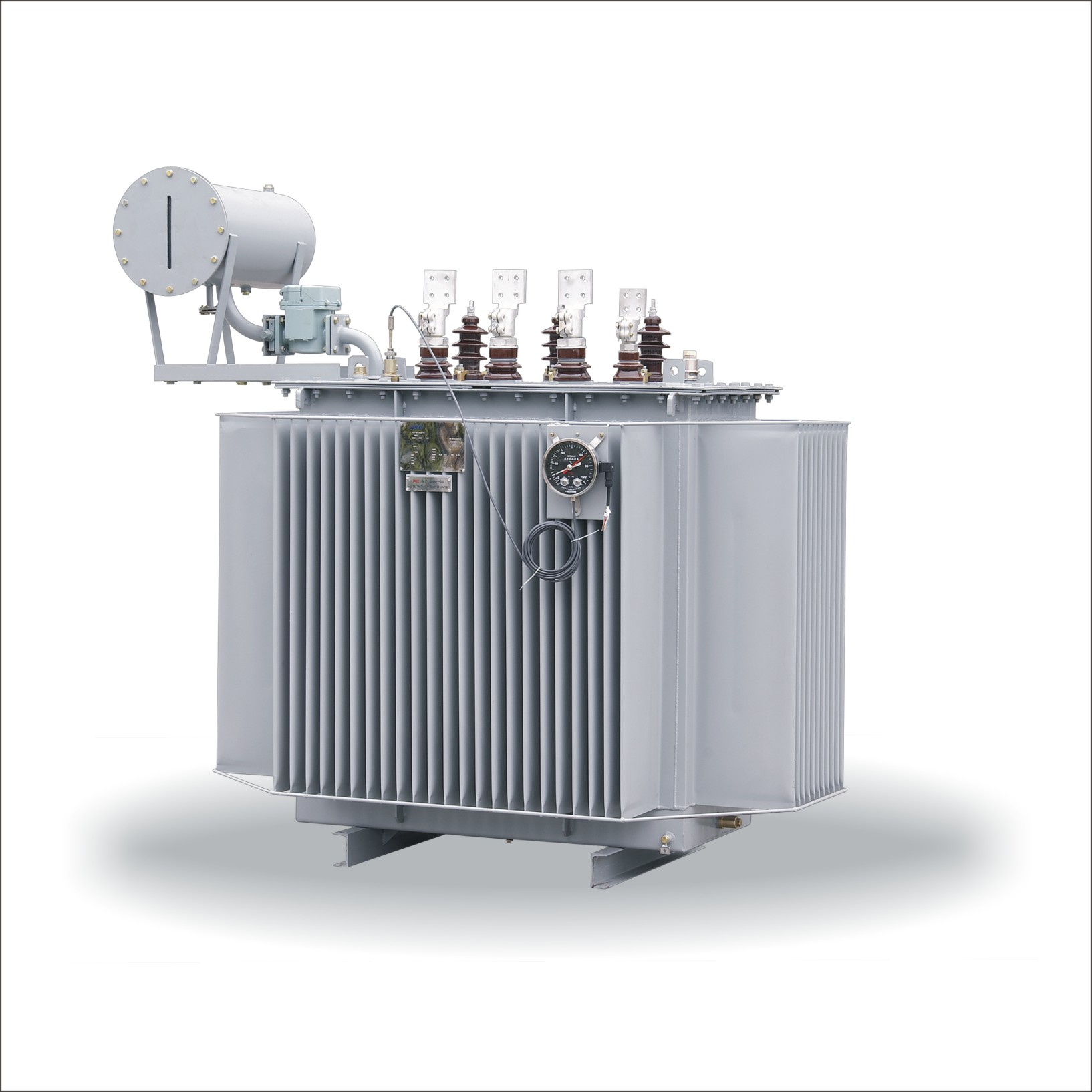
When ambient temperatures swing from -40°F to 250°F and airborne contaminants eat through standard barriers, insulation has to do more than just slow heat transfer. Our high-grade systems use a layered composite of ceramic fiber and hydrophobic aerogel, pressed into removable blankets with double-lock stitching. The outer jacket is a fluoropolymer-coated silica fabric that shrugs off oil mist, salt spray, and repeated thermal cycling without cracking or wicking moisture. We’ve seen these units come back from five years on a North Sea platform looking dull but fully intact—no delamination, no corrosion under insulation.
Every assembly is custom-fitted to the equipment, whether it’s a steam turbine casing, an exhaust duct, or a bank of actuated valves that need regular access. The seams are staggered and sealed with high-temperature silicone tape, then secured with stainless steel lacing anchors instead of banding that cuts into the jacket. That means you can remove and reinstall the same cover dozens of times during maintenance without losing compression or creating a cold spot. For areas with constant vibration or flexing, we add a flexible expansion joint layer that absorbs movement instead of transmitting it to the insulation core.
What separates these from off-the-shelf wraps is the verification behind them. We run hot-face testing at 1,200°F with simultaneous thermal shock cycles, expose samples to ASTM B117 salt fog for 3,000 hours, and measure surface temperature with an IR camera under load. The result is a system that typically keeps personnel-protection surface temperatures below 140°F and cuts heat loss by 45–60% compared to mineral wool alone. For operators, that translates into fewer unplanned shutdowns and lower energy costs, without having to worry about the insulation failing before the asset does.
Real-Time Condition Monitoring Without Unplanned Downtime
Unexpected equipment failures rarely announce themselves. By the time a vibration signature becomes obvious or a bearing starts screaming, the damage is already done. Real-time condition monitoring changes that dynamic, turning maintenance from a reactive scramble into a continuous conversation with your machinery. Sensors attached to critical assets stream temperature, vibration, and acoustic data around the clock, letting you spot subtle shifts long before they become costly breakdowns.
What makes this approach genuinely useful is not just the data, but the way it fits into daily operations. Instead of fixed maintenance schedules that waste time on healthy machines or run too long between checks, real-time monitoring lets you act on actual need. A slight uptick in pump vibration on a Tuesday afternoon becomes a targeted inspection, not a surprise shutdown on Saturday night. Technicians receive alerts on their phones, compare trends against historical baselines, and schedule repairs during planned windows—keeping production flowing without the drama of emergency calls.
The payoff shows up in more than just avoided downtime. Extending asset life, reducing spare parts inventory, and cutting overtime labor all contribute to a healthier bottom line. But perhaps the biggest advantage is confidence: knowing that your critical equipment is being watched every second, with anomalies flagged immediately, means you can focus on running your operation instead of waiting for the next failure to find you.
Low-Loss Core Designs That Cut Energy Waste
Low-loss core designs strip away much of the energy that older magnetic cores burn off as heat. By switching to amorphous or nanocrystalline alloys and slicing laminations much thinner, manufacturers cut both eddy-current and hysteresis losses. The payoff shows up quickly in cooler running temperatures and smaller cooling hardware, which means less wasted electricity over the life of a transformer or inductor.
These gains are especially visible in high-frequency power supplies, solar inverters, and electric vehicle chargers, where every percentage point of efficiency counts. Instead of relying on oversized cores to mask losses, designers now shape the core geometry and gap placement to keep flux density uniform. The result is a quieter, more compact component that delivers the same output with measurably lower draw from the grid.
Modular Construction for Faster Installation and Upgrades
Modular construction turns what used to be a drawn-out site build into a tight sequence of pre-fitted assemblies. Panels, racks, and cable trays arrive with connectors and mounting points already aligned, so crews spend less time measuring, cutting, and reworking on site. That shift cuts installation windows from weeks to days in many retrofit and expansion projects.
Because each module is built and tested before it ships, the upgrade path becomes far less disruptive. A new power block or cooling loop can be staged offline, then swapped into place during a short planned outage. Teams avoid the usual scramble of coordinating multiple trades in a live space, and they can validate fit and function before anything reaches the floor.
This approach also reduces the risk of schedule slip. When changes happen, a module can be revised at the factory rather than re-engineered in the field. The result is a facility that can grow in smaller, faster increments—matching real demand instead of forcing a large upfront buildout.
Proven Field Performance in Critical Grid Applications
When it comes to the backbone of modern energy infrastructure, reliability isn't a feature—it's a non-negotiable. Our equipment has been deployed across some of the most demanding grid environments, from remote substations battling extreme temperature swings to urban networks handling sudden load spikes. Year after year, these installations keep performing without the kind of unplanned downtime that cascades into costly outages. The real proof isn't in a datasheet; it's in the field logs that show steady voltage regulation and fault tolerance under conditions that would sideline lesser hardware.
One standout case involved an aging regional grid in a coastal area, where salt-laden air and high humidity had degraded previous systems within months. After switching to our solution, the operator saw a marked drop in maintenance callouts—over a two-year window, the only interventions were routine inspections. Another utility, facing rapid renewable integration, needed inverters and switchgear that could handle bidirectional flows without tripping. Our gear held steady through thousands of mode transitions, helping them avoid curtailment and keep power quality within tight tolerances.
What sets this apart isn't a single heroic component but a systemic approach: every breaker, relay, and communication module is tested not just in isolation but as part of a live, fault-injected grid simulation. That's why field engineers report fewer surprises during commissioning and why outage statistics in our installed base consistently beat industry benchmarks. If your grid can't afford a bad day, this is the kind of track record you build on.
FAQ
Their sealed oil bath cools internal components while insulating live parts, which reduces thermal stress and extends service life even under heavy or fluctuating loads.
Many now integrate dissolved gas analysis ports and moisture-resistant bushings, allowing crews to spot early warning signs like overheating or insulation breakdown before a minor issue escalates.
The oil's dielectric strength and oxidation stability directly affect arc suppression and long-term performance, so high-grade mineral or ester fluids can keep a unit running reliably for decades with fewer oil changes.
They regulate oil volume changes and filter incoming air, preventing moisture and oxygen from contaminating the oil, which would otherwise accelerate aging and increase fault risk.
Targeted upgrades such as retrofitting online monitors, replacing gaskets, or reclaiming and degassing the oil can restore insulation quality and buy years of additional service at a fraction of replacement cost.
Natural esters have higher fire points and better moisture tolerance, which lowers fire risk and slows cellulose aging, making them especially valuable in densely populated or environmentally sensitive areas.
Continuous winding temperature tracking helps operators avoid prolonged overloads and schedule cooling or load transfers before hot spots degrade insulation, keeping the unit within safe limits.
Regular oil sampling, infrared inspections, and keeping silica gel breathers dry are low-cost practices that catch contamination or loose connections early, preventing many common failure modes.
Conclusion
Reliability in modern power grids depends on transformers that can handle thermal stress without degrading. Advanced thermal management in oil-immersed designs uses directed oil flow and optimized cooling channels to keep winding temperatures low, directly extending insulation life. The insulation itself is built from high-grade, moisture-resistant materials that withstand harsh operating conditions—whether salt-laden coastal air or industrial contamination. Real-time condition monitoring adds another layer of security: dissolved gas analysis, temperature sensors, and partial discharge detection feed into a central system, alerting operators to anomalies before they become failures. This predictive approach eliminates unplanned downtime and shifts maintenance from reactive to planned.
Energy efficiency is not an afterthought. Low-loss core designs using grain-oriented silicon steel and step-lap joints cut no-load losses significantly, reducing both operating costs and carbon footprint. Modular construction further improves grid reliability by enabling faster installation and upgrades—pre-assembled components fit into existing substations with minimal civil work, so capacity can be added without long outages. Field performance across critical grid applications, from urban substations to remote renewable hubs, proves these solutions endure voltage fluctuations, overloads, and frequent switching. Together, these oil-immersed transformer innovations deliver a more stable, efficient, and resilient grid that operators can depend on for decades.
Contact Us
Contact Person: Tonglun Chen
Email: [email protected]
Tel/WhatsApp: 8618906642555
Website: https://www.cncsele.com