

UNS N10276 Extruded Pipe Company: Quality Solutions for Corrosive Environments
2026-11-16
When corrosive media threaten pipeline integrity, most suppliers hand you a spec sheet and hope for the best. JILAIDA takes a different route—extruding UNS N10276 pipe with the kind of dimensional control and surface finish that actually survives where Hastelloy C-276 is supposed to shine. But here's the part that rarely makes the brochure: the real difference isn't just the alloy. It's what happens before the extrusion press even warms up.
Why UNS N10276 Excels in Harsh Chemical Environments
The standout reason UNS N10276 holds up where other alloys crumble is its deliberate balance of nickel, molybdenum, chromium, and a small but critical tungsten addition. That combination does more than resist one type of acid; it handles both reducing media like hydrochloric and sulfuric acid and oxidizing media such as ferric and cupric chlorides. Most stainless steels pick a side—they survive one environment but pit or stress-crack in the other. N10276 sidesteps that trade-off.
In real plant conditions, failures rarely come from a single acid at room temperature. They come from hot, contaminated, mixed-acid streams where chlorides concentrate in crevices under gaskets or behind deposits. Here, the alloy's low carbon content (max 0.01%) prevents intergranular carbide precipitation during welding, so heat-affected zones stay almost as corrosion-resistant as the base metal. That matters because a weld that holds in the lab but degrades in service isn't an option.
Another practical advantage is its resistance to localized attack. Pitting and crevice corrosion are often the first dominoes in chemical processing equipment; once they start, stress corrosion cracking follows. N10276's high molybdenum and tungsten content raises the critical pitting temperature well beyond what 316L or even many superaustenitic grades can tolerate, which translates to fewer unplanned shutdowns and less patchwork repair. In harsh chemical service, that reliability is often the real differentiator.
Extrusion Expertise That Minimizes Defects and Maximizes Service Life
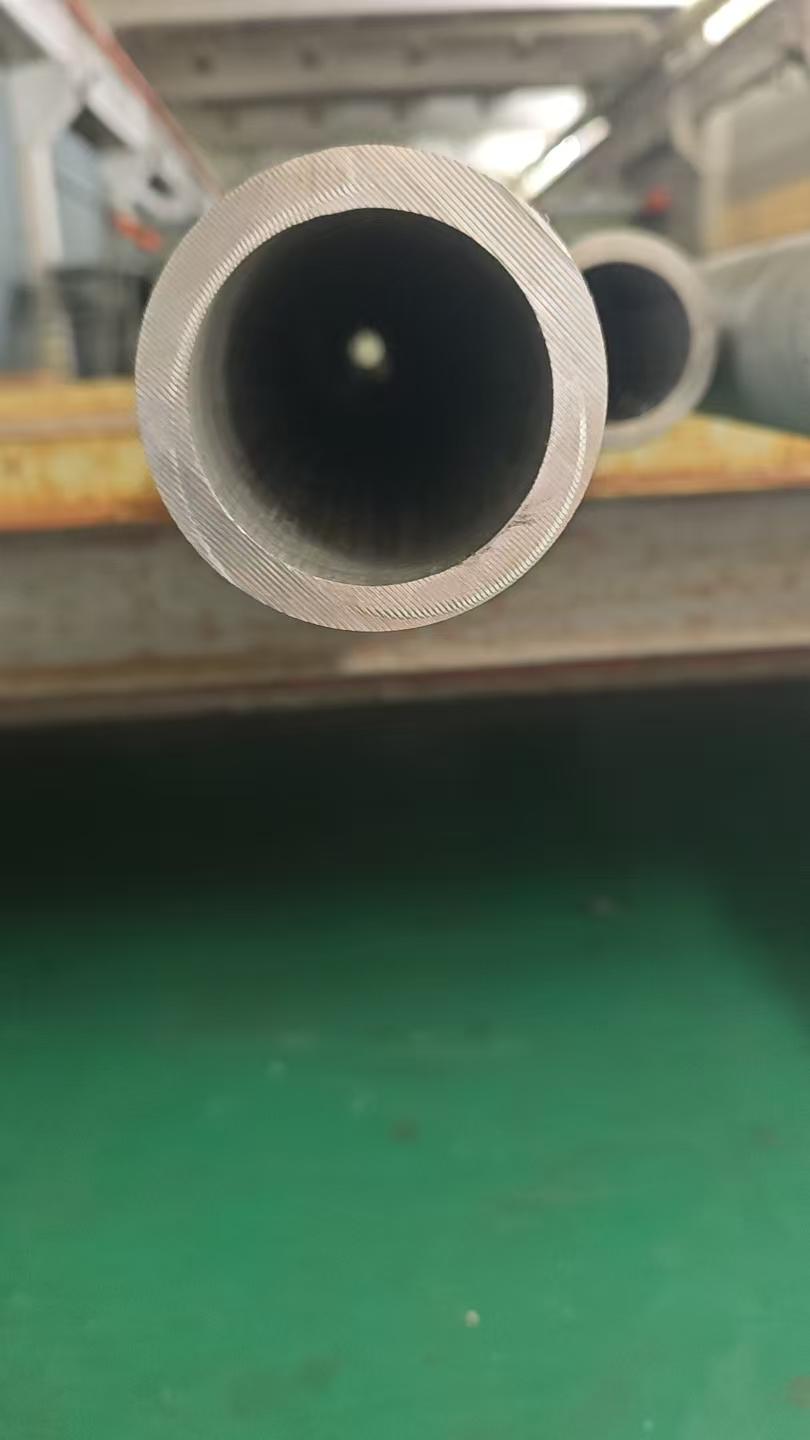
Most extrusion defects trace back to a handful of variables that are easy to overlook until they appear in the finished product. Melt temperature swings of just a few degrees can create surface tearing or inconsistent gloss, while uneven pressure across the die face often leaves one edge thicker than the other. Our approach is to lock down those variables early: we simulate flow paths before cutting steel, adjust land lengths for balanced output, and verify thermal uniformity with contact probes at multiple points along the barrel. Problems are designed out rather than inspected out.
Long service life doesn't come from a single upgrade—it's the result of matching materials to the actual wear environment. We specify nitrided or bimetallic barrels only where the formulation demands it, and we keep screw clearances tight enough to prevent polymer degradation without accelerating metal-to-metal contact. Downstream, cooling calibrators are machined to hold tolerance over thousands of cycles, and operators are trained to recognize early signs of die lip buildup or screw recovery drift. The result is less unplanned downtime and fewer rejected runs.
Resisting Pitting, Crevice Corrosion, and Stress Cracking
Alloys that hold up in aggressive chloride environments do more than simply pass a salt spray test. They maintain a stable passive layer even when oxygen access becomes uneven, which is exactly what triggers pitting and crevice attack. The key lies in a balanced mix of chromium, molybdenum, and nitrogen—elements that raise the potential required to initiate localized breakdown and help the surface repassivate quickly if a small pit does form.
Stress corrosion cracking is trickier because it needs both a corrosive medium and sustained tensile stress. Materials with a fully austenitic structure and higher nickel content resist chloride-induced SCC far better than conventional stainless grades. In practice, this means choosing a composition that delays crack initiation long enough for real service conditions, not just laboratory immersion tests.
Surface finish and fabrication history also play an oversized role. Ground or electropolished surfaces reduce crevice sites, while proper post-weld treatment prevents sensitization and residual stress buildup. Together with the right alloy chemistry, these steps turn what could be a rapid failure into decades of low-maintenance performance in seawater, chemical processing, and offshore equipment.
Proven in Chemical Processing, Pollution Control, and Beyond
In caustic scrubber trains and solvent recovery units, the equipment has logged years of continuous duty without the usual corrosion failures. Operators often note that the wetted parts shrug off acids, chlorides, and aggressive solvents that would pit standard alloys within months. A plant in Louisiana, for instance, ran the same casing through three catalyst regeneration cycles without measurable wall loss.
Pollution control systems present a different kind of punishment: thermal cycling, abrasive particulates, and wet-dry interfaces. Here the design's tight clearances and sealed bearing arrangements keep stack gas fans and oxidizer blowers running between scheduled turnarounds. One wastewater treatment facility reported that replacing its previous aeration blowers cut unplanned downtime by roughly forty percent over two years.
The same principles translate well outside traditional chemical sites. Food processors, pharmaceutical manufacturers, and even marine ballast treatment operations have adopted the platform for its clean-in-place compatibility and low leakage rates. That breadth of installations, rather than any single specification sheet, is what gives maintenance teams confidence.
Every Pipe Verified Through Rigorous Non-Destructive Testing
Each length of pipe moves through a battery of ultrasonic, eddy current, and radiographic inspections before it earns a shipping tag. This is not a spot-check exercise; every single piece is scanned for internal flaws, wall thickness deviations, and surface discontinuities that could compromise long-term service. Operators calibrate the equipment at the start of each shift, and the digital records from each test are tied directly to the heat number and production lot.
The non-destructive testing protocols follow the strictest industry codes, but the real difference is how the data is used. Instead of only flagging rejects, the inspection results feed back into forming and welding parameters, allowing the line to correct small drifts before they become trends. That closed loop means the pipes that pass are not just acceptable — they are consistent from end to end and joint to joint.
Customers receive a full traceability package with every order, including raw material certifications and the specific NDT signatures for each pipe. No guesswork, no hidden exceptions. If a pipe has a test record, it has been verified. If it does not, it does not leave the facility.
Tailored Dimensions and Alloy Options to Match Your Operating Conditions
Getting the geometry right matters more than most catalogs admit. We work from your actual operating envelope—not a fixed table of stock sizes—so wall thickness, bore tolerances, and flange profiles can be adjusted in small increments. If your setup runs hot on one end and cold on the other, we can specify different dimensions across zones rather than forcing a single compromise.
The alloy side is handled the same way. Instead of defaulting to a generic stainless grade, we look at what the part actually touches: chlorides, wet CO2, abrasive slurries, or cyclic thermal loads. That may lead to a duplex stainless for pitting resistance, a nickel alloy for creep strength, or a carbon steel with a localized overlay only where wear is concentrated. No extra cost for mixing grades within a single assembly if that is what the service conditions require.
FAQ
It is a nickel-molybdenum-chromium alloy with tungsten, which provides outstanding resistance to pitting, crevice corrosion, and stress corrosion cracking in both oxidizing and reducing acids. The hot extrusion process refines the grain structure, improving toughness and dimensional stability in aggressive service.
Chemical processing, petrochemical, pharmaceutical, pollution control, pulp and paper, and marine engineering. These sectors handle aggressive media such as sulfuric, hydrochloric, and phosphoric acids, where standard stainless steels often fail prematurely.
We use hot extrusion followed by controlled cold working and solution annealing. This yields tighter dimensional tolerances and a more uniform microstructure than welded or conventionally rolled pipe, resulting in better corrosion resistance and mechanical integrity.
Yes, we stock and produce pipes from 1/2 inch to 12 inch nominal bore with wall thicknesses from Sch 5S to Sch 160 and heavier. Custom outside diameters, wall thicknesses, and cut lengths are available on request, complete with material test certificates.
Each batch is supplied with EN 10204 3.1 or 3.2 certificates. We perform chemical analysis, tensile testing, hydrostatic testing, eddy current or ultrasonic inspection, and optional intergranular corrosion testing per ASTM G28 upon request.
We maintain full lot traceability using heat numbers and barcoded tags. Every pipe is linked to its original mill certificate, and we archive records for at least 10 years to support audits and reorders.
Yes, the alloy meets NACE MR0175/ISO 15156 requirements for hydrogen sulfide-containing environments. We can supply pipes with hardness control and additional testing for sour gas and oilfield use.
Standard sizes often ship within 2 to 4 weeks from stock. Custom extrusions generally take 8 to 12 weeks depending on quantity, wall thickness, and required testing. We confirm realistic delivery dates before order acceptance.
Conclusion
UNS N10276 extruded pipe has earned a reputation in aggressive chemical service because its nickel-chromium-molybdenum chemistry offers resistance to pitting, crevice corrosion, and stress cracking that standard stainless steels simply cannot match. The alloy's high molybdenum and tungsten content helps it withstand chloride-rich acids, oxidizing media, and elevated temperatures without localized attack. Our extrusion expertise further separates these pipes from commodity products: we control deformation parameters, grain structure, and cooling rates to minimize internal defects, inclusions, and residual stresses. This process-level attention directly extends service life, reducing unscheduled shutdowns and replacement costs in harsh operating environments.
Every pipe we ship undergoes rigorous non-destructive testing, including ultrasonic and eddy current inspection, so surface and subsurface flaws are caught long before installation. That verification is reinforced by years of field-proven performance in chemical processing plants, pollution control systems, and other demanding applications where failure is not an option. We also understand that no two corrosive environments are identical, so we offer tailored dimensions, wall thicknesses, and alloy options to match your specific operating conditions. From custom lengths to specialized heat treatments, the result is a supply partner that combines metallurgical know-how with practical, reliable UNS N10276 extruded pipe designed for long-term service without compromise.
Contact Us
Contact Person: Chenji Li
Email: 521 Zhonghui Road, Huishan Economic Development Zone
Tel/WhatsApp: +86 83112233
Website: https://www.jldnickelalloy.com/