

Urban Pipe Gallery Mold Selection: Key Factors to Consider for Your Project
2026-07-11
When it comes to underground construction, mold selection for pipe galleries can make or break your project timeline and budget. Getting it right means navigating a maze of factors—from material durability to dimensional precision—often overlooked until it's too late. At LugongMachinery, we've seen how the right choice slashes rework and boosts on-site efficiency. So, what separates a seamless pour from a costly mistake? Let's unpack the key considerations that shape your pipe gallery's success.
Material Matters: Choosing the Right Composition for Longevity
Every material tells a story of decay or endurance long before a product reaches your hands. The molecular dance within a composition determines whether an object crumbles after a few seasons or weathers decades with grace. Neglecting this inner blueprint leads to premature failure, even when surface finishes appear flawless. It's not just about strength—it's about how components interact under stress, moisture, and UV exposure. The right pairing of alloys, polymers, or natural fibers can mean the difference between a legacy piece and landfill fodder.
Think beyond the spec sheet. A stainless steel alloy might boast corrosion resistance, yet sink into pitting corrosion if its molybdenum content skimps by a fraction. Plastics reinforced with glass fiber can warp under sustained load if the resin matrix lacks proper UV stabilizers. High-density polyethylene, often hailed for outdoor durability, turns brittle without carbon black shielding against sunlight. The savvy choice isn't about picking the strongest or cheapest material—it's understanding the chemistry of degradation and building a composition that actively resists its environment.
Practical wisdom suggests two paths: mimic nature's layered approach or embrace deliberate redundancy. Marine-grade plywood, with cross-laminated veneers, outlasts solid timber by disrupting crack propagation. Similarly, a zinc-aluminum coating sacrifices itself to protect underlying steel through galvanic action. When selecting materials, ask how they age—does the surface develop a protective patina like copper, or does it micro-fracture silently? Combine this knowledge with real-world testing, not just lab certifications, and longevity becomes a predictable outcome rather than a hope.
Design Precision: Tailoring Molds to Complex Urban Layouts
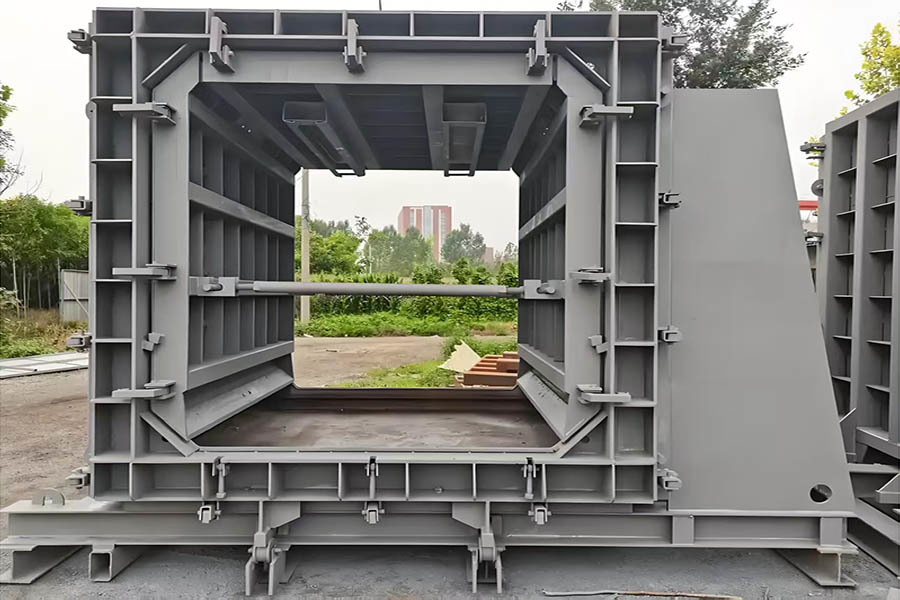
In the intricate web of city planning, achieving design precision is less about imposing rigid forms and more about adapting to the unpredictable choreography of streets, utilities, and existing structures. Each mold—whether for a curved facade element, an underground conduit, or a streetscape feature—must be conceived as a bespoke response to site-specific constraints. Survey data, often messy and full of surprises, becomes the raw material that shapes these molds, turning irregularities into opportunities for a tighter, more integrated urban fabric.
The process hinges on a dialogue between digital modeling and hands-on fabrication. Complex urban layouts rarely yield perfect right angles or uniform setbacks, so the mold maker translates point clouds and laser scans into toolpaths that can handle subtle variations. This isn't just about tolerances; it's about anticipating how concrete or composite materials will flow within a cavity that might twist, taper, or branch to follow the logic of a congested site. Prototyping becomes essential—testing the mold's release angles and joints against the actual bumps and slopes of the installation spot, refining until the off-form surface feels inevitable.
Precision, in this context, is measured by how seamlessly the resulting component settles into its chaotic surroundings. A well-tailored mold delivers parts that don't fight the urban grain but instead clarify it, bridging the gap between digital ideals and the hard-won pragmatism of construction crews. The true mark of success is when a passerby never notices the piece at all—only the enhanced sense of place it quietly supports.
Durability Under Pressure: Withstanding Underground Conditions
Underground environments don’t forgive weakness. From the crushing weight of soil and rock to the constant threat of water ingress and chemical erosion, every component must prove its resilience. Materials that excel here are selected not just for their strength on paper, but for their ability to hold up over decades of unrelenting stress. This means careful engineering of wall thickness, reinforcement, and protective coatings that resist microfractures before they become catastrophic failures.
Real durability under pressure comes from understanding how forces shift underground. Temperature swings cause expansion and contraction; ground movement can apply uneven loads. That’s why designs often incorporate flexible couplings and stress‑relief features that let the system move without breaking. It’s not about building something rigid—it’s about creating a structure that can absorb and distribute force, maintaining integrity long after cheaper alternatives have been replaced.
Long‑term performance is the real test. Accelerated aging simulations in the lab recreate decades of exposure to aggressive soils and fluctuating water tables. Every material batch is tested for tensile strength, impact resistance, and chemical stability. The goal isn’t to meet a minimum standard—it’s to ensure that when buried out of sight, the infrastructure keeps performing as though it were still day one.
Cost vs. Quality: Balancing Budget with Performance Expectations
Striking the right balance between what you spend and what you actually get in return often feels like walking a tightrope. It’s tempting to chase the lowest price, but skimping too much can leave you with something that barely functions past the warranty period. On the flip side, throwing money at premium features you’ll never fully use is just wasteful. The real skill lies in identifying where performance truly matters for your specific needs and directing your budget there, while consciously choosing more modest options for the rest.
Many people fall into the trap of equating higher cost with superior quality across the board, but that’s rarely accurate. Some products carry a hefty markup simply because of brand positioning, not because the internal components are dramatically better. Instead of fixating on the price tag, focus on independent reviews and real-world longevity tests. A device that costs moderately but consistently lasts for years without hiccups often outperforms a flashy, expensive alternative that becomes sluggish or breaks after a few updates.
An underrated approach is to stagger your investments. Prioritize the core element you can’t easily upgrade later—like a solid processor in a laptop or a reliable motor in a power tool—and allocate a larger share of your budget there. The peripherals, aesthetics, or extra accessories can often be added or improved down the line when your budget allows. This way, you avoid both immediate disappointment and the creeping regret of having settled for something that never quite meets expectations.
Customization Capabilities: Adapting Molds for Unique Project Needs
Every project comes with its own set of constraints—whether it’s an unconventional cavity depth, a need for multi-material overmolding, or tight integration with existing assembly lines. Our mold customization starts by mapping out these very specifics, not from a standard catalog. We refactor runner geometries, gate placements, and cooling channel layouts to align with your part’s exact flow and thermal demands, ensuring that even highly complex geometries are replicated with relentless precision.
Adaptation goes beyond mere dimensional tweaks. For a recent marine application, we engineered a family mold that simultaneously produced rigid panels and flexible seals using dissimilar materials—all while maintaining a single tooling base. This required custom hot-runner sequencing and variable tonnage planning, capabilities we honed over dozens of niche industrial projects. The result was a 30% shorter cycle time and elimination of secondary assembly steps.
What truly sets the process apart is how we handle transitions. Rather than handing you a fixed design, we iterate directly with your engineering team using real-time mold-flow simulations. This co-development approach lets us experiment with alternative ejector systems or insert configurations without delaying the timeline. The mold becomes a shared instrument, tuned not only to your part but to how you manufacture, inspect and deliver.
Supplier Reliability: Ensuring Timely Delivery and Support
In our experience, the true test of a supplier isn't just in the products they deliver, but in the consistency and dependability behind every interaction. A reliable partner anticipates potential disruptions—from raw material shortages to logistics bottlenecks—and has contingency plans already in motion before they ever affect your schedule. We prioritize clear, proactive communication, so you're never left guessing about order status or timelines. That means real-time tracking, transparent lead times, and a dedicated point of contact who understands your operational rhythm as well as your technical requirements.
When something does go off-track—and in complex supply chains, it occasionally will—the response matters more than the problem. We've built a support framework that resolves issues quickly, drawing on localized inventory hubs and a cross-functional response team that can authorize replacements or expedite shipments without layers of approval. This isn't just about fixing mistakes; it's about having the infrastructure and the mindset to treat every delay as urgent, even if it's just one component in a larger order. You stay focused on your work, knowing we've got the details covered.
Over time, this reliability turns into a strategic advantage. Consistent on-time delivery helps you maintain leaner inventories, trim carrying costs, and avoid production downtime. But the less visible piece is the confidence it builds—confidence that lets your teams plan further ahead, innovate without fear of supply breaks, and respond to your own customers with certainty. That's the kind of supplier relationship that moves from transactional to indispensable.
FAQ
Steel and aluminum are the most common choices. Steel molds hold up well under high pressure and repeated use, offering long-term reliability. Aluminum, being lighter, simplifies handling and setup, but may wear faster in abrasive environments. Some projects also explore fiberglass-reinforced plastic for its corrosion resistance, though it’s less common for high-volume casting.
Start by reviewing the structural drawings and pay close attention to the gallery’s cross-sectional dimensions and joint details. Factor in any embedded components, like cable brackets or drainage channels, that need precise cutouts. It’s wise to involve the mold manufacturer early—they can suggest modular designs that adapt to future project phases and help optimize concrete flow during pouring.
Look for molds with robust bracing to prevent deflection, smooth joints to minimize concrete buildup, and easy-release mechanisms that reduce stress on the mold during demolding. Surface treatments like hard chrome plating can resist abrasion and chemical attack. Also, consider molds with integrated vibration mounts—they help consolidate concrete without damaging the mold over time.
Yes, reuse is common if the mold design allows for adjustments. Weld-on sections or bolt-together panels let you modify dimensions without starting from scratch. Maintenance involves thorough cleaning after each pour, storing in dry conditions, and regularly inspecting for wear, especially around corners and seams. A good maintenance log can double the lifespan of a quality mold.
In coastal or industrial areas with high chloride levels, opt for stainless steel components or protective coatings to fend off rust. For continuously wet sites, drainage gaps in the mold design prevent standing water that leads to pitting. If you’re in a freeze-thaw region, the mold material should handle thermal expansion without warping—aluminum can be preferable here for its thermal stability.
The biggest pitfalls are prioritizing price over engineering support and ignoring a supplier’s track record with similar projects. A low-cost mold may lack the precision needed for tight utility fits, leading to costly rework. Also, avoid suppliers who give vague timelines—urban jobs often have strict deadlines, and mold delays can cascade. Visit their facility if you can, and ask for client references from the last three years.
Self-adjusting hydraulic molds are gaining traction—they automatically expand and retract, shaving hours off setup. Magnetic side forms simplify attachment of inserts, and some factories now use IoT sensors on molds to track usage cycles and predict maintenance. These smart molds can alert crews before a failure, cutting downtime. Lightweight carbon fiber panels are also emerging for very large sections, though they’re still on the pricier side.
Conclusion
Selecting molds for urban pipe galleries involves more than just picking a standard design off the shelf. The material composition directly dictates how the structure withstands decades of underground exposure, so opting for high-grade steel or corrosion-resistant alloys pays dividends in longevity. Complex city layouts demand precise tailoring, where even minor deviations can derail installation, making design precision as critical as the material itself. Beyond shape, these molds must endure intense pressure from soil loads, groundwater, and temperature shifts, rendering durability under pressure a non-negotiable trait. Customization capabilities also come into play, as each project has unique spatial constraints and connection requirements that off-the-shelf solutions simply can't meet.
Balancing cost against performance expectations often triggers the toughest trade-offs, but cutting corners on quality inevitably leads to premature failure and higher lifecycle expenses. Smart buyers weigh initial investment against long-term reliability, recognizing that superior molds cut maintenance down the line. Equally important is supplier reliability; a manufacturer's track record for on-time delivery and responsive support can make or break project timelines. When testing labs, real-world references, and transparent communication are part of the package, the selected molds seamlessly integrate into the broader construction workflow, ultimately protecting both the pipeline and the city above for generations.
Contact Us
Contact Person: Zhang Zhenlai
Email: [email protected]
Tel/WhatsApp: 8618563210000
Website: https://en.lugongmachinery.com/