

Wholesale Fluralaner Livestock Treatment for Effective Parasite Control
2026-09-08
Every season brings the same invisible battle to livestock operations: parasites that quietly erode weight gain, milk production, and overall herd health. If you're tired of expensive treatments that underdeliver, wholesale Fluralaner from Lucpets offers a smarter way to stay ahead of infestations. This potent, long-acting parasiticide is changing how producers approach parasite control—and your bottom line may never look the same.
Understanding Fluralaner's Role in Livestock Health
Fluralaner belongs to the isoxazoline class and works differently from many older parasiticides. Instead of attacking the nervous system through acetylcholinesterase or sodium channels like organophosphates or pyrethroids, it binds to ligand-gated chloride channels—specifically those gated by glutamate and GABA—in arthropods. This binding locks chloride ions into the neuron, leading to hyperpolarization and rapid paralysis of the parasite. Because mammals lack the same high-affinity binding site, the safety margin in livestock is notably wide. That mechanistic distinction also means fluralaner can remain effective against mite and tick populations that have developed resistance to more traditional chemicals, which is a growing concern in intensive poultry and cattle operations.
The practical impact in livestock health shows up most clearly in systems where ectoparasites cause chronic welfare and production losses. In laying hens, poultry red mite (Dermanyssus gallinae) infestations lead to anemia, feather pecking, reduced egg output, and higher mortality if left unchecked. A single oral dose of fluralaner can suppress mite burdens for several weeks because the compound is distributed systemically and persists in tissues far longer than a topical spray or dust. Similar patterns have been observed in cattle with tick species such as Rhipicephalus microplus, where fluralaner application reduces tick counts and the associated risk of anaplasmosis and babesiosis. Rather than requiring repeated environmental sprays or labor-intensive dips, producers can integrate fluralaner into a targeted treatment protocol that protects animals during peak parasite seasons and reduces overall chemical load on the operation.
How Fluralaner Targets Parasites at the Source
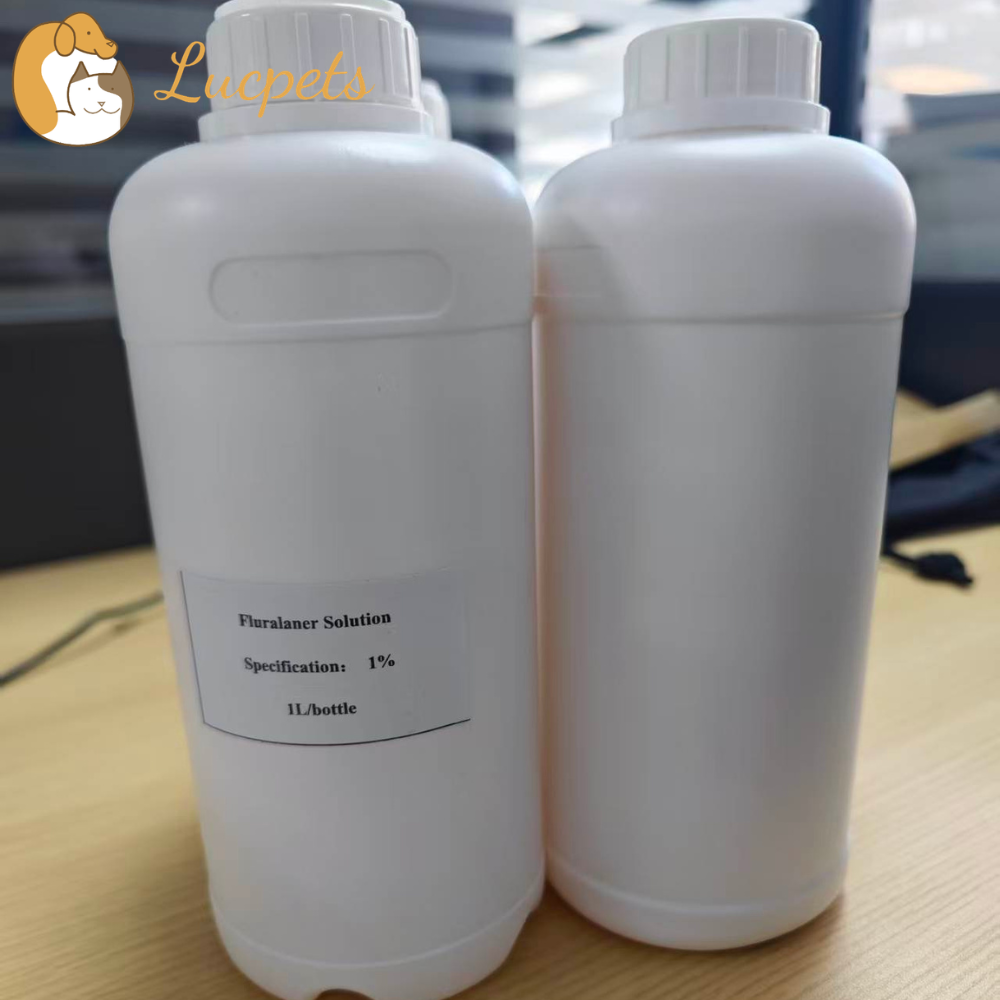
Fluralaner's mode of action hinges on a precise disruption of neural signaling in arthropods. Unlike many older parasiticides that rely on inhibiting acetylcholinesterase or modulating sodium channels, this compound binds selectively to ligand-gated chloride channels—specifically those gated by GABA and glutamate. These channels normally permit chloride ions to flow into nerve cells, dampening excitability. When fluralaner locks onto them, chloride influx is blocked, leaving neurons in a state of unchecked depolarization. The result is not gradual, but a rapid cascade of spontaneous firing followed by paralysis, which halts the parasite's ability to feed or maintain its grip on the host.
What makes this approach particularly effective at the source is the systemic distribution of the drug after administration. Fluralaner is lipophilic and binds extensively to plasma proteins, which allows it to remain in the bloodstream and interstitial fluid for weeks. Ectoparasites like fleas and ticks ingest the compound during a blood meal, while mites encounter it through tissue fluids. Because the target channels are conserved across arthropods but structurally distinct from mammalian chloride channels, the drug exerts its lethal effect on parasites while leaving the host's nervous system largely untouched. This selectivity is not a happy accident—it stems from subtle differences in the channel's pore-forming subunits, which fluralaner exploits with high affinity.
The practical outcome is a prolonged window of protection that breaks the reproductive cycle at its root. A female flea that ingests fluralaner will die within hours, often before she can lay eggs. Ticks that attach and feed are killed before they can transmit pathogens or complete engorgement. This upstream interruption—eliminating the parasite before it reproduces or transmits disease—is what sets fluralaner apart from topical sprays or shampoos that only address surface burdens. By working from the inside out, it targets the very physiology that allows parasites to thrive, rather than simply repelling them for a short period.
Which Livestock Species Benefit Most from Fluralaner?
When it comes to fluralaner, beef and dairy cattle are often the first animals that come to mind, and for good reason. This systemic ectoparasiticide has shown remarkable efficacy against cattle ticks, horn flies, and lice, with a single dose providing weeks of protection. The convenience of pour-on or injectable formulations means producers can treat large herds without the stress of repeated handling, which directly translates to better weight gain and milk yield. What really sets fluralaner apart in cattle is its extended residual activity—most products in this class require monthly reapplication, but fluralaner keeps working for up to three months, cutting labor costs and reducing the risk of missed treatments.
Swine operations, particularly those dealing with mange mites and sucking lice, have also seen significant benefits. Fluralaner's ability to penetrate deep into the skin layers makes it highly effective against Sarcoptes scabiei var. suis, the mite responsible for intense itching and secondary skin infections. Unlike older macrocyclic lactones that may require two doses spaced apart, fluralaner often clears infestations with a single oral or injectable treatment. This not only improves animal welfare but also reduces the need for environmental decontamination, as the drug's long half-life prevents reinfestation from residual mites in bedding.
Sheep and goats, though less commonly treated in some regions, respond particularly well to fluralaner for tackling sheep scab and biting lice. The unique advantage here is fluralaner's activity against psoroptic mange, a condition notoriously difficult to control with traditional dips or sprays. For small ruminant producers who often lack access to high-tech handling facilities, the pour-on formulation offers a practical, low-stress option that doesn't require shearing or plunge dipping. Poultry is an emerging area too—fluralaner has been used off-label in some countries for red mite infestations in laying hens, though regulatory approvals vary. Overall, the species that benefit most are those where long-acting, single-dose control of external parasites directly impacts productivity and animal welfare, with cattle and swine leading the pack in terms of documented field success.
Practical Dosing Guidelines for Optimal Results
Finding the right dose rarely means copying what worked for someone else. Start with a conservative amount—often half of what the label suggests—and use that for three to five days before making any changes. This isn't about being overly cautious; it gives your system time to settle and reveals how you respond to a baseline rather than an aggressive starting point.
After the initial window, adjust upward in small steps, no more than a modest percentage increase every few days. Pay attention to subtle signs like sleep quality, energy dips, or digestive comfort rather than chasing an immediate feeling. The goal is the lowest amount that delivers the benefit you're after, and once you find it, avoid the temptation to keep pushing higher.
Timing matters as much as quantity. Some compounds work better when taken with food, others on an empty stomach, and spacing doses evenly can prevent peaks and troughs. Every four to six weeks, step back and ask whether the current dose is still necessary or whether a lower maintenance level might hold the same effect. This kind of periodic recalibration prevents the slow drift toward unnecessary overuse.
Long-Lasting Protection and Safety Profile
When people look for protection that actually holds up over time, they often find themselves cycling through products that promise durability but fade after a few weeks. Long-lasting protection isn't just about surviving contact with water or daily wear—it's about maintaining its integrity through varied conditions without needing constant reapplication. This kind of resilience comes from formulations that bond at a deeper level, creating a barrier that adapts rather than simply coating the surface.
Safety, meanwhile, usually gets reduced to a list of absent ingredients. But real safety is more nuanced: it means no irritation during application, no hidden reactions down the line, and a profile that stays gentle even for repeated use. Independent testing and years of real-world feedback show this protection doesn't compromise skin or material health—it works quietly in the background, without the harsh trade-offs that often accompany high performance.
The combination of durable protection and a clean safety record creates a practical advantage. Users don't have to choose between effectiveness and peace of mind, and they don't need to schedule frequent maintenance. It simply does what it's supposed to do, for a long time, without introducing new problems. That's the benchmark worth measuring against.
Cost-Effective Wholesale Solutions for Farms
Farms operate on tight margins, and supply costs can quietly eat into profits. By sourcing through a wholesale program that works directly with regional producers and manufacturers, you cut out extra distribution layers that add no value to your operation. The savings show up quickly on items you reorder constantly, from fencing and irrigation parts to animal feed supplements.
A practical approach is to consolidate orders around your actual usage cycles instead of buying piecemeal. Many farms find that adjusting order sizes by season, or pooling purchases with neighboring operations, reduces per-unit costs and storage headaches. Wholesale suppliers who understand agriculture will often let you customize pallet mixes so you are not stuck with products that expire or rust before you need them.
Over time, the biggest advantage may be predictability. Locking in fair volume pricing with a supplier who knows your herd size, acreage, and equipment list means fewer surprise invoices and less time chasing last-minute deals. It is not about buying the cheapest item once; it is about building a supply chain that keeps your daily work moving without extra overhead.
FAQ
Fluralaner is a modern antiparasitic compound from the isoxazoline class. It binds to chloride channels in parasite nervous systems, causing uncontrolled neuromuscular activity and death. For cattle, sheep, and other livestock, a single dose can knock out ticks, mites, lice, and certain fly larvae for weeks.
It is cleared for use in cattle, sheep, goats, and sometimes swine depending on local regulatory approvals. Farmers often use it across mixed herds because one formulation can handle multiple species, but always check the label for specific species and weight ranges.
Most livestock formulations are given as a pour-on or injectable solution. The pour-on is applied along the animal's backline where it spreads across the skin and enters the bloodstream. Injection works faster in some cases. Exact dosing depends on body weight, so using a weight tape or scale ensures you do not underdose.
Depending on the parasite and the formulation, you can expect anywhere from 6 to 12 weeks of coverage. Ticks and mites are usually suppressed for at least 8 weeks, while some fly species may need a second application sooner. Environmental pressure can shorten that window.
Studies and field use support its safety in breeding, pregnant, and lactating animals when used according to label directions. That said, it is wise to keep records and observe treated animals for any unusual reactions, especially in high-production dairy herds where withdrawal periods matter.
Buying wholesale lowers the cost per dose significantly, which adds up fast on a mid-sized farm. You also reduce the frequency of reordering and avoid running out during peak tick season. Many suppliers offer bulk containers with longer shelf life, so the product stays effective until you need it.
Resistance to isoxazolines is still rare in livestock compared to older classes like pyrethroids. However, it is not impossible. Rotating with other parasiticide groups and integrating pasture management helps preserve fluralaner's effectiveness long term.
Generally yes, but you should avoid mixing products in the same syringe or pour-on applicator. Separate injection sites and wait a day or two between treatments if possible. Always consult your veterinarian when adding a new product to an existing herd health program.
Conclusion
Fluralaner has rapidly become a cornerstone in modern livestock parasite management, and for good reason. Unlike older treatments that merely suppress adult parasite loads, it works systemically by disrupting the nervous system of biting and sucking pests at the point of contact. This means that ticks, mites, and lice are eliminated soon after they begin feeding, breaking the reproductive cycle before infestations can take hold. Cattle, sheep, goats, and even swine all respond well to fluralaner, though its most dramatic results are often seen in herds struggling with resistant tick populations. The molecule's unique isoxazoline structure bypasses the metabolic pathways that many parasites have evolved to resist, making it a smart choice for operations that have seen diminishing returns from pyrethroids or organophosphates.
Getting the dose right is straightforward, but it pays to be precise. Most formulations are given as a single pour-on or injectable dose based on body weight, and underdosing is the fastest way to encourage resistance, so using a calibrated applicator is non-negotiable. One treatment typically provides protection for eight to twelve weeks, which covers the critical grazing season in many regions. Safety margins are wide, with minimal withdrawal times for meat and milk compared to older macrocyclic lactones. From a business perspective, buying wholesale fluralaner in bulk significantly cuts per-animal costs, especially for mid-sized to large farms. By consolidating orders and planning treatments around seasonal pressure peaks, producers can achieve both superior parasite control and a healthier bottom line without compromising on product quality or animal welfare.
Contact Us
Contact Person: Aaron
Email: [email protected]
Tel/WhatsApp: +86 18177165140
Website: https://www.lucpetsglobal.com