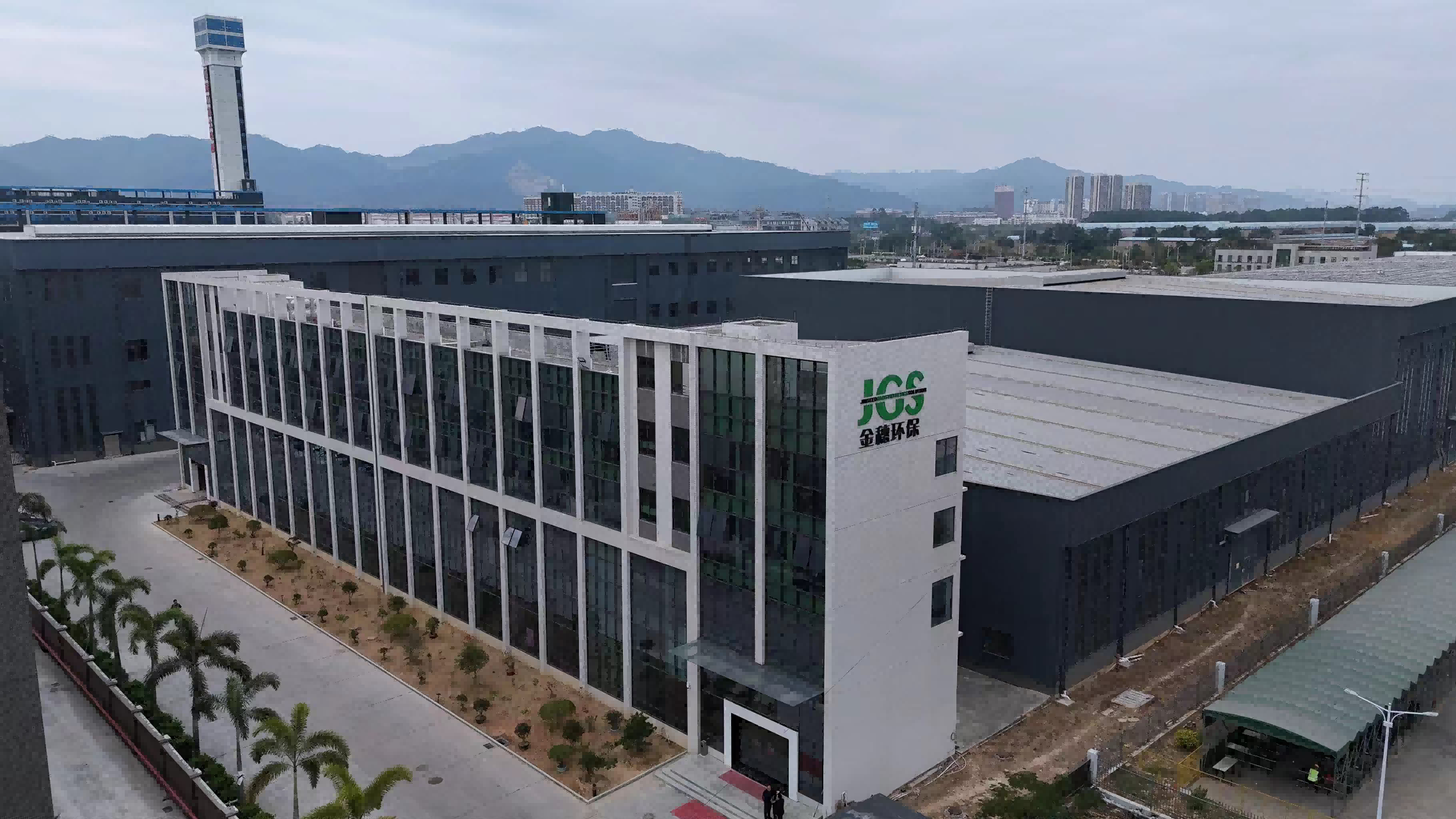

Woven Geotextile Exporter Offers High Strength Fabrics for Infrastructure Projects
2026-09-14
Consider a highway built on soft soil, a retaining wall facing heavy rains, or a coastal defense battered by waves. All rely on one unsung hero: the woven geotextile. As an exporter focused on high-strength fabrics, JInseed Geosynthetics Solution has become a go-to partner for infrastructure projects that can't afford weak links. In this post, we explore what makes their geotextiles a cut above.
What High-Strength Woven Geotextiles Actually Do Under a Road Base
High-strength woven geotextiles serve as a structural separator that keeps aggregate from sinking into the soft subgrade. Under repeated traffic loads, the fabric’s tight weave holds the stone layer in place, preventing contamination that would otherwise weaken the road base over time. This separation is not just a passive barrier—it actively redistributes pressure across a wider area, reducing rutting and extending the pavement’s service life.
Beyond separation, these geotextiles provide measurable reinforcement through tension. When the base course tries to spread laterally under wheel loads, the woven filaments lock together and resist that movement. The result is a stiffer, more stable platform that allows thinner aggregate sections to carry the same traffic. In many projects, this means less quarry material hauled to the site, which lowers both cost and environmental impact without sacrificing performance.
Another often-overlooked function is filtration. The fabric’s controlled opening size lets water pass through while retaining fine soil particles. Without this, water trapped in the base would create hydrostatic pressure and accelerate pavement failure. By managing moisture movement, high-strength woven geotextiles help maintain the base’s modulus in wet conditions, so the road performs consistently through seasonal changes and heavy rain events.
Reading Tensile and Grab Strength Specs Before You Buy
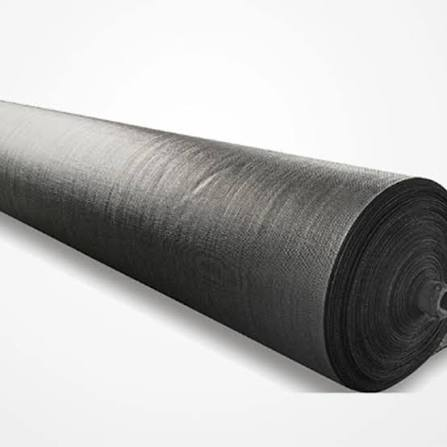
Most fabric listings will throw a couple of numbers at you—tensile strength and grab strength—but they don't always bother to explain what those actually tell you. Tensile strength measures how much force a material can take when pulled from both ends before it breaks, usually reported in pounds or newtons per inch. Grab strength is a bit more specific: it simulates a concentrated pull in the middle of the fabric, which is closer to what happens when a seam gets snagged or a sharp corner catches. If you skip these specs, you might end up with a cover or tarp that shreds under ordinary use, even if the denier or weight looked impressive on paper.
A smarter move is to compare the two numbers side by side. Some materials have a decent tensile rating but a weak grab strength, which means they hold up fine under even tension but tear easily when stress hits one small area. Before buying, check whether the values are given for warp and fill directions—fabrics rarely behave the same both ways. And don't assume a higher number always equals better value; too much stiffness can make a fabric hard to sew or fold. The real question is whether the strength matches how you'll actually stress the material, not whether it wins a spec sheet contest.
Why Some Exporters Use Virgin Polypropylene Instead of Recycled Mixes
Many exporters lean toward virgin polypropylene because it offers a level of consistency that recycled blends often struggle to match. Contaminants from post-consumer waste—everything from residual food particles to incompatible polymer fragments—can compromise melt flow and mechanical strength. For manufacturers producing thin-wall packaging or medical-grade components, even minor variations in recycled feedstock can lead to rejects or equipment downtime. Virgin resin removes that uncertainty, letting production lines run at full speed without constant adjustments.
Another driving factor is the regulatory landscape. Certain export markets have strict requirements around material traceability and purity, especially for food-contact or children's products. Recycled mixes may lack the documentation needed to prove they meet those thresholds, or they might require costly testing that erodes any price advantage. Exporters often find it simpler—and legally safer—to certify virgin PP rather than navigate a patchwork of recycling standards across different countries.
Price perception also plays a role. While recycled PP can be cheaper per ton in domestic markets, the hidden costs of sorting, washing, and reformulating blends can push the real expense higher once you factor in labor, energy, and quality-control waste. For exporters shipping large volumes overseas, the reliability of virgin material often translates to fewer rejected shipments and smoother customs clearance, making it the more practical choice despite the higher upfront resin cost.
Handling Steep Slopes and Soft Ground Without Extra Fill
On steep slopes, the usual instinct is to dump more material to create a stable base. But extra fill often backfires—it adds weight that can trigger slides, especially when the underlying soil is already weak. Instead, work with the existing angle by cutting shallow steps or benches into the slope. This creates a series of small, flat ledges that lock the structure into the hillside without needing imported soil. Each step acts as a friction point, interrupting the natural slip path and spreading the load across a wider area.
Soft ground presents a different challenge: too much pressure in one spot and the earth simply gives way. Rather than piling on fill to bridge the soft zone, use a technique called load distribution. Lay down a grid of locally sourced timber, geotextile fabric, or even interwoven branches directly on the soft surface. This spreads the weight like a snowshoe, allowing you to build upward with minimal material. If the ground is particularly spongy, consider digging narrow trenches and filling them with compacted gravel to create discreet load-bearing ribs. These ribs act like buried beams, transferring weight to firmer layers below.
A third approach is to lighten the structure itself. In steep or soft terrain, a heavy, monolithic design often fights the landscape—and loses. Opt for a series of smaller, connected elements: a terraced retaining wall, a stepped pathway, or a post-and-beam frame that flexes with subtle ground movement. By reducing the overall mass and allowing slight deformation, the structure can settle naturally without cracking or shifting. This is not about cutting corners; it's about letting the ground's own constraints guide the design so that extra fill becomes unnecessary altogether.
The Difference a Tight Weave Makes in Filtration and Separation
A tight weave does more than just look uniform—it fundamentally alters how a filter behaves under real process conditions. When fibers or wires are drawn closely together, the spaces between them shrink and become far more consistent in size. That consistency means particles approaching the media encounter a predictable barrier, not a random maze. Rather than relying on depth loading where debris gets trapped at unpredictable depths, a tight weave encourages surface filtration: contaminants are stopped near the top layer, making them easier to remove during cleaning cycles and extending the usable life of the media.
Compare this to a looser construction, where larger or uneven openings allow smaller fines to slip through or lodge deep inside the fabric. In separation tasks, that sloppiness translates into cloudy filtrate, premature blinding, or product loss—especially when dealing with sub-100-micron particles or viscous slurries. A tightly woven mesh, by contrast, creates a sharply defined cut point. The weave's geometry, whether plain, twill, or Dutch, can hold tolerances that a loose weave simply cannot approach, and that precision matters when you are trying to meet strict purity specs or recover every gram of active ingredient.
In practice, this difference shows up in sensitive industries like sterile pharmaceutical processing, fine chemical recovery, or high-end beverage clarification. A tight weave reduces the need for multiple filtration stages because it gets the separation right the first time. It also handles pressure surges better—since the pores are small and uniform, there is less shifting of the media under load, which keeps the cut point stable from batch to batch. That reliability, far more than any marketing claim, is what makes operators willing to pay extra for a well-constructed tight weave over a generic alternative.
How to Spot Inconsistent Roll Tension and Core Damage on Delivery
When the truck backs in, don't wait for the warehouse crew to start complaining. Walk around the roll ends first. Inconsistent tension shows up as uneven hardness across the face—press your thumb into the roll near the core and then near the outer edge. If one side gives way while the other feels like a brick, the winder wasn't set right. You'll also see it in the edges: a roll with loose tension often has a slightly puckered or wavy surface layer that you can catch by running your palm across the top under a raking light.
Core damage is easier to see once you remove the end caps. Look for crushing at the chuck contact points, especially on the drive side. If the core has been spinning on the shaft, you may find a polished ring or fine dust inside the bore. Pick up the roll with a forklift if possible and check for wobble—an off-center core will make the roll's shadow trace a slight oval instead of a straight line. Moisture-swollen cores feel soft when you press a key against the inside wall, which often means the roll sat in a humid trailer too long.
On delivery, don't sign the paperwork before checking a few rolls from the middle of the stack, not just the top ones. Top rolls are often the last wound and the first to hide problems. If you find inconsistent tension, mark the affected rolls clearly and have the driver note it before unloading. For core damage, photograph the bore and the chuck end with a ruler in the shot—this gives you leverage if the claim gets disputed later.
FAQ
It starts with high-tenacity polypropylene or polyester yarns and a tight weave pattern. That combination resists tearing and holds its shape even when loaded with heavy aggregate or placed under deep fill.
You'll typically see them under highways, below rail ballast, behind retaining walls, and along eroding shorelines. Anywhere the ground needs reinforcement or separation between different soil layers.
Each production lot is tested for tensile strength, elongation, and puncture resistance. We tie those results to a batch number on the roll, so you always know exactly what you're getting.
Yes, we regularly adjust roll width, length, weight per square meter, and UV resistance. If you have a project-specific data sheet, we can usually match it within a few days.
For common specs, we ship in about 15 to 20 days after the deposit clears. Custom weaving or very large volumes might push that to 25-35 days, depending on the production schedule at the time.
You get a mill test certificate, packing list, bill of lading, and certificate of origin. If the project requires third-party inspection, we can arrange it before the container leaves the factory.
Store them on pallets or dunnage off the ground, keep them covered with light-blocking tarps, and try to limit direct sun exposure if the fabric is not rated for extended UV exposure.
Woven geotextiles provide much higher tensile strength at lower elongation, which is why they're preferred for reinforcement. Non-wovens are better suited for filtration and drainage where high strength is not the main requirement.
Conclusion
What makes a high-strength woven geotextile worth using under a road base is the way it redistributes wheel loads and stops aggregate from sinking into soft subgrade. Instead of relying on guesswork, buyers should read the tensile and grab strength figures on the spec sheet—these numbers show how much force the fabric can take before failing, both during installation and under long-term traffic. Many exporters turn to virgin polypropylene rather than recycled blends because the yarns are more consistent, hold their strength over time, and resist chemical breakdown better than mixed-source resins. Reliable suppliers will often include batch test reports so you can verify these values before the rolls ship.
Steep slopes and weak soils pose a different challenge, and a tightly woven fabric can act like a tension membrane, spreading stress so crews don't have to bring in excessive fill. That same dense weave matters for filtration and separation: water drains through while fine particles are retained, which protects the stone layer from clogging. On delivery, checking roll tension and core condition is a simple but often skipped step. Loose winding or a damaged core can lead to uneven stretching and snags during layout, so a quick inspection at the receiving yard can prevent trouble later. Taking time to check these details can save money on rework and keep the project on schedule.
Contact Us
Contact Person: Jerry Qiu
Email: [email protected]
Tel/WhatsApp: +65 84265294
Website: https://www.jinseed-geo.com