

How to Maintain a Concrete Mixer for Long-Term Jobsite Reliability?
2026-03-23
Reliable performance on construction sites depends heavily on how well equipment is maintained, especially when it comes to a Concrete Mixer. In regions such as North America and Europe, contractors often refer to preventive maintenance as a key factor in reducing jobsite delays and avoiding costly downtime. Equipment failure during peak pouring schedules can disrupt timelines, increase labor costs, and impact project quality.
From our field experience, our factory has observed that poor lubrication, hardened concrete buildup, and irregular inspections are the most common causes of performance decline. These issues may seem minor at first but often lead to major mechanical wear if left unaddressed. Our team has supported multiple contractors who improved uptime significantly simply by implementing structured maintenance routines.
At Quangong Machinery Co., Ltd., practical maintenance strategies are developed based on real jobsite conditions. By focusing on consistent inspection and cleaning practices, operators can ensure long-term reliability and stable mixing quality across different applications.
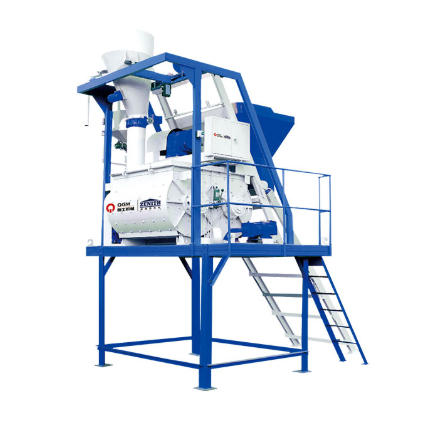
How Should Operators Clean and Inspect a Concrete Mixer After Daily Use?
Daily cleaning is essential to maintain optimal efficiency. After each shift, residual concrete must be removed before it hardens inside the drum. In many construction environments, this process is known as washout, and it plays a critical role in extending equipment lifespan.
Our factory recommends using high-pressure water systems to clean internal surfaces thoroughly. Operators should also inspect blades, drum lining, and discharge chutes for wear or buildup. Neglecting these areas often leads to uneven mixing and reduced output quality.
Routine inspection should include checking bolts, drive components, and hydraulic systems. These components are exposed to heavy loads and vibrations, making them prone to loosening or misalignment. A well-maintained Concrete Mixer ensures consistent material blending and minimizes unexpected stoppages.
What Key Technical Parameters Influence Concrete Mixer Durability?
Understanding technical specifications helps operators select and maintain equipment effectively. Matching machine capacity and performance with jobsite requirements is essential for long-term reliability.
| Parameter | Typical Range | Impact on Performance |
| Drum Capacity | 250L to 4000L | Determines batch size efficiency |
| Mixing Speed | 14 to 20 rpm | Affects uniformity of concrete mix |
| Motor Power | 5.5 kW to 30 kW | Influences operational stability |
| Discharge Method | Manual or hydraulic | Impacts efficiency and control |
| Drum Material | High-strength steel | Improves wear resistance |
At Zenith, our engineering team ensures that each unit is designed to handle demanding workloads. By selecting the right configuration, our clients can reduce mechanical stress and extend service intervals significantly.
How Can Lubrication and Component Care Extend Equipment Lifespan?
Proper lubrication is one of the most effective ways to prevent premature wear. Bearings, gears, and rotating parts require consistent lubrication to reduce friction and heat generation. In construction environments, dust and debris often contaminate these components, accelerating wear if not properly managed.
Our factory advises using high-quality industrial lubricants and following a fixed schedule based on operating hours. Over-lubrication should also be avoided, as it can attract contaminants and reduce efficiency.
Component care also includes monitoring the condition of mixing blades and liners. These parts are subject to constant abrasion and should be replaced when signs of wear appear. Maintaining these components ensures that the Concrete Mixer continues to deliver consistent performance over time.
How Do Advanced Design Features Improve Concrete Mixer Reliability?
Modern equipment incorporates advanced design features that enhance durability and simplify maintenance. Reinforced drum structures, optimized blade geometry, and automated control systems all contribute to improved performance.
| Feature | Design Approach | Benefit |
| Drum Structure | Reinforced steel design | Increases durability under load |
| Blade Design | Optimized mixing angle | Ensures uniform mixing |
| Drive System | Heavy-duty gearbox | Reduces mechanical stress |
| Control System | Automated operation | Improves efficiency and consistency |
| Surface Treatment | Anti-corrosion coating | Extends service life |
Zenith integrates these features into its manufacturing process to meet international construction standards. Our production lines focus on precision and durability, ensuring that our equipment performs reliably even in demanding environments.
FAQ
How often should a concrete mixer be cleaned to ensure reliable performance?
A concrete mixer should be cleaned after every use to prevent hardened material buildup. Daily washout combined with weekly deep cleaning helps maintain efficiency and prevents long-term damage to internal components.
What are the most common causes of concrete mixer breakdowns on construction sites?
The most common causes include lack of lubrication, accumulation of hardened concrete, worn mixing blades, and loose mechanical parts. Regular inspection and maintenance can effectively prevent these issues.
How can proper maintenance improve the lifespan of a concrete mixer?
Consistent maintenance reduces wear on critical components, ensures smooth operation, and prevents unexpected failures. By following a structured maintenance plan, operators can significantly extend equipment lifespan and reduce overall operating costs.
Conclusion
Maintaining long-term jobsite reliability requires a combination of daily cleaning, proper lubrication, regular inspection, and selecting equipment with robust design features. A well-maintained Concrete Mixer not only improves efficiency but also reduces downtime and operational risks.
Our factory is committed to providing reliable solutions tailored to real construction needs. If you are looking to improve performance and extend equipment lifespan, contact our team for professional guidance and customized support for your next project.