

Precision Engineering in 2026: The Shift Toward Internal Circulation Ball Screws
2026-03-19
In 2026, precision engineering is no longer defined only by tolerance levels, but by efficiency, durability, and system integration. Manufacturers across North America and Europe are rapidly adopting internal circulation designs to meet stricter performance benchmarks in CNC machining, semiconductor automation, and medical device production. This shift is driven by the demand for smoother motion, reduced noise, and longer service life under continuous duty cycles.
In our experience working with OEM clients, internal circulation structures significantly improve operational stability in high-speed applications. Compared to external return systems, this design reduces vibration and enhances load distribution, making it a preferred choice for advanced automation systems. At Suzhou Maitu Screw Rod Manufacturing Co., Ltd., our factory has been closely following these market transitions, optimizing production lines to align with global precision standards.
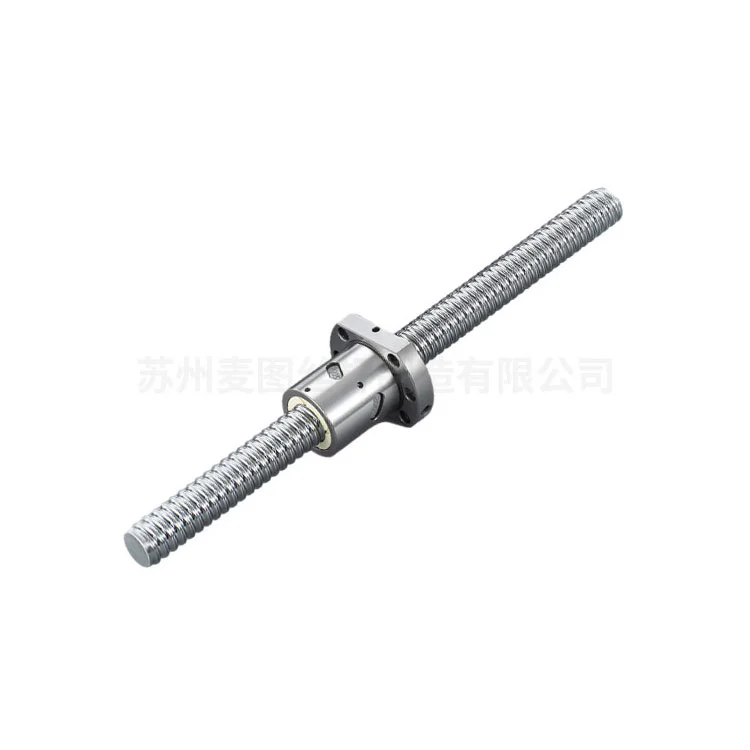
How Does Internal Circulation Design Improve Mechanical Performance?
The internal circulation mechanism eliminates external return tubes and integrates the ball return path within the nut body. This structural upgrade reduces interference risks, minimizes friction loss, and enables more compact assembly. For engineers, this translates into better axial rigidity and improved positioning accuracy, especially in high-speed linear motion systems.
Our factory has developed advanced grinding and heat treatment processes to support this design evolution. By refining the raceway geometry and ball circulation path, we ensure consistent preload and smoother operation across various load conditions. This allows our Ball Screw solutions to perform reliably in applications such as CNC machining centers, robotic arms, and precision measuring equipment.
What Technical Parameters Define High-Quality Internal Circulation Systems?
When selecting components for precision engineering, buyers typically focus on load capacity, lead accuracy, and durability. Our factory provides customized solutions based on application requirements, ensuring compatibility with international standards such as ISO and DIN.
| Parameter | Specification Range | Application Benefit |
| Nominal Diameter | 12 mm – 80 mm | Supports light to heavy industrial loads |
| Lead Accuracy Grade | C3 / C5 / C7 | Ensures precision positioning |
| Dynamic Load Rating | Up to 120 kN | Handles high-speed continuous motion |
| Material | Alloy Steel with Heat Treatment | Enhances wear resistance |
| Surface Hardness | HRC 58–62 | Extends service life |
At Maitu Screw Rod, our engineering team continuously refines these parameters to meet the needs of global buyers. Our Ball Screw products are widely used in high-precision industries where reliability is critical.
Why Are Global Manufacturers Switching to Internal Circulation Solutions?
The shift toward internal circulation is largely driven by the need for compact machine design and reduced maintenance costs. In traditional systems, external return tubes are prone to damage and misalignment, leading to downtime and higher servicing requirements. Internal systems eliminate these issues while maintaining consistent performance.
Our factory has observed that clients in automation and robotics sectors increasingly prioritize integrated solutions that reduce assembly complexity. With fewer external components, installation becomes easier and system reliability improves. This is why our Ball Screw configurations are often selected for next-generation manufacturing equipment.
| Feature | Internal Circulation | External Circulation |
| Structure | Compact and integrated | Requires external tubes |
| Noise Level | Low | Moderate |
| Maintenance | Minimal | Frequent inspection needed |
| Durability | High | Moderate |
Through continuous R&D investment, Suzhou Maitu Screw Rod Manufacturing Co., Ltd. ensures that our factory remains competitive in supplying advanced motion components to international markets.
How Can Buyers Select the Right Configuration for Their Application?
Selecting the right component involves evaluating load requirements, speed, environmental conditions, and installation space. For example, high-speed CNC machines require low friction and high rigidity, while heavy-duty industrial equipment demands stronger load-bearing capacity.
Our factory works closely with clients to analyze these factors and recommend optimized configurations. Our Ball Screw solutions can be tailored with different preload levels, coatings, and sealing options to suit various operating environments. This flexibility allows our customers to achieve better performance while reducing long-term operational costs.
FAQ: Precision Engineering in 2026: The Shift Toward Internal Circulation Ball Screws
Q1: Why is internal circulation design becoming the standard in precision engineering?
A1: Internal circulation designs provide higher stability, reduced vibration, and improved durability compared to traditional systems. These advantages are critical for industries requiring high-speed and high-precision motion control, making them the preferred choice for modern engineering applications.
Q2: How does internal circulation impact maintenance and service life?
A2: By eliminating external return components, internal circulation reduces wear points and minimizes the risk of mechanical failure. This results in longer service intervals, lower maintenance costs, and more consistent performance over time.
Q3: What industries benefit most from internal circulation Ball Screw technology?
A3: Industries such as CNC machining, robotics, semiconductor manufacturing, and medical equipment benefit significantly due to their need for precision, reliability, and compact system design.
What Does the Future Hold for Precision Motion Components?
As precision engineering continues to evolve, the demand for compact, efficient, and durable motion systems will only increase. Internal circulation technology is set to become a baseline standard across multiple industries. Our factory remains committed to innovation, ensuring that our Ball Screw solutions meet the highest global standards while adapting to future technological advancements.
If you are looking for reliable, high-performance components tailored to your application, our team is ready to support your project with customized engineering solutions. Contact us today to explore how we can help optimize your system performance and achieve long-term operational success.